



Cryogenic Deflashing & Deburring: Precise, Cost‑Effective Flash Removal for Plastics
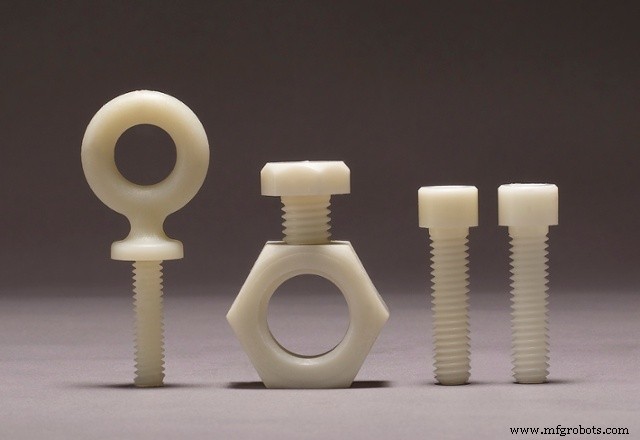 Cryogenic deflashing and deburring is a state‑of‑the‑art method that uses ultra‑cold temperatures to eliminate flash from parts made of a wide range of plastics and other materials. Commonly treated polymers include nylon, Tefzel®, HD‑PE, PPS, PET, polycarbonate, polypropylene, polyurethane, liquid crystal polymer, ABS, PEEK, and Acetal. The process works on components produced by injection, compression, and extrusion molding.
What is “Flash”?
Flash is an unwanted ridge of material that remains on the edge of a molded part. Its removal is critical for medical devices and other precision components. Deflashing accounts for a significant portion of manufacturing costs, but the cryogenic method turns the flash into a brittle, stiff layer that snaps cleanly away, leaving a pristine edge. Three common burr types are often addressed: Poisson, roll‑over, and tear burrs.
Poisson Burr
A Poisson burr forms when a material bulges laterally under compression until it permanently deforms.
Roll‑over Burr
A roll‑over burr is a bent chip rather than a sheared one, typically larger and often found in blind or through holes. The cryogenic process can remove these recessed burrs as well.
Tear Burr
A tear burr occurs when material tears away from the part instead of shearing off.
Cryogenics
According to the National Institute of Standards and Technology, cryogenics covers temperatures below –180 °C (–292 °F, 93.15 K). Most researchers consider the threshold to be around –150 °C (123 K, –238 °F). Cryogenic solutions typically employ liquids such as nitrogen, which maintain these extreme temperatures.
Cryogenic Deflashing Process
Parts are placed in a basket and immersed in a cryogenic bath, usually liquid nitrogen. Once chilled, they tumble with polycarbonate media ranging from 0.006 to 0.080 inches (0.15 mm to 2.03 mm). The low temperature makes the flash brittle, allowing it to detach during the gentle tumbling motion. This method does not rely on abrasive blasting; it preserves surface finish and dimensional tolerances while removing both edge and recessed burrs.
Advantages of Cryogenic Deflashing
Compared to manual techniques, cryogenic deflashing:
- Maintains part integrity and critical tolerances.
- Processes many parts simultaneously, reducing cost per unit.
- Is non‑abrasive, eliminating surface damage.
- Reduces human error through computer‑controlled operation.
- Extends mold life, allowing a single mold to produce high‑quality parts for extended periods.
Interested in learning more about plastic manufacturing? Download our free glossary
Questions? Comments? Let me know in the comments section below.

Resin
- Understanding Plastic Burrs & Deburring Techniques for Superior Product Quality
- Advanced Cryogenic Air Separation: Efficient Extraction of Nitrogen and Oxygen
- Iron Ore Pellets: Production Process & Key Technologies
- Tinplate & Tinning: The Tin Plating Process Explained
- Mastering Process Planning, Estimating & Costing for Competitive Manufacturing
- Understanding Manufacturing Processes: Definitions, Types, and Key Components
- Maximizing Manufacturing Efficiency: Proven Production & Process Optimization Techniques
- Effective Deburring Techniques: Applications & Process Types
- Hot vs. Cold Rolling: Understanding Metal Forming Processes
- Understanding Glass Types and Their Manufacturing Processes