



Toyota Industries Leads 3D Printing Innovation: From Prototyping to Mass‑Production
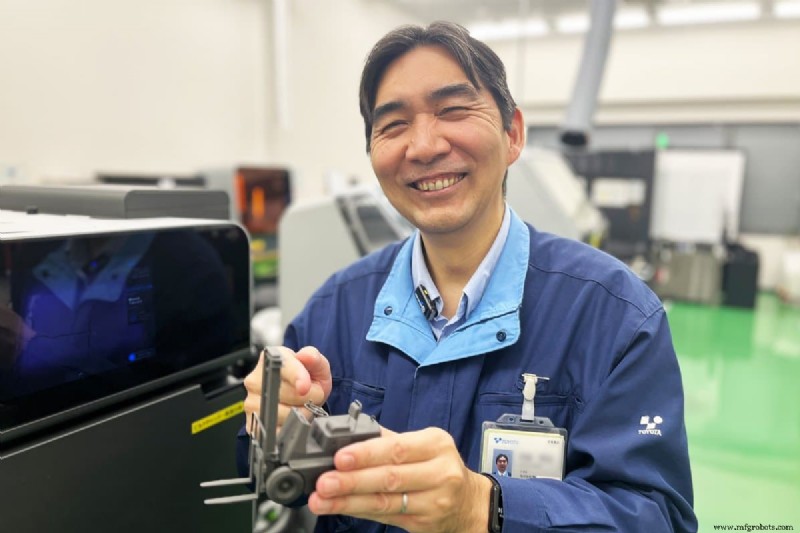
At Toyota Industries Corp.’s R&D Administration Center in Japan, engineers deliberately choose the most suitable manufacturing method for each application, rather than adopting new machines simply because they exist. This practice reflects the company’s culture of healthy internal competition and the belief that frontline staff should select the equipment they use.
Toyota Industries began as a loom manufacturer, but today it handles diverse R&D projects and produces critical components such as compressors, engines, DC‑DC converters, on‑board batteries and charging inverters for its automotive line.
We spoke with Group Manager Hiroyuki Oiwa, who has led the additive manufacturing (AM) strategy since 2019, about how the company has evolved its 3D‑printing approach.
Oiwa explains that the Toyota Group is not a monolithic entity; each subsidiary operates independently and, when overlapping parts are needed, internal competition determines the final design adopted for Toyota vehicles.
In automotive, Toyota Industries manufactures engines, compressors for air‑conditioning, DC‑DC converters, onboard batteries and charging inverters that convert vehicle voltage to 100 V, enabling household outlets for mobile use. The company also supplies industrial vehicles such as forklifts and textile machinery.
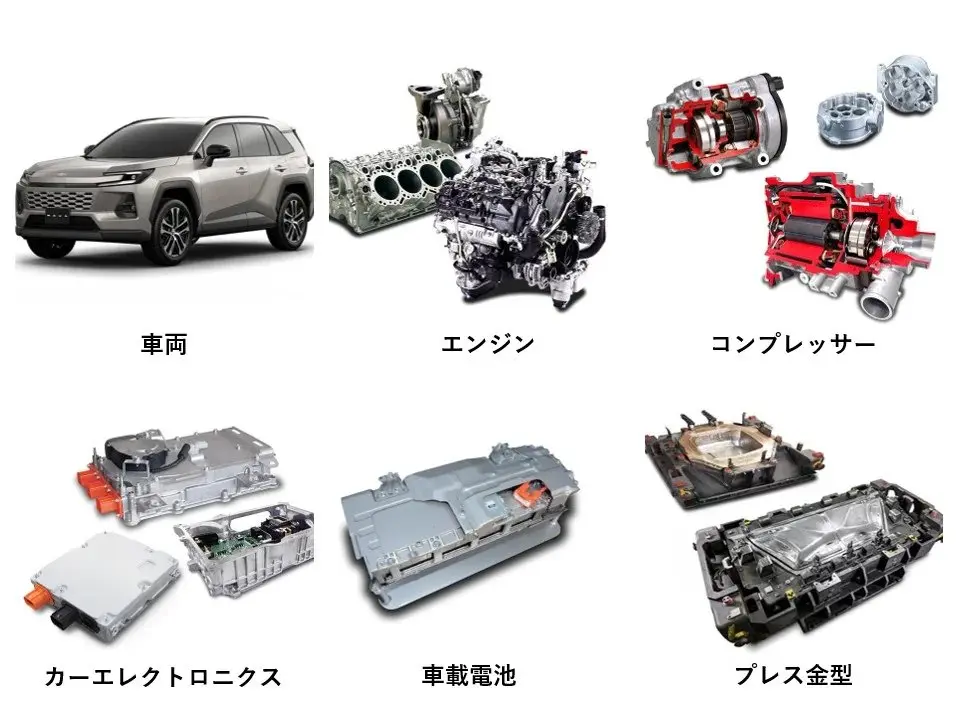
Products handled by Toyota Industries in the automotive sector (Photo courtesy of Toyota Industries Corp.)
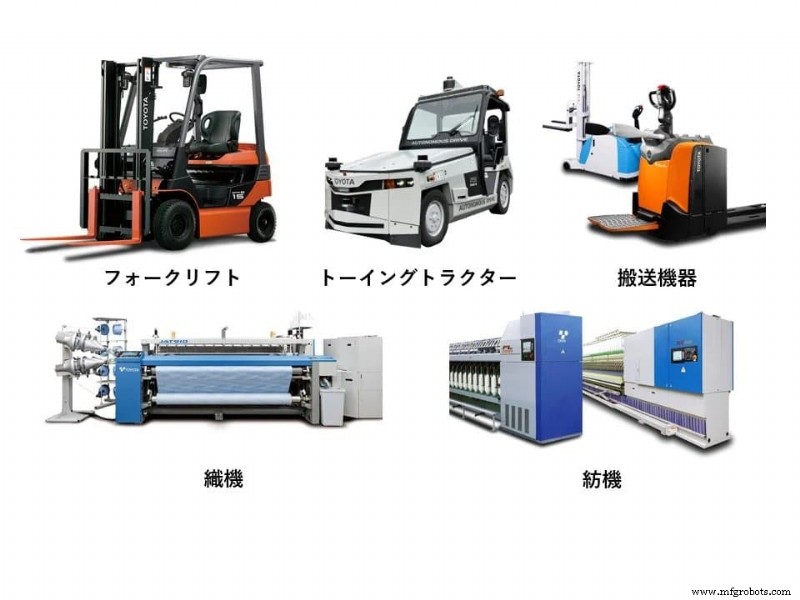
Products handled by Toyota Industries in the industrial machinery sector (Photo courtesy of Toyota Industries Corp.)
When Oiwa joined the R&D Administration Center in 2019, the only 3D‑printing technology in use was an inkjet printer for large‑scale, color prototypes. Although the output quality was high, inkjet was unsuitable for end‑use parts, prompting a shift toward more versatile AM solutions.
Oiwa and the manufacturing lead surveyed department heads who were independently using fused deposition modeling (FDM) printers, forming the “3D Printer Liaison Group” to coordinate company‑wide adoption beyond prototyping.
Global research into mass‑production 3D printers identified stereolithography (SLA) and selective laser sintering (SLS) as the most promising technologies.
Toyota purchased a Formlabs Form 3 and a second SLA printer, allowing teams to test both and select the best fit.
Different departments chose printers and materials for specific jobs, sharing lessons learned. The collective preference settled on the Form 3.
Oiwa attributes the choice to material versatility: while the other printer’s industrial resin was discontinued shortly after launch, the Form 3 supported a wide range of resins, meeting diverse application needs.
When the Form 4, a next‑generation SLA printer with record speed, entered the market, Toyota adopted it in partnership with Harada Vehicle Design, addressing frontline requests.
The same philosophy guided the adoption of the Fuse Series SLS printers. Though initially hesitant due to powder residue and surface finish concerns, Oiwa was persuaded after a presentation by Shinya Takei of Owl Craft, who demonstrated successful end‑use parts and the Fuse Blast automated post‑processing solution.
Once the Fuse Series entered production, requests multiplied across departments, including environmental, PR and design teams.
A highlighted case is a motor‑evaluation component with intricate coil‑winding geometry. SLA could fabricate the shape, but SLS provided the required mechanical strength and eliminated support structures, enabling higher precision.
The absence of support material and the fine detail achievable with SLS earned repeat orders and high praise from users.
To celebrate Toyota’s centenary, a lightweight, heat‑resistant light fixture inspired by an automatic loom shuttle was printed for the new headquarters lobby using PA12 nylon powder.
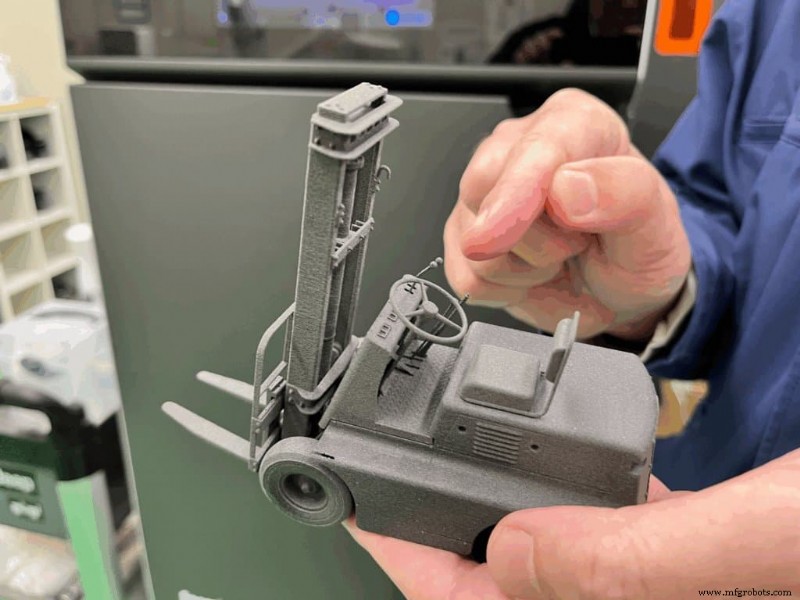
The precision and detail delivered by the Fuse Series, combined with the popularity of PA12, also produced a first‑generation forklift lever set that impressed engineers with its delicacy.
Current request mix: roughly 30% jigs and 60% prototypes, of which 40% serve functional evaluation and 20% test fit and form.
Oiwa’s ultimate ambition is to scale additive manufacturing to mass‑production volumes.
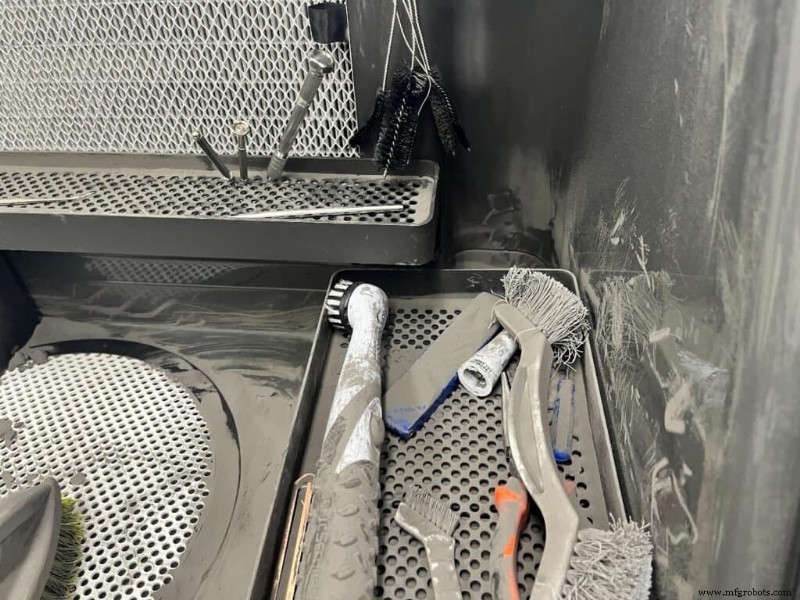
The 3D‑printing room features a high ceiling, air purifiers and dedicated powder‑removal equipment, such as the Fuse Sift, to ensure a safe and efficient workflow.
Medium‑term plans include acquiring large‑format powder‑bed fusion machines like the Jet Fusion, but the strategy is to master smaller Fuse Series units first before scaling.
While AM has advanced considerably, Oiwa acknowledges that mass‑production remains the final hurdle before widespread adoption on Japanese manufacturing sites. Nonetheless, he is committed to annual progress.
Oiwa also serves as the instructor for the Japanese AM team at the 2026 WorldSkills Competition in Shanghai, underscoring his leadership in the field.
Toyota’s culture of internal competition and the principle of giving frontline staff autonomy to choose equipment has accelerated the company’s AM rollout, exemplified by the successful deployment of Formlabs printers at the R&D Administration Center.
Explore Formlabs 3D printers to learn more, or contact sales.
3D printing
- Stereolithography & Digital Light Processing: Current Landscape & Future Outlook
- Mastering 3D Printer Flow: Definition, Significance, and Calibration Tips
- Can Rubber Be 3D Printed? Exploring the Possibilities of Rubber 3D Printing
- Additive Manufacturing Explained: From Design to Finished Part
- Stratasys Revives MakerBot: The Method Brings Industrial‑Grade Reliability
- Race Up Team Padova Leverages Formlabs 4L & High‑Temp Resin to 3D‑Print a Lightweight, High‑Performance Radiator
- Resin 3D Printers Explained: UV Light‑Cured Technology for High‑Precision, Smooth Prints
- Unlocking Scalability in Additive Manufacturing with MES & Workflow Software
- Understanding 3D Filament Glass Transition Temperatures & How to Optimize Them
- Common 3D Printing Issues & Expert Solutions