



WeNext Accelerates High‑End Manufacturing with Formlabs Form 4 SLA 3D Printers
In today’s fast‑moving manufacturing landscape, the speed of product iteration is a decisive competitive advantage. Efficient and accurate prototype validation shortens time‑to‑market and keeps R&D costs in check. To meet these demands, WeNext – Shenzhen’s leading 3D‑printing service provider – has integrated Formlabs’ Form 4 Series stereolithography (SLA) printers into its workflow, positioning itself as an innovation accelerator for automotive, robotics, and consumer electronics sectors.
WeNext serves 200,000 customers and produces 30 million parts annually. Conventional tooling simply cannot keep pace with the evolving prototype standards, which now shift from validation‑grade to production‑grade requirements. These changes demand higher material performance, finer detail, and superior accuracy.
Responding to this need, WeNext installed 13 Form 4 units and began using Formlabs’ full range of specialty resins. Powered by the free PreForm print‑preparation software—including the Dashboard printer‑management module—WeNext can rapidly deliver high‑quality parts while scaling its service offering.
Form 4 3D printers are deployed to meet WeNext’s growing production demands.
The printers handle a wide variety of orders across automotive, robotics, and consumer electronics, delivering parts that meet stringent dimensional accuracy, structural strength, and speed requirements. The Form 4 boasts an impressive 98.7 % print‑success rate.
With an average printing speed of 40 mm/h, the Form 4 completes an automotive LED light strip and its base in just 2 hours 49 minutes—outpacing both FDM and benchmark SLA printers.
Time to print an automotive LED light strip and base

The automotive LED light strip is printed in under three hours on the Form 4.
In addition to the Form 4, WeNext utilizes the Form 4L, which offers a 4.6× larger build volume while maintaining a compact footprint. This larger volume allows large parts to be printed in a single build, eliminating the labor and time required to splice multiple parts together.
“From the perspective of efficiency, precision, and stability, Formlabs enables WeNext to ensure consistency in mass‑production delivery and build a reliable brand image,” says the Head of SLA Production at WeNext.
Parts are oriented and support structures are generated in PreForm with a single click. Post‑processing is streamlined with Form Wash and Form Cure, which feature automated settings for Formlabs’ resins, ensuring consistent, repeatable results.
WeNext’s portfolio spans aesthetic and structural validation, functional testing, and small‑batch delivery. The diverse mechanical properties required—strength, durability, environmental stability—are met with Formlabs’ tailored materials.
Examples include automotive components printed in the Tough Resin Family.
Formlabs’ materials are developed in tandem with its software and hardware, leveraging in‑house expertise to deliver industry‑leading resins optimized for Form 4 and Form 4L. WeNext uses Flame Retardant Resin, High‑Temp Resin, and Tough Resin Family materials to produce functional prototypes and end‑use parts that satisfy a wide range of industry needs.
This part is printed in Flame Retardant Resin, a UL 94 Blue Card‑certified material that produces self‑extinguishing, halogen‑free parts.
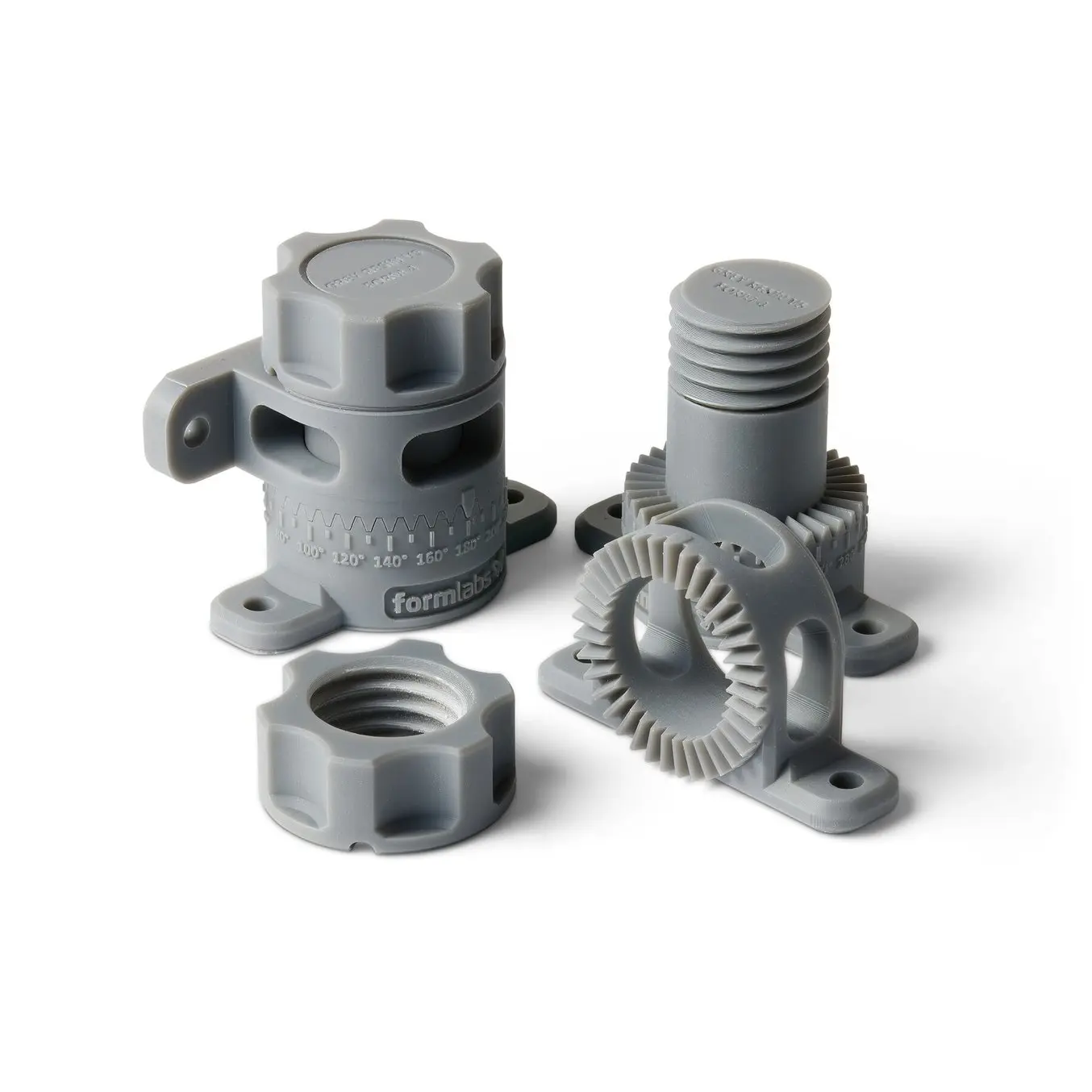
Sample part
Experience Formlabs quality first‑hand. We’ll ship a free 3D‑printed sample part to your office.
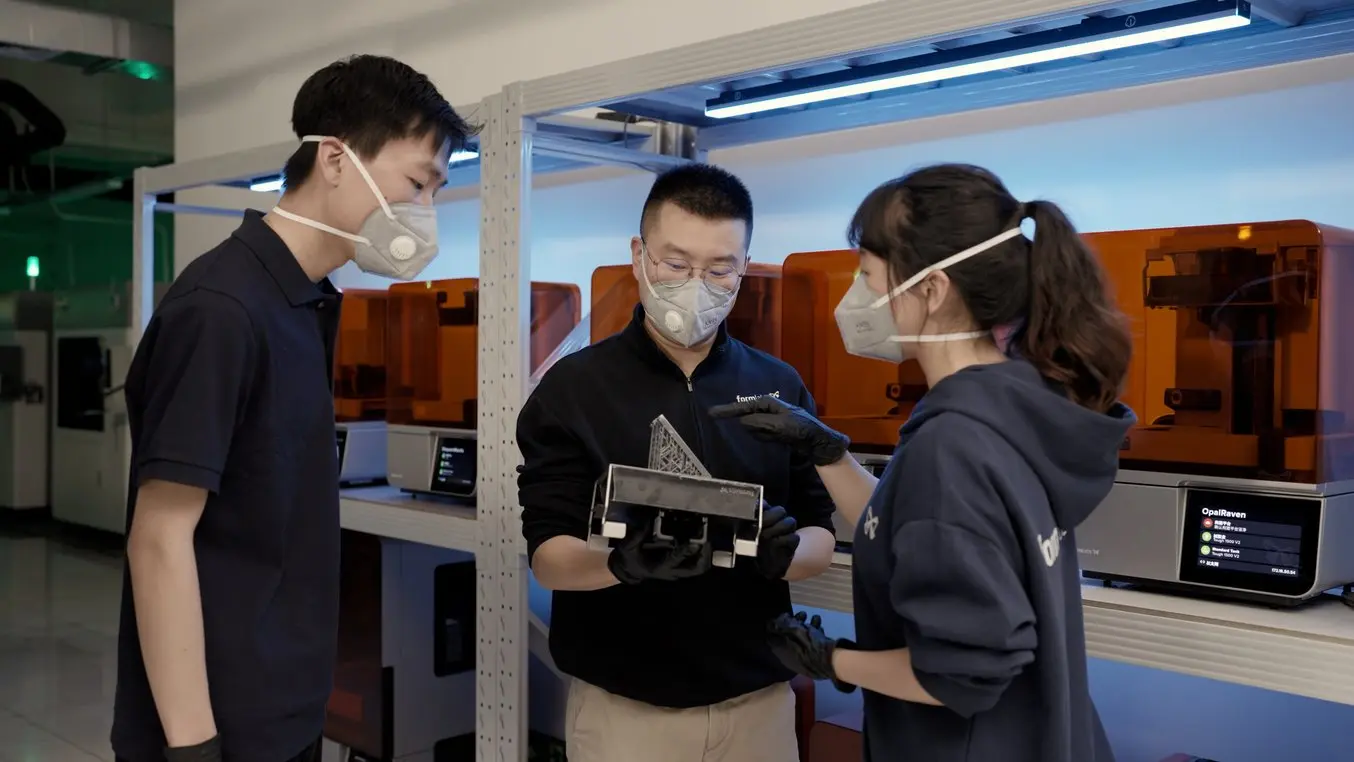
A Formlabs engineer collaborates with WeNext staff to fine‑tune processes.
WeNext views the Formlabs ecosystem—hardware, materials, software, and workflows—as a stable, scalable, long‑term prototyping platform that drives value for its global clientele.
Ready to sharpen your competitive edge? Explore Formlabs 3D printers or contact a reseller to learn more.
3D printing
- How to Install Heat‑Set Inserts for Strong, Reliable 3D Printed Threads
- Why Professional 3D Printers Like Markforged Surpass Hobbyist Machines
- Premium 3D-Printed Motorcycle Parts: Crafting High-End Custom Components
- Harnessing Machine Learning to Transform Additive Manufacturing
- Boost Your 3D Prints: 5 Proven Strategies for Strength and Durability
- Heat Sink Fundamentals: Definition, Operation, Components, Types, and Applications
- Expert Answers to Your Top 3D Printing Questions
- Ultimaker’s Rebranding Signals the Rise of Industrial 3D Printing
- Cut Print Time for 3D‑Printed Plastic Parts – Expert Design Strategies
- SLA vs. FDM: Comprehensive Comparison & Key Benefits