



Elegoo Centauri Carbon Review – A Competitive CoreXY FDM Printer at $299
The 3D printing landscape gains a fresh contender with Elegoo’s foray into CoreXY: the Centauri Carbon.
Priced at $299, the fully enclosed printer arrives when high‑speed CoreXY machines are becoming mainstream, positioning it as a direct competitor to the Bambu Lab X1C while keeping a comfortable price differential.
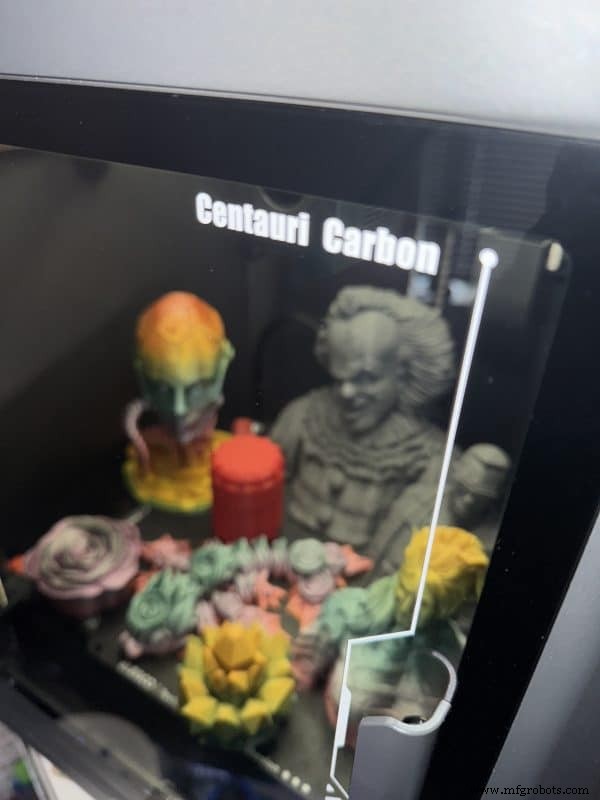
Its feature set is surprisingly robust: a true 256 × 256 × 256 mm build volume, strain‑gauge automatic bed leveling, a high‑flow direct‑drive extruder, and a dual‑surface heated bed that supports everything from standard PLA to engineering‑grade composites.
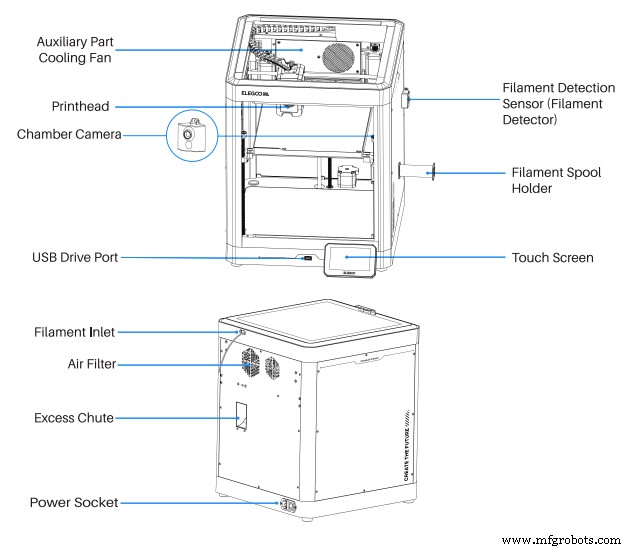
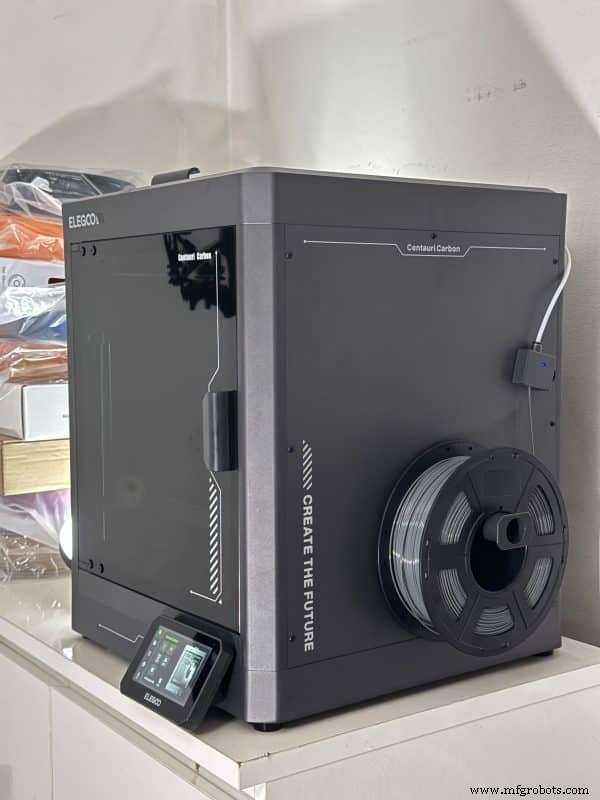
Elegoo, already respected in the resin market, leverages its expertise to deliver a CoreXY machine that feels ready out of the box, complete with a magnetic dual‑surface bed, built‑in camera, and a convenient side‑mounted spool holder.
In a market full of lofty promises, the key question is whether the Centauri Carbon can deliver professional‑grade performance at this price point. Let’s explore.
Key Features
- CoreXY Design – Enclosed steel frame with aluminum panels and a magnetically‑latching front door.
- Build Volume – 256 × 256 × 256 mm, giving a true cubic workspace.
- Motion System – Linear rods for X/Y, synchronized lead screws for Z, all driven by timing belts.
- Extruder – Direct‑drive with hardened steel gears and a high‑flow hotend (32 mm³/s).
- Temperature Control – Hotend to 320 °C, heated bed to 110 °C.
- Speed Options – Balanced (100 %), Silent (60 %), Sport (133 %), Ludicrous (166 %) with max 500 mm/s.
- Bed & Leveling – Dual‑surface (PEI & epoxy), 4‑point strain‑gauge auto‑leveling with 121‑point mesh.
- Control – 7‑inch touchscreen, custom ELEGOO slicer, USB & Wi‑Fi connectivity, power‑loss recovery.
- Camera – Built‑in LED‑lit camera with time‑lapse and anomaly detection.
- Spool Holder – Side‑mounted for 1 kg rolls, integrated run‑out sensor and purge system.
- Cooling – 50/20 blower, auxiliary back fan, exhaust fan, and nano‑crystal filtration.
Detailed Breakdown
Enclosed CoreXY Design
The sealed chamber stabilises temperatures, reducing warping and environmental interference while the CoreXY geometry delivers high‑speed, low‑vibration motion.
Build Volume
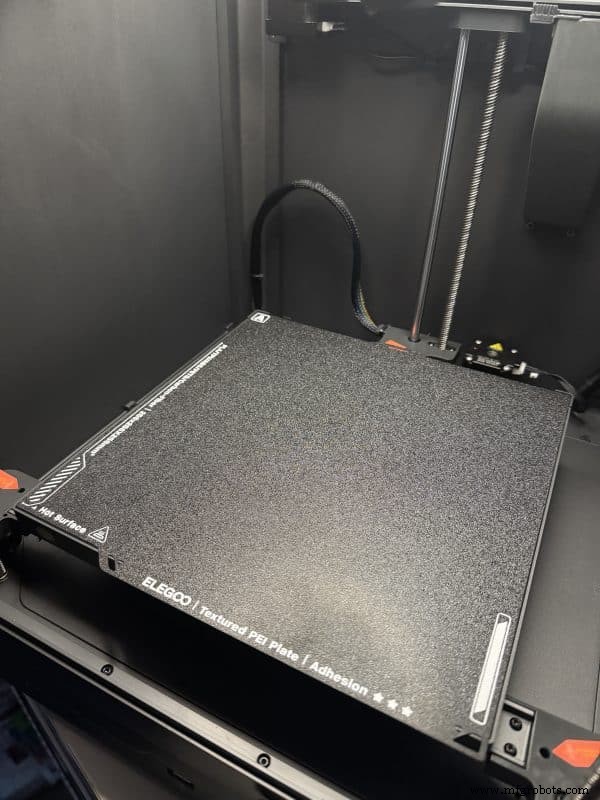
Its cubic 256 mm workspace matches the likes of Bambu Lab, yet remains compact enough for most workstations.
Motion System
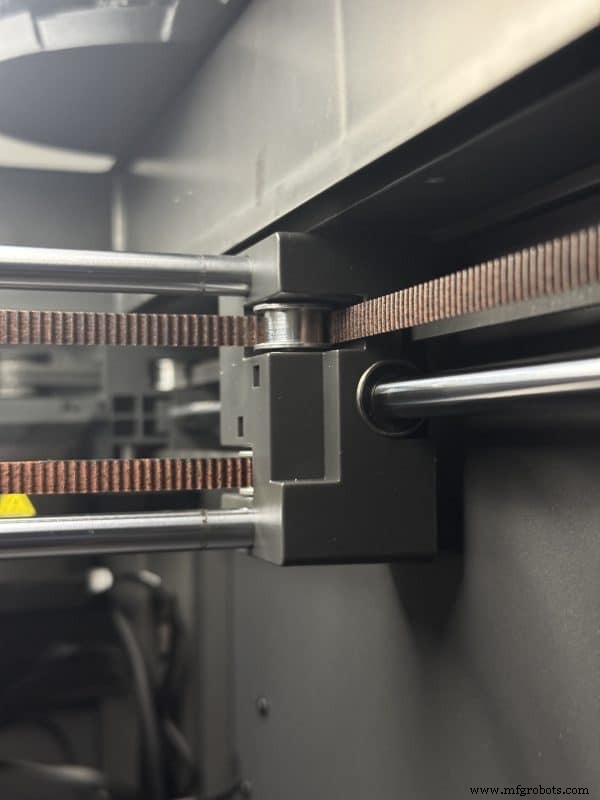
Linear rods ensure smooth X/Y travel, while the Z‑axis lead screws, driven by a timing belt, provide precision at 0.1 mm accuracy.
Extruder & Hotend
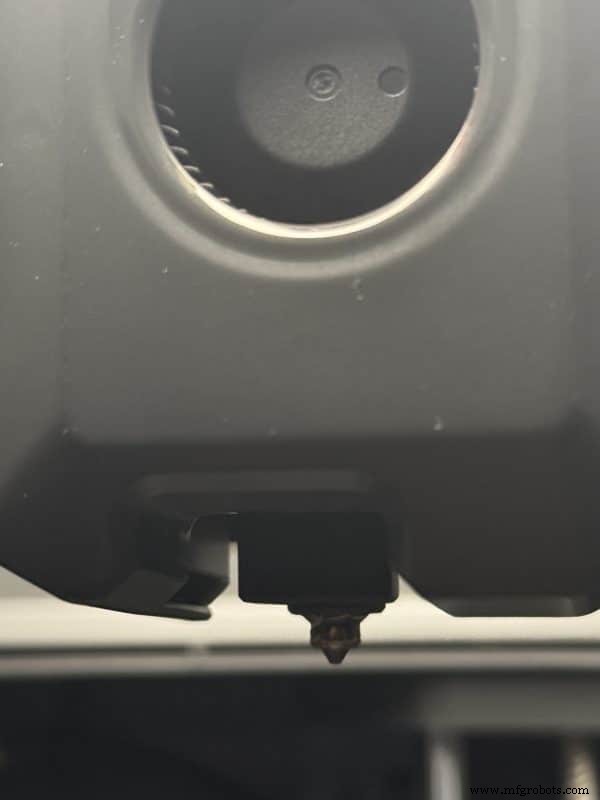
The hardened‑steel gearset and 60 W heater reach 320 °C in ~2 min, ideal for abrasive filaments such as carbon‑fiber composites.
High‑Temperature Capability
With a 110 °C heated bed, the Centauri Carbon can print ABS, PETG, nylon, and even carbon‑fiber‑filled materials without warping.
Speed Performance
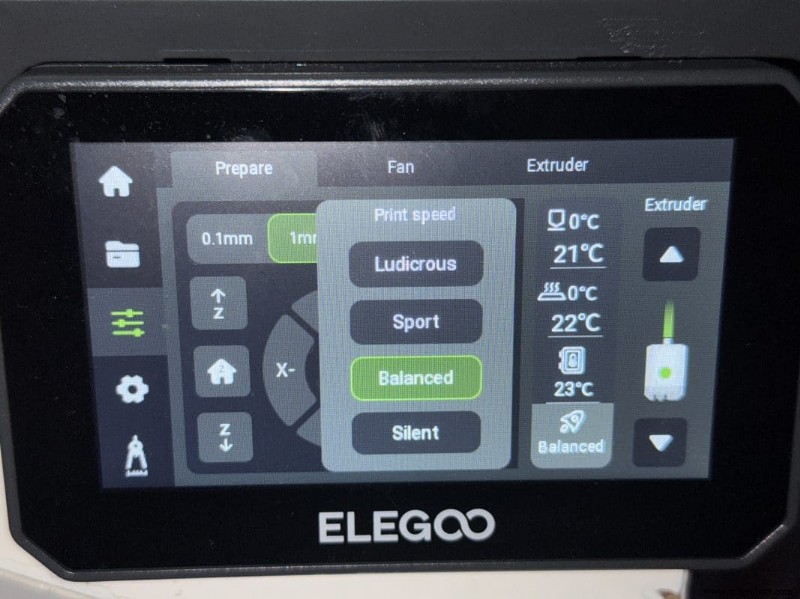
The robust frame and rubber feet dampen vibration, allowing safe operation up to 500 mm/s. Multiple speed modes give users flexibility between speed and detail.
Bed & Leveling
Dual‑Surface Bed
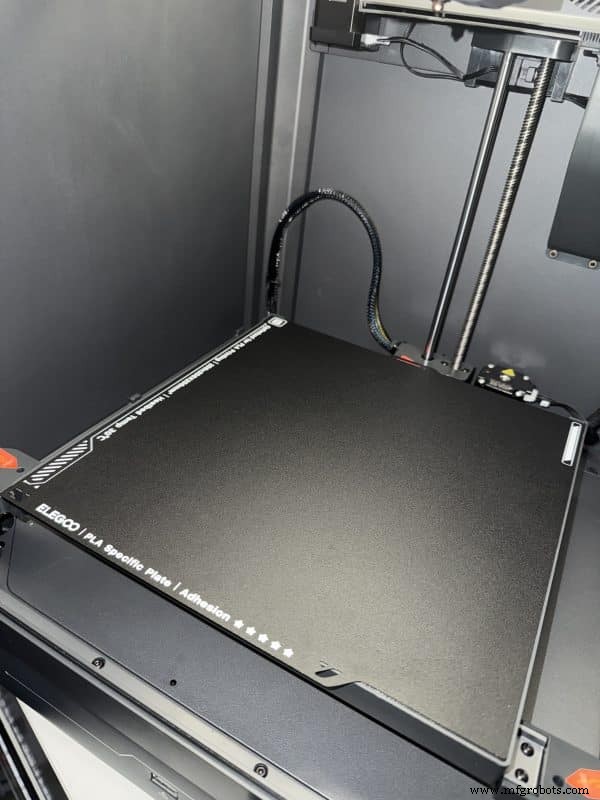
One side features textured PEI for high‑temperature filaments, the other a low‑temperature epoxy surface for PLA and flexible materials.
Automatic Bed Leveling
Four strain‑gauge sensors probe a 11 × 11 grid (121 points), creating a precise mesh. Two separate profiles allow instant switching between bed surfaces.
Temperature Management
The enclosure retains ambient temperatures around 40 °C, enabling stable printing of heat‑sensitive materials without additional heating.
Control & Connectivity
User Interface
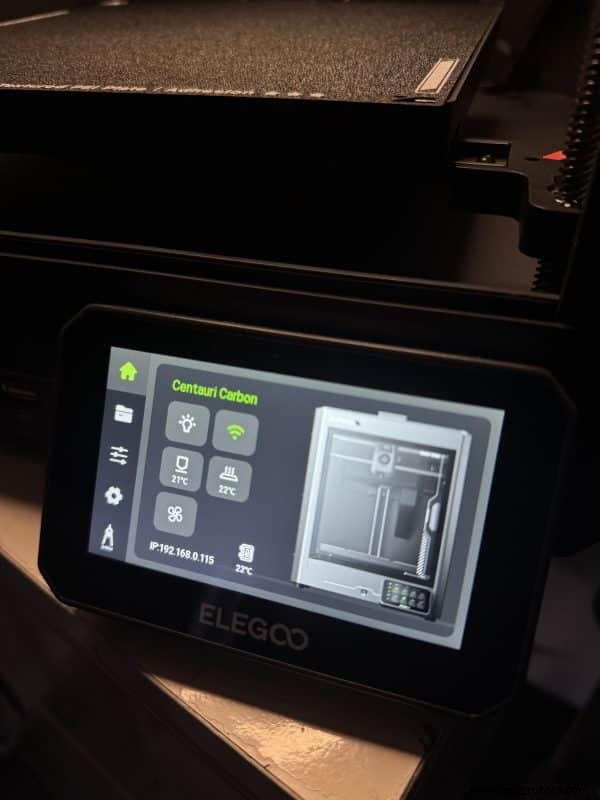
The 7‑inch touchscreen offers intuitive access to settings, mirroring high‑end printers while remaining user‑friendly.
Slicer Software
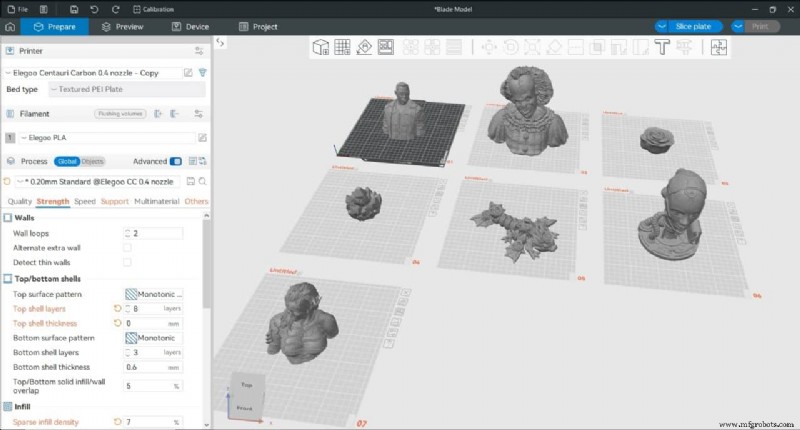
ELEGOO Slicer, a fork of Orca, includes optimized profiles for the Centauri Carbon and supports both basic and advanced modes.
Connectivity
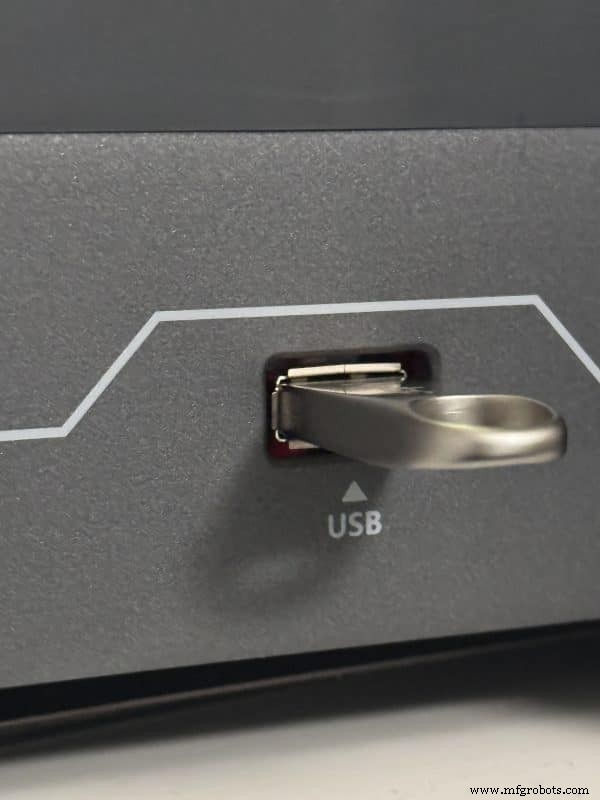
USB drive, Wi‑Fi, automatic firmware updates, and remote monitoring via the built‑in camera make managing prints straightforward.
Additional Features
Camera System
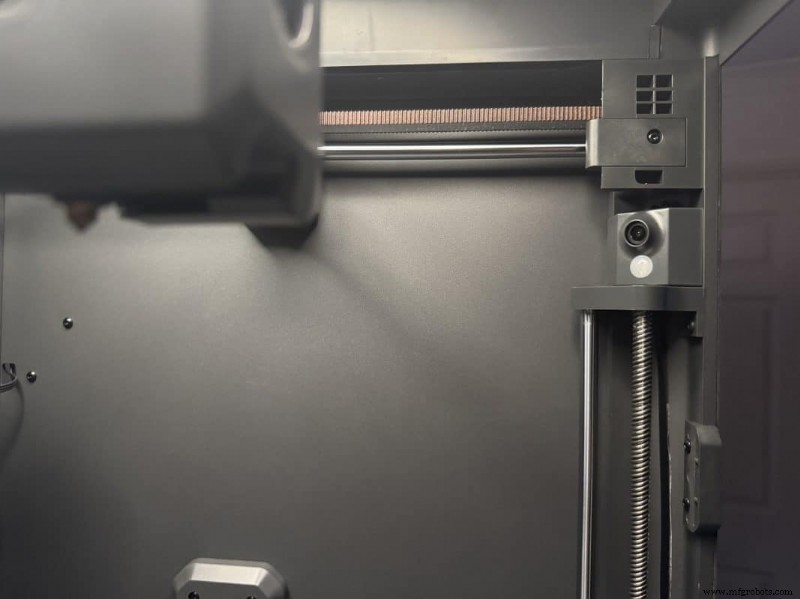
Time‑lapse, anomaly detection, and LED lighting allow for remote monitoring and troubleshooting.
Spool Holder
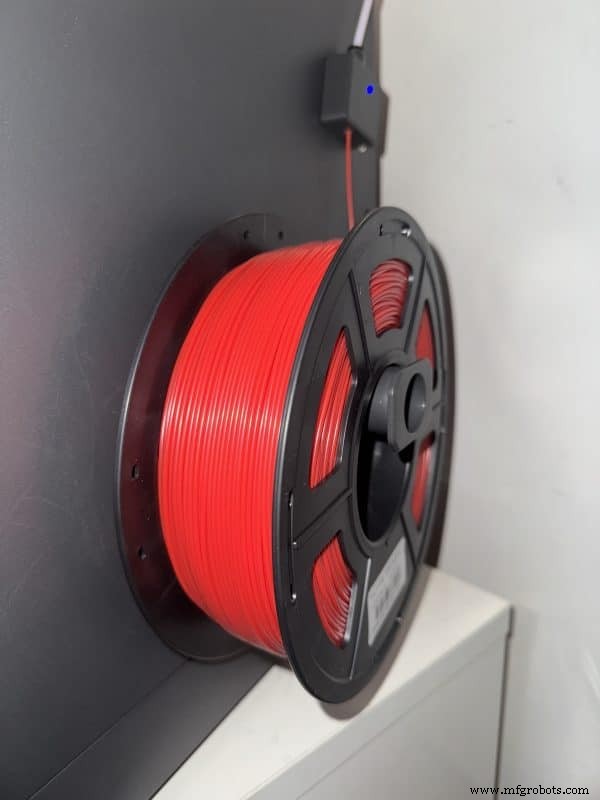
Side‑mounted holder for 1 kg rolls simplifies filament changes; the run‑out sensor and purge system aid smooth transitions.
Cooling System
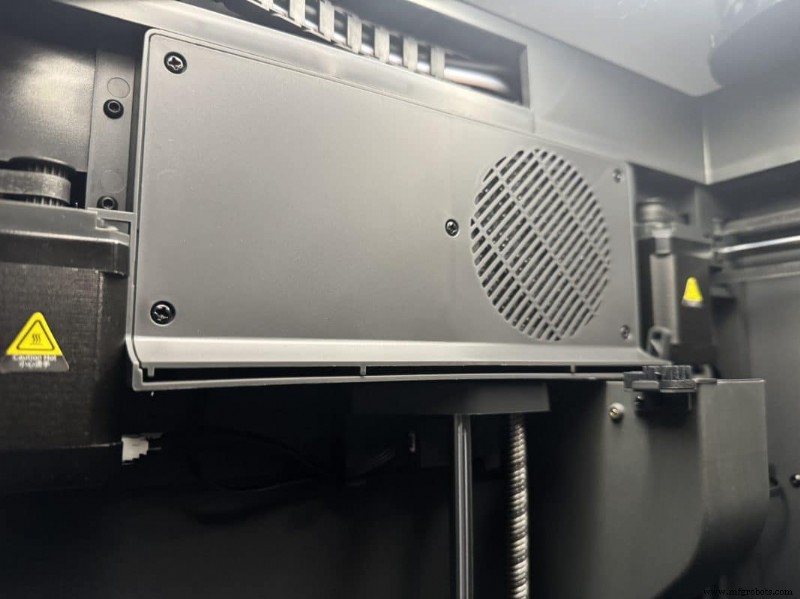
A multi‑fan setup, including a 50/20 blower, back fan, and exhaust, ensures optimal cooling and mitigates heat creep. Nano‑crystal filtration reduces fumes from materials like ASA.
Specifications
Printer
- Type: FDM
- Build Volume: 256 × 256 × 256 mm
- Precision: ±0.1 mm
- Nozzle: 0.4 mm
- Max Speed: 500 mm/s
- Ambient Temp: 5 °C–40 °C
Operating Temp
- Nozzle: 320 °C
- Bed: 110 °C
Software
- Slicer: ELEGOO Slicer (recommended)
- Input: STL, OBJ, 3MF, STP
- Output: G‑code
- Interface: USB, Wi‑Fi
Power
- Input: AC 100‑240 V; 50/60 Hz
- Rated Power: 110 W@220 V, 350 W@110 V
Physical
- Dimensions: 398 × 404 × 490 mm
- Weight: 17.5 kg
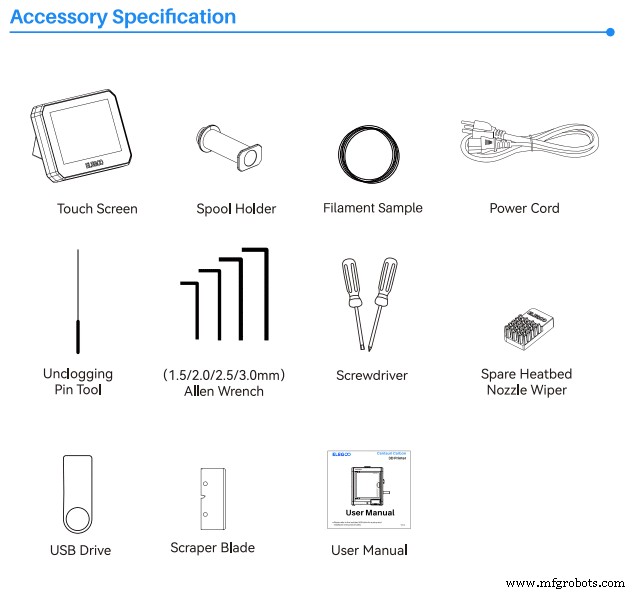
Accessories Included
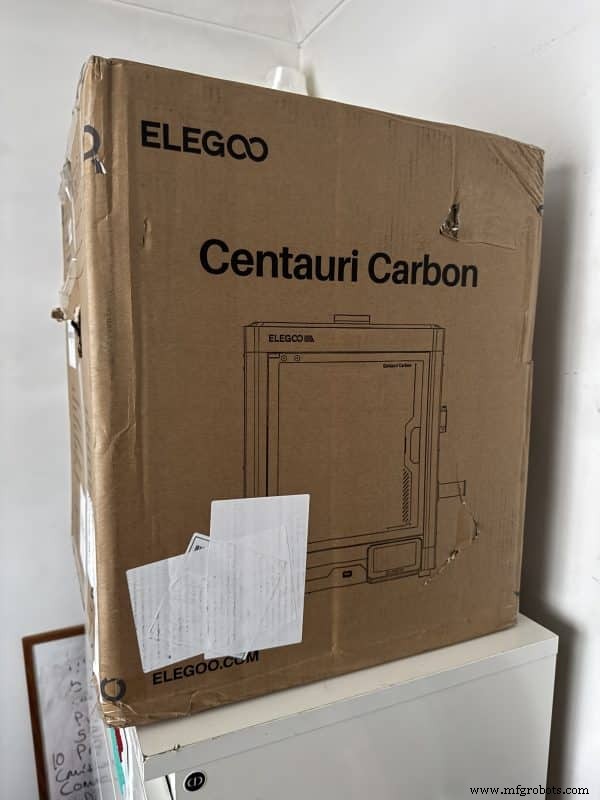
Unboxing & Setup
The Centauri Carbon arrives in a well‑padded box with protective plastic sheets. Despite its weight, the packaging protects the enclosure and components.
Inside, the kit includes a spool holder, screen, fixing kit, lubricant, power supply, and a concise user manual.
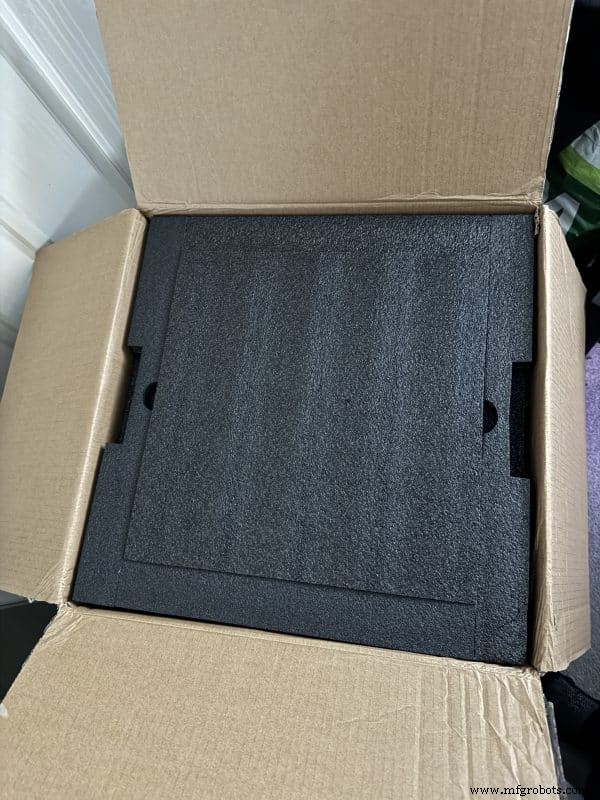
Assembly steps are straightforward: remove foam, install the screen, mount the spool holder, load filament, and run the self‑check. The entire process takes roughly 30 minutes.
Print Quality Assessment
Initial tests show consistent first layers, reliable adhesion, and no print failures out of the box. Models printed at 0.2 mm layer height on PLA (and ABS for a screw container) produced smooth finishes. Time estimates: Blade – 3 h 14 min; Cyborg – 5 h 41 min; Pennywise – 9 h 27 min; ABS Screw – 1 h 28 min.
Pros
- Fast printing up to 500 mm/s without quality loss.
- Reliable bed adhesion and auto‑leveling reduce failures.
- Side‑mounted spool holder simplifies filament management.
- No extra upgrades needed for advanced filaments.
- High‑end features at $299, nearly half the cost of comparable printers.
- Quick 30‑minute setup vs. hours of calibration on many kits.
- Multiple speed modes for prototyping or detailed work.
- Remote monitoring, power‑loss recovery, and camera feed.
Cons
- Single‑color printing only; no multi‑material capability.
- Calibration noise can reach 84 dB near the print head.
- Spool holder fits only 1 kg rolls.
- Camera lighting limited for dark filaments.
- PTFE tube angle requires adjustment for smooth loading.
- Strong magnets produce audible closing.
Community Feedback
Renowned reviewers like Uncle Jessy and Aurora Tech have praised the Centauri Carbon for its value and performance. Their detailed reviews cover real test prints with PLA, TPU, and nylon, confirming the printer’s versatility.
Conclusion
The Elegoo Centauri Carbon offers a compelling blend of high‑speed CoreXY mechanics, robust temperature control, and user‑friendly features—all at a price that undercuts premium competitors. While it lacks multi‑color capability and has some minor noise issues, its print quality, reliability, and fast setup make it an attractive choice for hobbyists and professionals alike. If you’re looking for a sub‑$500 enclosed CoreXY printer that delivers on performance, the Centauri Carbon deserves serious consideration.
Pre‑order today on Elegoo’s website for $299.

Michael Dwamena
Founder of 3D Printerly, author of over 900 articles, and a seasoned 3D printing enthusiast with more than 20 printers.
3D printing
- Why 3D Printing Is a Magnet for Investors
- Essential Pre-Print Checklist for Reliable 3D Printing
- Fortify CEO Josh Martin Discusses Revolutionary Fluxprint™ Digital Composite Manufacturing
- Graphene 3D Printing: Unlocking New Horizons in Fabrication
- Markforged: Deloitte 2018 Fast 500 #10 & Forbes Next Billion-Dollar Startup
- Adaptive Bed Leveling: Revolutionizing First Layer Accuracy on the Mark X
- PLA vs. PETG: Which 3D Printing Filament Reigns Supreme?
- 3D Printed Injection Molds: Professional Material Comparison
- Discover the Types of 3D Printers and Their Capabilities
- Altair’s Ravi Kunju Discusses Simulation-Driven Design & the New Inspire Print3D for 3D Printing