



MMF #3: Building Industrial‑Strength 3D‑Printed Hinges with Kevlar‑Reinforced Living Joints
MarkForged Mechanical Features (MMF) is a series of posts that distills proven strategies for crafting conventional mechanical parts using MarkForged’s composite‑reinforced 3D printers.
One persistent challenge with FFF and CFF technologies is the weaker bond along the vertical axis. Layers stack atop one another, and the inter‑layer adhesion often behaves like a seam, limiting tension strength. On the Mark Two, continuous fibers run parallel to the build plate, giving extraordinary in‑plane strength but leaving the vertical axis comparatively vulnerable. The key to overcoming this anisotropy is geometry: design the part so that it experiences most of its load in the horizontal plane, and then apply design tricks that distribute stress more evenly.
MarkForged nylon is intrinsically flexible, which opens the door to “living hinges” – flexible sections that act as a joint without separate hardware. By reinforcing those hinges with fiber, we can combine the nylon’s flexibility with the fibers’ tensile strength, producing components that are both lightweight and robust.
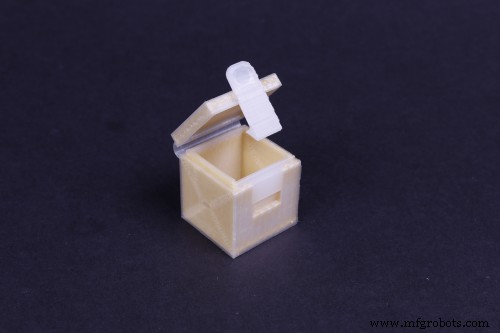
Kevlar®, with its unique blend of high tensile strength and exceptional bendability, is ideal for these applications. While carbon fiber and fiberglass offer higher stiffness, they tend to fracture at the sharp angles required for folding. Kevlar’s flexibility allows it to maintain strength even when bent into tight radii.
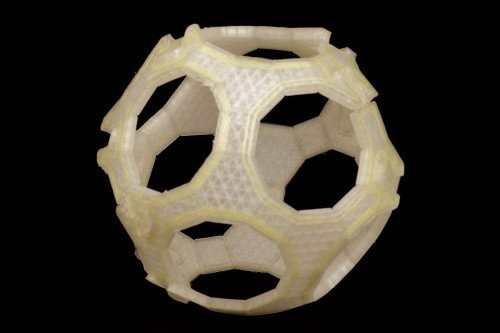
In the example below, the design is optimized to avoid excessive support material and to ensure the part remains strong in all directions.
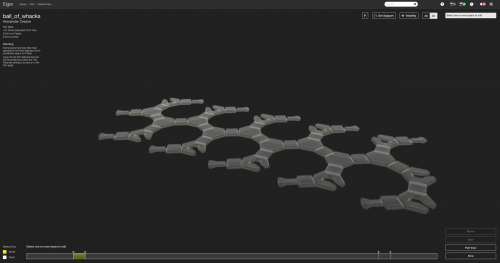
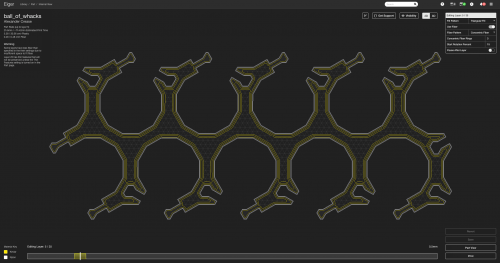
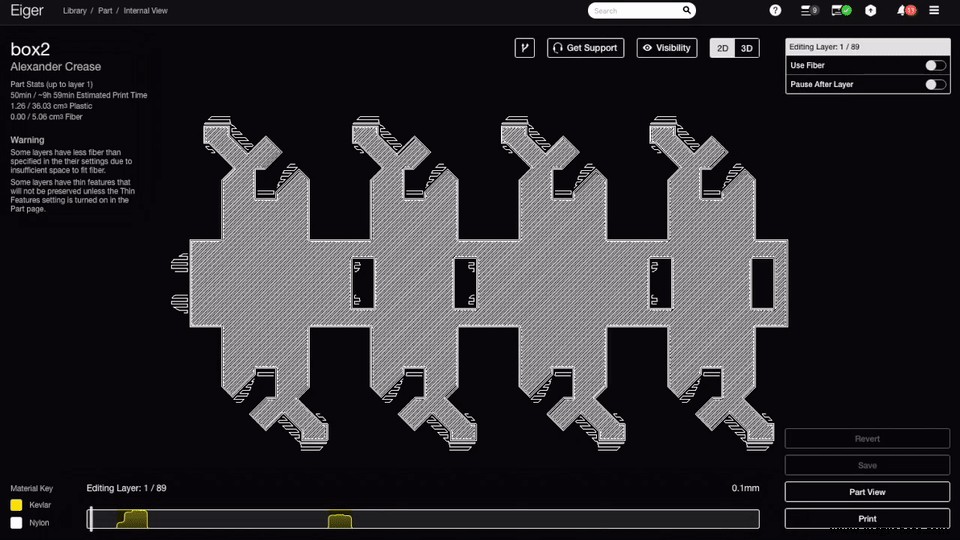
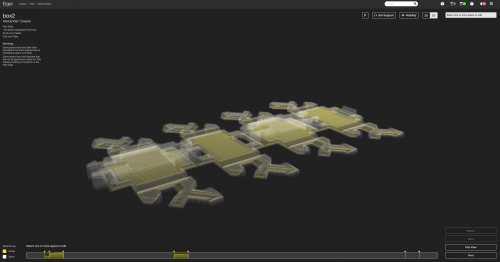
The filament layout in Eiger shows a single layer of concentric Kevlar patterns. This single layer is sufficient to support several dozen pounds while keeping the hinges pliable.
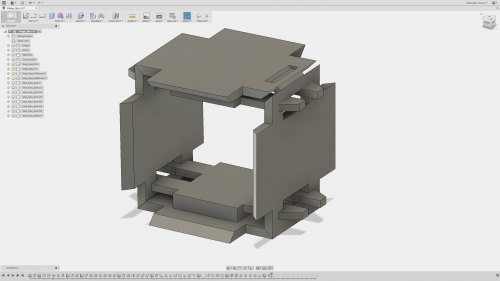
To push the limits, I designed a foldable Kevlar cube in Autodesk Fusion 360 that could support the author’s body weight. The cube uses snap‑fit joints and mortise‑tenon interlocks to lock the faces together once folded.
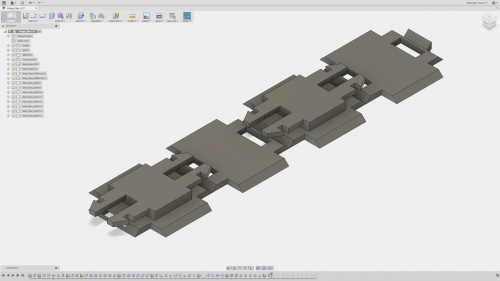
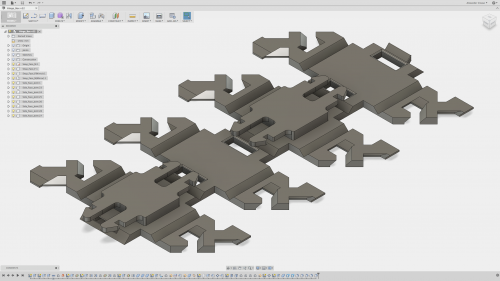
Each face is a separate component during design, allowing precise control of the folding behavior. Twist‑fit tabs and dovetail‑like chamfers on the remaining edges enable the final two faces to lock into place.
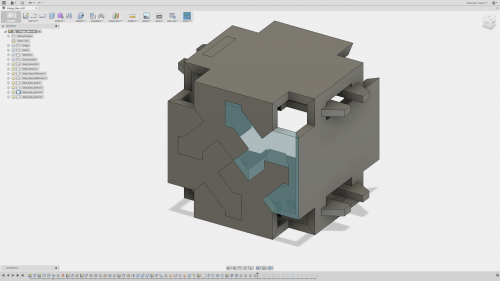
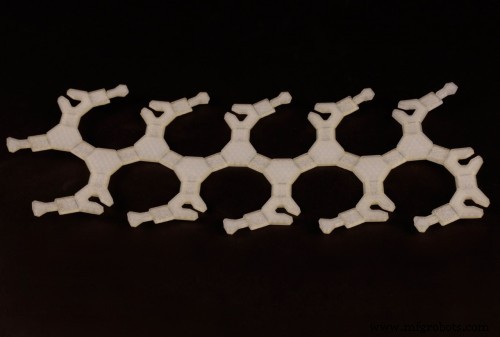
After finalizing the geometry, I flattened the assembly in CAD, capturing the bottom profiles of each component and extruding them by 0.875 mm. This thickness creates a living hinge that accommodates a single Kevlar layer, providing both flexibility and strength.
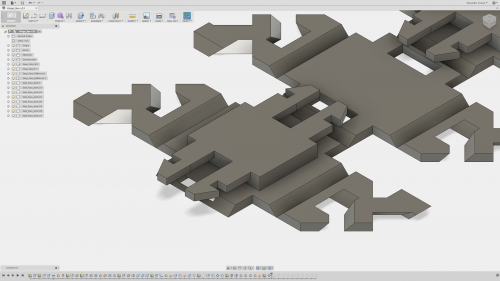
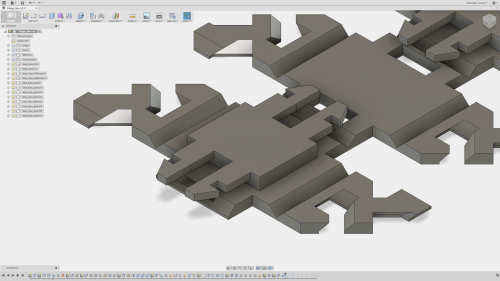
The final print layout is shown below. In Eiger, concentric rings of Kevlar reinforce the first hinge layer, while sandwich panels on each face further stiffen the structure.
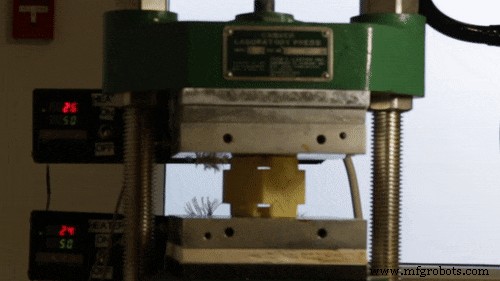
After printing, I assembled the cube and tested its load capacity. The fully assembled cube could support approximately 130 lb (the author’s body weight) without deformation. In a more rigorous test, the cube withstood 300–400 lb before the joints disengaged, after which the structure could be re‑assembled without permanent damage.
These results demonstrate that fiber‑reinforced living hinges enable the creation of 3D‑printed parts that are strong, lightweight, and isotropic. If you’re interested in trying this technique yourself, download the STL or .mfp file below. Want to test the strength first‑hand? Order a free sample part here!
3D printing
- Living Hinges: The Rust‑Proof, Silent, and Customizable Advantage Over Metal
- Living Hinges Explained: Single‑Piece Elastic Joints that Outperform Traditional Hinges
- Webinar: Build Stronger 3D Parts with Eiger Software
- MarkForged Mechanical Features #1: Mastering 3D Printed Living Hinges
- Earth’s Laser & Telescope Tech Can Signal Aliens 20,000 Light‑Years Away
- Custom 6090 CNC Router Built for Ultimate Strength and Precision
- Boost Your 3D Prints: 5 Proven Strategies for Strength and Durability
- Are 3D Printed Parts Really Strong?
- Why Your 3D Printer Is Failing to Extrude and How to Fix It
- Designing Robust 3D‑Printed Living Hinges: A Practical Guide