



Case Study: Transitioning from Aluminum Tool Mounts to Kevlar‑Reinforced 3D Printed Brackets
Autometrix is a global leader in CNC‑based automated textile cutting systems, complemented by advanced pattern‑design and digitization software. Their machines combine unrivaled speed and precision, allowing clients—from apparel brands to sailmakers—to produce high‑volume, high‑quality cuts with exceptional reliability.
About Autometrix
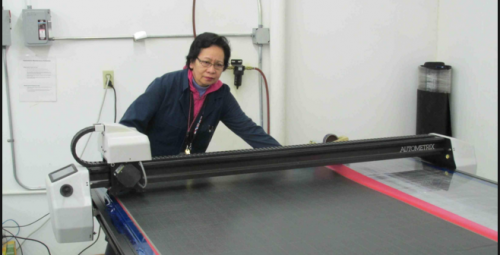
Headquartered in Grass Valley, CA, Autometrix designs, builds, and services large‑scale cutting machines that handle nearly every textile type. Their comprehensive software suite—covering pattern optimization and production management—ensures maximum machine utilization for customers such as Eagle Sports and NOMAR.
"Autometrix’s 7th‑generation cutting systems are fast, precise, and built for single‑ply or low‑ply operations,” says the company. “Our philosophy delivers the smoothest motion and the highest reliability in the industry.”
A Culture of Continuous Innovation
All engineering and production take place in-house at the Grass Valley headquarters, giving Autometrix complete control over quality and fostering a collaborative environment where every team member can contribute ideas. The design team’s prior experience with maker‑grade desktop 3D printers laid the groundwork for exploring industrial‑grade additive manufacturing.
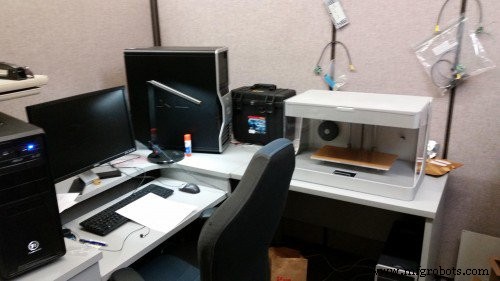
Initial trials with a Robo3D printer demonstrated the potential but highlighted the need for a stronger material. This led the team to the Mark One Composite 3D Printer, which can fabricate Kevlar®‑reinforced nylon parts that meet the machine’s demanding load requirements.
Replacing the First Two Parts
Autometrix’s workflow begins with 3‑D modeling in Autodesk Inventor. The CAD files are exported as STL and imported into Markforged’s Eiger software, where the system automatically layers Kevlar fibers throughout the part. The entire process—from setup to printing—was reported as “hassle‑free,” with engineers able to hit “Print” and let the machine run unattended.
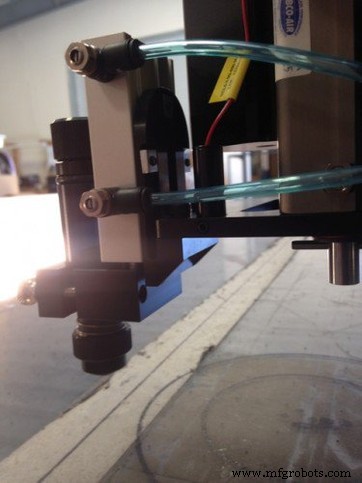
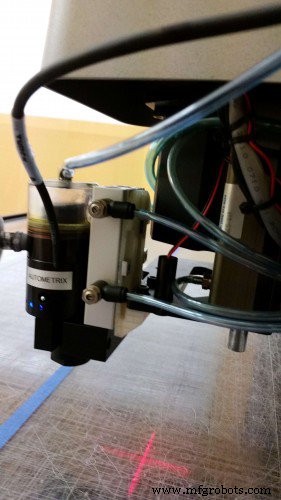
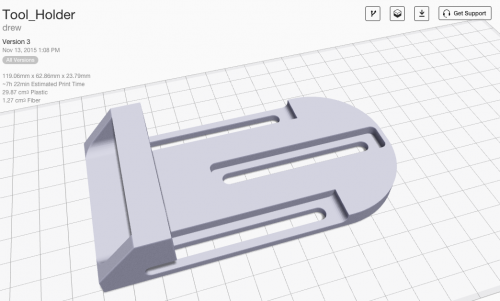
The first components replaced were the cutting head bracket and the cutting‑tool mount—critical elements that secure the tool and endure torsional loads during operation. Kevlar’s high modulus and impact resistance, combined with nylon’s toughness, provide a robust solution that resists cracking and bending under repetitive stress.
Benefits Realized
Composite 3‑D printing aligns perfectly with Autometrix’s design philosophy. By replacing aluminum with Kevlar‑reinforced nylon, the company achieved:
- Reduced lead time: Design-to-fabrication cycle shortened from weeks to hours.
- Lower costs: Nylon cost $6.57, Kevlar $2.03 per part.
- Inventory elimination: Parts are printed on demand, freeing storage and reducing waste.
- Enhanced durability: Brackets withstand torsional forces and occasional impacts without failure.
These advantages ripple across the organization—from engineering and production to the end‑user operators—ensuring that Autometrix’s cutting machines remain reliable and efficient.
Tool Holder Specifications
Size: 119.06 mm × 62.86 mm × 23.79 mm | Print Time: ~7 h 22 m | Nylon Cost: $6.57 | Kevlar® Cost: $2.03
3D printing
- Coloring 3D‑Printed Parts with Wax Crayons: A Novel Post‑Processing Technique
- 3D‑Printed Carbon Fiber: A Superior Alternative to Aluminum Amid Global Shortages
- Elevating Quality Control: 3D‑Printed Tooling Enhances Manufacturing Precision
- Designing Functional 3D‑Printed Bicycle Pannier Adapters with Kevlar CFF
- Reimagining the Go‑Kart: 3D‑Printed Carbon‑Fiber Parts for Unmatched Performance
- Case Study: Autometrix Accelerates Prototype Development with Markforged Mark One
- Aeromotions Accelerates Racing Innovation: 3D‑Printed Carbon Fiber Wing Bases Hit 150 MPH
- Björn Lindwall’s 3D‑Printed Gear Powers His Everest Ascent
- Boosting Throughput with Lights‑Out Manufacturing and Mobile Manipulation – A HIROTEC AMERICA Case Study
- Professional Guide: Dyeing 3D Printed Polyamide Parts for Vibrant Color and Durability