



Aeromotions Accelerates Racing Innovation: 3D‑Printed Carbon Fiber Wing Bases Hit 150 MPH
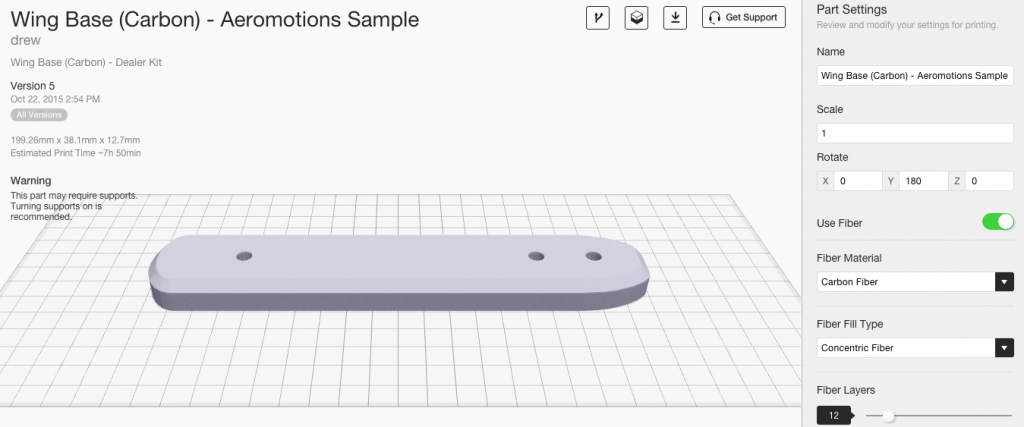
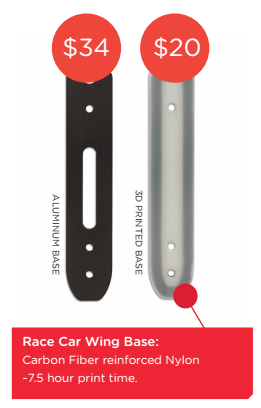
The “wing base” of the Aeromotions Dynamic Wing – the part that specifically adapts the airfoil and wing to the car without damage – is traditionally made from 6061 Aluminum. Ordering aluminum prototypes from vendors typically takes 1‑2 weeks per iteration, slowing the race car company to a halt. With the Mark One Composite 3D Printer™, Aeromotions makes flat, stiff, scratch‑resistant carbon fiber reinforced nylon wing bases in 7‑10 hours, and with a higher strength‑to‑weight than 6061 Aluminum. Using the same SolidWorks‑generated STL files used for manufacturing, Aeromotions added optimized carbon fiber layers just by clicking the “Use Fiber” toggle in MarkForged's software. Now we can adapt our wings to new car models right away, and test new products at track speeds the next day. Speed in design iteration, leading to speed on the track, is key to success for Aeromotions. Creating reinforced 3D printed parts was cheaper, faster, and easier – an unexpected and welcome advantage for a company who specializes in traditional carbon fiber composites. Using the Mark One Composite 3D Printer™ allows Aeromotions to keep their customers on the podium, and reach a whole new audience of racers interested running the newest and latest gear. Aeromotions Wing Base in 6061 Aluminum: Size 199.26 mm × 38.1 mm × 12.7 mm; Lead time ~168 hours; Cost ~$34 each Aeromotions Wing Base in Nylon + Continuous Carbon Fiber: Size 199.26 mm × 38.1 mm × 12.7 mm; Estimated Print Time ~7 h 30 m; Nylon Cost ~$8.40; Carbon Fiber Cost ~$11.41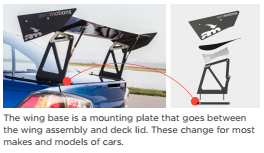
Aluminum is Too Slow; We Couldn't Trust Regular Plastic
Specifications
3D printing
- 3D‑Printed Molds for Low‑Volume Injection Molding – Download the IPC Technical Study
- Eli Lilly BHI Plant: A Reliability Success Story
- Case Study: Honda Lincoln Plant – Engineering Excellence & Reliability
- Rebuilding Reliability at Century Aluminum’s Ravenswood Smelter
- High-Performance Maintenance at CCM Tecate: A Proven TPM Success Story
- 3D‑Printed Sensor Enclosure for Tablet‑Counting Systems: A Practical Use Case
- Case Study: Transitioning from Aluminum Tool Mounts to Kevlar‑Reinforced 3D Printed Brackets
- Case Study: 3D‑Printed Soft Jaws Accelerate Prototype Production at Superstition Machine Works
- Case Study: Swagelok Drives Innovation in Lightfoot Defence’s Military Refrigeration Systems
- Case Study: Nylon AF80 – 3D Printing Revolutionizes Geology Sensor Design