



Innovating Surfboard Fins: 3‑D Printed, Onyx‑Made, Performance‑Driven Design
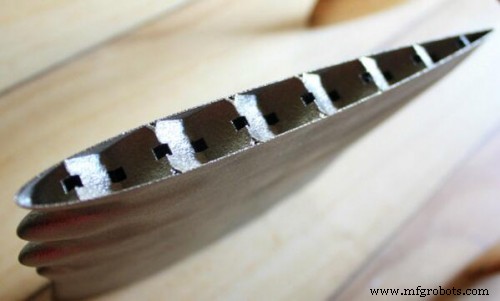
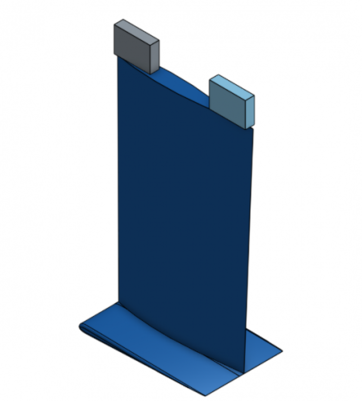
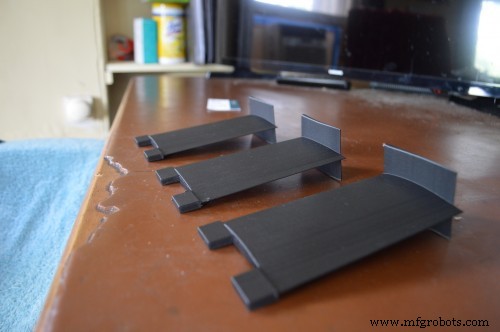
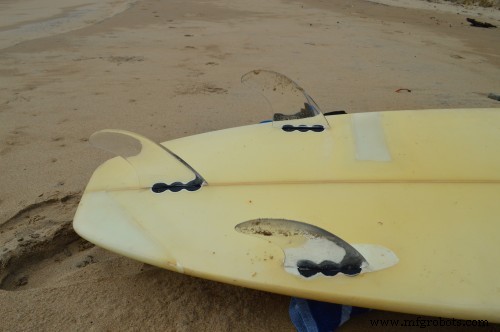
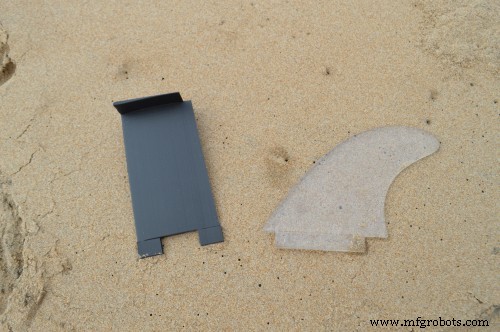
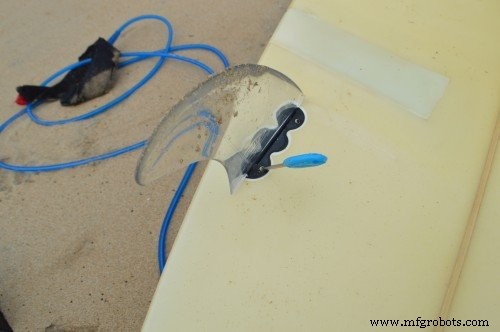
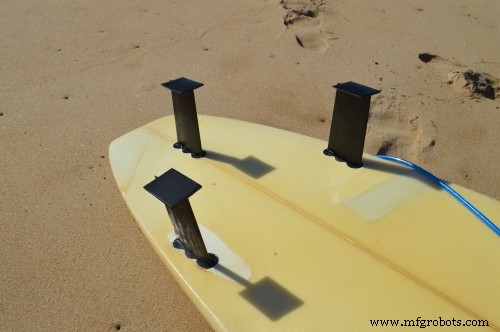
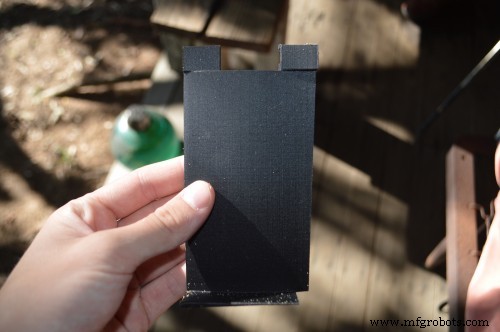
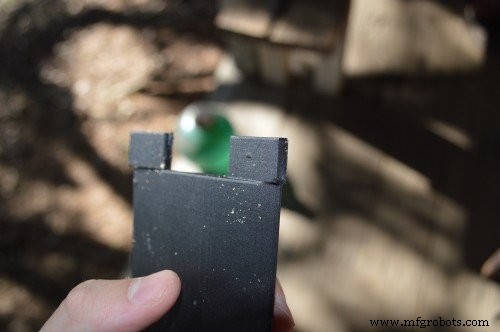
Writer’s Note: I work at Markforged as an electrical engineering intern. While reviewing test surfboard fins in the office before a trip to Australia, I was inspired to create 3‑D printed surfboard fins using the Markforged Mark Two printer. This post details the design, printing, and on‑water testing of these custom fins. Before the 1930s, surfboards relied on heavily convex hulls or the rudimentary act of dragging feet in the water to control direction. The addition of fins revolutionised surfing by stabilising yaw, damping roll, and generating lift during turns—functions analogous to an aircraft wing or tail. Most fins feature an airfoil cross‑section, which maximises lift while minimising drag compared to a simple rectangular shape. Cross‑section of a titanium surfboard fin. As you can see, the shape of a typical surfboard fin is strikingly similar to a symmetrical airplane wing. Despite the optimisation of airfoil profiles, many commercial fins still adopt a classic “dolphin” shape—beautiful, but not ideal for lift. Aerodynamic theory shows that the most efficient wing shape is an ellipse because lift is distributed in an elliptical pattern. A long, narrow wing offers a higher span efficiency, meaning more lift for less drag. The Rutan Voyager, an airplane that circumnavigated the globe without refuelling, exemplifies this principle with its ultra‑long, narrow wings. Why, then, do most surfboard fins feature a swept‑back design? In practice, the sweep reduces the likelihood of a fin becoming tangled in kelp—there’s no supersonic airflow to optimise for, unlike fighter jets or airliners. One of the largest contributors to drag on a fin is the vortex that forms at the bottom edge. By adding small winglets to the fin’s underside, we can suppress these vortices, significantly improving drag efficiency. Modern passenger jets employ similar winglets to great effect. Winglets serve a dual purpose: reducing drag and providing additional pitch stability. When a rider positions their feet too far forward, the board pitches nose‑down; the winglets generate downforce to counteract this. Conversely, if the rider stands too far back, the winglets produce lift, helping maintain balance. Although proper foot placement remains essential, winglets act as a valuable safety net. CAD rendering of the custom fin; the upper blocks serve as mounting points for the board. The test set consisted of three fins printed in pure Onyx—without fiber reinforcement—to mimic the flexibility of cast acrylic fins. Despite their slenderness (maximum thickness 4 mm, trailing edge two layers thick), the prints were robust. The winglet’s two‑layer thickness held up well during shipping and testing. Hydrodynamic surfboard fins printed in Onyx. The fins were shipped to Australia for on‑water evaluation. I used a 7‑foot‑3‑inch board fitted with 120 mm depth fins for comparison. Standard clear‑plastic dolphin‑shaped fins. Onyx fin compared to a standard dolphin shape fin. Surf fins are interchangeable via a hex‑key system; plastic boxes are molded into the fiberglass board. One box on my board cracked, affecting camber. Using a fin key to change fins; the black base is the fin box. The 3‑D printed fins fitted snugly to specification, showcasing the high resolution of the Mark Two printer. With the new fins installed, it was time to hit the waves. Board with Onyx fins installed. The fins were tested in roughly 3‑foot surf—small by most standards. Even on the first ride, the fins enabled clean turns and delivered noticeably greater pitch stability than the standard set. Although I’m not a seasoned professional, I found the feel of the new fins highly satisfying. After the first session, the fins remained largely intact, despite some 2‑layer thick features. Minor marks appeared where the mounting screws contacted the fin’s attachment plugs. Fin after surf, still fully intact. Mark from mounting screw on the top of the fin. On the second day, the fin in the cracked box failed in torsion. Likely causes include a sudden torque from a wipe‑out and insufficient screw tightening. Roughly, a 10 km/h wave can exert about 3 kg of force on a fin, translating to a substantial load on the mounting plugs. While fin failure is common, a fiber‑reinforced fin could improve durability and allow tunable stiffness—a key design parameter for surfboard fins. Overall, the 3‑D printed Onyx fins performed impressively, demonstrating both strength and precision. Editors Note: The .stl files for these fins are available for download—give them a try! If you’re interested in collaborating on projects like this, email us at social@markforged.com.About Surfboard Fins


Adding Winglets

Surfing with the Fins
3D printing
- Surfboard Construction and Design: From Polynesian Roots to Modern Innovation
- 3D‑Printed Surgical Models Enable Historic Separation of Rare Head‑Fused Twins
- What to Make of 3D‑Printed Firearms: Ethics, Technology, and Public Policy
- 3D‑Printed Drone Enables Rapid, Cost‑Effective Data Collection in Antarctica
- Skateboard Part 1: Building Durable 3D‑Printed Wheels
- Revolutionizing 3D Printing: Precise Joinery for Effortless Assembly
- Introducing Inconel 625 for 3D Printing – A Game‑Changing Nickel‑Based Superalloy
- Markforged Introduces 3D‑Printed Copper – Unlocking High‑Conductivity Parts
- Are 3D Printed Parts Really Strong?
- Silencio: A 3D-Printed Tactile Poetry Book for Sighted and Blind Readers