



9 Key Factors for Selecting and Designing Board‑Level Machine Vision Cameras
Integrating a board‑level machine vision camera can unlock powerful AI capabilities while shrinking system size. The following nine factors guide you in choosing the right camera and embedding it seamlessly into your product.
Board‑level cameras bring compactness, flexibility in cable and lens choices, and direct access to core components for efficient heat dissipation. They find applications across medical diagnostics, metrology, robotics, packaging inspection, handheld scanners, benchtop labs, and other space‑constrained systems.
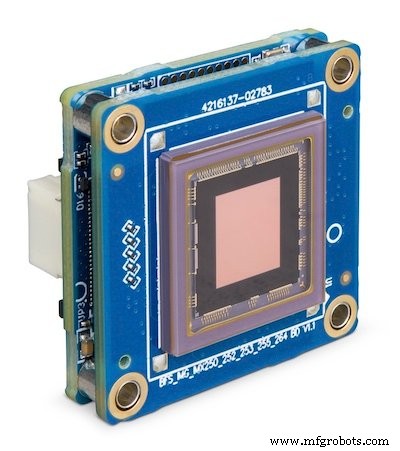
Figure 1. Board‑level cameras can be deployed in many ways, but design decisions influence performance and cost.
Choosing the right embedded vision camera is not trivial. While off‑the‑shelf options may suffice for some projects, board‑level cameras often require careful design to mitigate electrostatic discharge (ESD) risks and physical damage, and to balance cost against functionality.
Below are the nine core considerations that help you tailor a board‑level camera to your project’s needs.
- Feature set and form factor
- Lens mounting flexibility
- Case design for rapid prototyping
- Thermal management
- Interfaces and connectors
- MIPI versus standard MV cameras
- Electromagnetic compatibility
- Off‑the‑shelf carrier boards
- Deep‑learning CPU vs. GPU performance
Let’s explore each factor in detail.
Feature Set and Form Factor
Match the camera’s feature set to the physical footprint. Many board‑level MV cameras are essentially standard cameras stripped of their enclosures, so you must account for the exposed components in your layout. Use compact GPIO and interface connectors to conserve space, and take advantage of customizable FPC cable lengths for optimal integration.
Lens Mounting Flexibility
Unlike fixed‑mount cameras, board‑level units allow you to select optics beyond the typical C, CS, or S‑mounts. You can even integrate the lens mount into a product part or mold it directly into the housing, reducing assembly steps and cost. For low‑resolution, one‑third‑inch sensors, an S‑mount is appropriate; CS mounts suit sensors between one‑third and one inch; C mounts are best for one‑inch or larger sensors.
Case Design for Rapid Prototyping
When the camera is not enclosed within a product, a protective case may be necessary to shield it from the environment. Leverage existing CAD models or generic 3D‑printed plastic cases, using spacers and brackets to secure the unit during early development.
Thermal Management
High‑performance board‑level cameras generate heat without the benefit of a case. Ensure key components such as the sensor or FPGA stay below their maximum operating temperature by incorporating adequate heat sinks. Thermal paste or putty is preferred over pads to minimize mechanical stress.
Interfaces and Connectors
USB 3.1 Gen 1 is a common choice for embedded systems, supporting cable lengths up to 30 m. However, its high‑frequency signals can interfere with 5 GHz wireless devices. Alternatives include GigE for robust data links or MIPI CSI for lower power consumption, depending on your system architecture.
MIPI versus Standard MV Cameras
MIPI cameras can be up to 50 % cheaper but typically lack an FPGA, delivering raw sensor output that requires additional image‑processing pipelines. Standard MV cameras offer built‑in processing (flat‑field correction, pixel‑level noise reduction, etc.) and are compatible with a broader range of ARM boards and PCs.
Electromagnetic Compatibility
Without a protective case, board‑level cameras expose more circuitry to the environment, potentially affecting EMC performance. Products integrating these cameras must undergo separate certification to meet regulatory requirements.
Off‑the‑Shelf Carrier Boards
Vendors often provide ARM‑based carrier or dual‑carrier boards, simplifying integration and cutting time to market. Configurable boards can host multiple USB 3.0 hosts, enabling simultaneous streaming from several cameras while maintaining full bandwidth.
Deep‑Learning CPU versus GPU Performance
Inference on a CPU is typically slower than on a GPU. If low‑latency predictions are critical, a GPU is the preferred option, even when data is offloaded to the cloud for processing. Alternatively, some cameras incorporate an inference engine that runs models locally, offloading the host processor.
By addressing these nine factors, you can confidently select and design a board‑level MV camera that meets your application’s performance, size, and cost targets.
Industry Articles are a form of content that allows industry partners to share useful news, messages, and technology with All About Circuits readers in a way editorial content is not well suited to. All Industry Articles are subject to strict editorial guidelines with the intention of offering readers useful news, technical expertise, or stories. The viewpoints and opinions expressed in Industry Articles are those of the partner and not necessarily those of All About Circuits or its writers.
Automation Control System
- The Evolution and Design of Modern Cameras
- High‑Performance FPGA Accelerator for Embedded Vision with MIPI Cameras
- Axiomtek IPS960‑511‑PoE: All‑In‑One Rugged Vision Controller for Industrial Inspection
- ADLINK Launches NEON‑1000‑MDX: A Turnkey Edge AI Smart Camera for Rapid Industrial Vision Deployment
- Accelerating Industrial Edge Vision with NXP’s i.MX 8M Plus Processor
- How Machine Vision Enhances Food Safety & Reduces Recall Costs for Manufacturers
- Top 5 Factors for Remote Industrial Jobsite Success
- B&R Launches Fully Integrated Smart Cameras for Precise Automation
- SICK Presents Webinar: Customizing Machine Vision to Boost Industrial Automation
- 7 Essential Factors for Crafting High-Quality PCB Designs