



Time‑Sensitive Networking: How TSN Drives Predictable Industrial Ethernet
Time‑Sensitive Networking (TSN) delivers deterministic performance over standard Ethernet, enabling industrial systems to meet the most demanding real‑time requirements. This article explains the core TSN standards, how they work together, and highlights devices that support TSN in practice.
What Is Time‑Sensitive Networking?
In modern factory floors, a single Ethernet link often carries both operational‑technology (OT) traffic—such as machine‑control commands—and information‑technology (IT) traffic—like firmware updates and email. OT data requires strict timing guarantees: fixed latency, minimal jitter, and reliable delivery within hard deadlines. IT traffic, by contrast, is tolerant of delays and is typically best‑effort.
Traditional solutions separate OT and IT onto dedicated networks, but TSN builds determinism directly into Ethernet, allowing both traffic types to coexist on the same cabling while honoring each domain’s needs.
Key TSN Standards
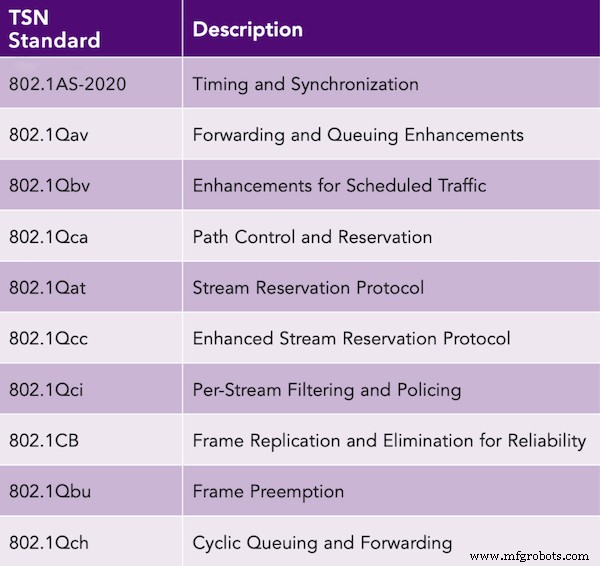
TSN is a family of IEEE 802.1 standards that extend Ethernet with time‑aware features. Below are three foundational standards that engineers often combine:
- 802.1AS – gPTP: A precision time protocol that synchronizes all networked devices to a shared, nanosecond‑accurate clock.
- 802.1CB – Redundancy Protocol: Enables ring topologies that duplicate traffic in both directions, guaranteeing packet delivery without retransmission delays.
- 802.1Qbv – Time‑Aware Shaper: Uses a gate‑control list to schedule traffic into discrete time slots, ensuring low‑latency, low‑jitter delivery for critical streams.
Synchronization with 802.1AS (gPTP)
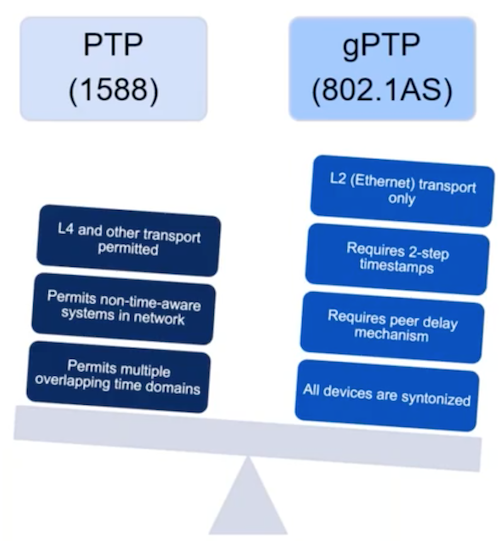
802.1AS builds on the precision time protocol (PTP, IEEE 1588) by introducing a master‑slave hierarchy that anchors all devices to a single time source, often a GPS‑referenced clock. This clock distribution tree guarantees that every node’s local clock runs at the same frequency, enabling precise coordination across the network.
While PTP operates at the transport layer, gPTP is confined to the data link layer, providing tighter integration with Ethernet hardware. Newer gPTP revisions re‑introduce one‑step timestamping and enforce peer‑to‑peer delay measurement, ensuring accurate time dissemination.
Redundancy with 802.1CB
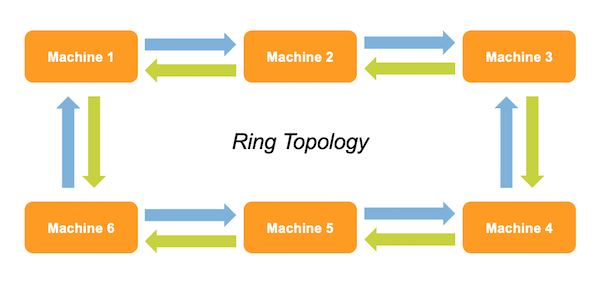
802.1CB facilitates fault‑tolerant ring topologies. When a device, or the ring itself, fails, traffic continues to circulate in the remaining direction, eliminating loss or retransmission delays. The TSN switch automatically duplicates packets, tags them with a sequence ID, and discards duplicates at the receiver, relieving the application layer from complex error handling.
Combining OT and IT with 802.1Qbv
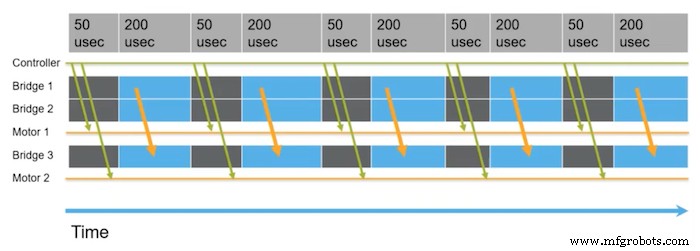
802.1Qbv implements a time‑aware shaper on the egress port of an Ethernet switch or controller. Eight traffic queues are scheduled via a gate‑control list, which can open or close gates in precise time intervals. Software maps each traffic flow to a queue based on priority, protocol, or destination, while the hardware enforces guard bands to prevent packet overruns.
Software Enablement for TSN
NXP provides robust tools to deploy TSN on its Layerscape LS1028A and i.MX RT1170 devices. Open‑source utilities such as tsntool and the Linux tc command configure shapers and queues, while ptp4l supports gPTP. For developers needing a turnkey solution, NXP offers a portable AVB/TSN stack that runs on both microprocessors and microcontrollers.
Practical Example: Synchronous Motor Control
Two motors with interlocking slots must run in perfect synchrony. An i.MX RT1170 MCU uses 802.1AS to maintain a shared clock. Layer‑scaped LS1028A bridges apply 802.1Qbv to schedule motor‑control packets separately from background IT traffic, guaranteeing that control commands arrive on time and the motors stay synchronized.
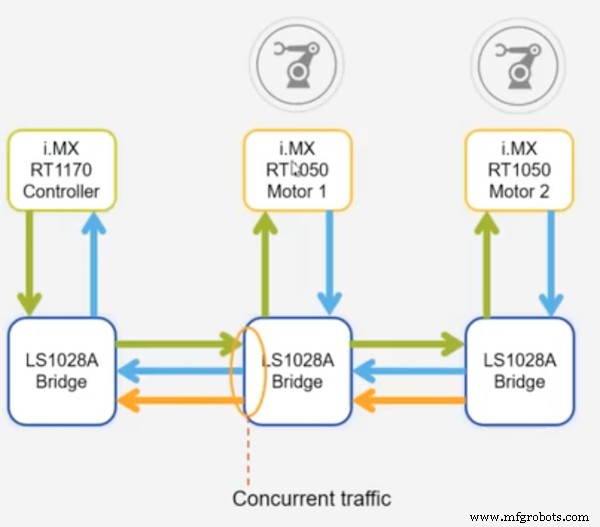
TSN for Shared Ethernet Connections
By combining 802.1AS, 802.1CB, and 802.1Qbv, engineers can build a single Ethernet infrastructure that delivers deterministic, fault‑tolerant communication for OT traffic while still carrying high‑bandwidth IT data. Many NXP processors support these standards out of the box, and both open‑source and commercial software packages simplify configuration and deployment.
For more resources, consult the NXP community forums, application notes, and product datasheets that detail TSN integration.
Industry Articles are a form of content that allows industry partners to share useful news, messages, and technology with All About Circuits readers in a way editorial content is not well suited to. All Industry Articles are subject to strict editorial guidelines with the intention of offering readers useful news, technical expertise, or stories. The viewpoints and opinions expressed in Industry Articles are those of the partner and not necessarily those of All About Circuits or its writers.
Automation Control System
- How Industry Standards Drive Success in IoT Development
- Fundamentals of Facial Recognition: How AI Identifies Faces
- Time‑Sensitive Networking (TSN): Merging OT and IT for Real‑Time Industrial Ethernet
- Condition‑Based Maintenance: Core Principles and Key Advantages
- Mastering Electrohydraulic Valves: Key Design Principles
- Survive and Thrive: Build Your Digital Strategy on Strong Foundations
- Nine Essential Standards for Evaluating Laser Cutting Quality
- Mastering Gear Chamfering & Deburring: Key Techniques for Optimal Performance
- Mastering Calibration Standards: Navigating the Challenges of Precise Measurement
- Understanding the Motoman UP165: Key Features and Benefits