



Understanding Data Flow: From Simplex to Full‑Duplex Communication
Buses and networks are engineered to enable seamless communication between interconnected devices. The movement of information—known as data flow—can manifest in various patterns.
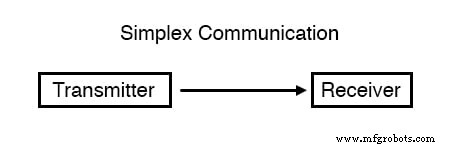
In simplex communication, data travels only one way—from a designated transmitter to a designated receiver. The BogusBus system illustrates this, sending telemetry from a water tank to a remote monitoring station without any return traffic.
If one‑way transmission suffices, simplex is adequate. However, most real‑world applications demand more flexible interaction.
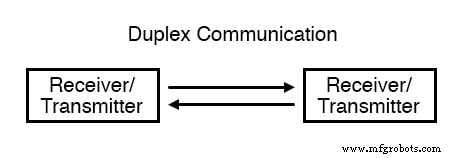
Duplex Communication
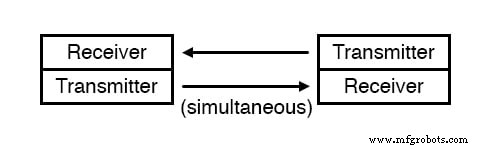
Duplex communication allows data to flow bidirectionally between each device. It is subdivided into two modes:
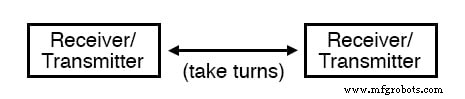
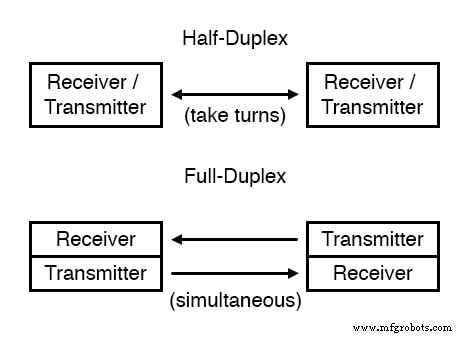
Half‑Duplex
Think of two tin cans connected by a string: either can may speak or listen, but not simultaneously. Half‑duplex is common in walkie‑talkies and certain bus protocols where devices take turns transmitting.
Full‑Duplex
Full‑duplex resembles a telephone conversation where both parties talk and listen at the same time. This is typically achieved using separate channels or wires for each direction, or by allocating distinct carrier frequencies—especially in radio links.
RELATED WORKSHEETS:
- Data Flow Worksheet
Industrial Technology
- MQTT vs. DDS: Choosing the Right M2M Protocol for IoT
- Industrial IoT Communication: 6 Proven Infrastructure Protocols
- Optical Data Communication: Harnessing Light for High‑Bandwidth, Interference‑Free Transmission
- Tableau: Turning Raw Data into Strategic Insight
- Navigating IT Challenges in Modern Manufacturing: Strategies for Digital Transformation
- ERP Systems: The Backbone of Industry 4.0 Data Integration
- Arduino Serial Communication: Mastering UART Basics and Troubleshooting
- 2022 Cybersecurity Landscape: Scope and Impact on IT
- Bringing Legacy Systems into Industry 4.0: Overcoming Multi-Protocol Challenges
- Straton Tutorial 2: Mastering MMS Communication in IEC 61850