



Special‑Purpose Batteries: From Mercury Standards to Fuel, Solar, and Chemical Detection Cells
Special‑Purpose Batteries
In the formative years of electrical measurement, the mercury standard cell served as the benchmark for voltage calibration. Delivering a highly stable output of 1.0183–1.0194 V DC, these cells were prized for their minimal drift—about 0.004 % of rated voltage per year. They were also known as Weston cells or cadmium cells.
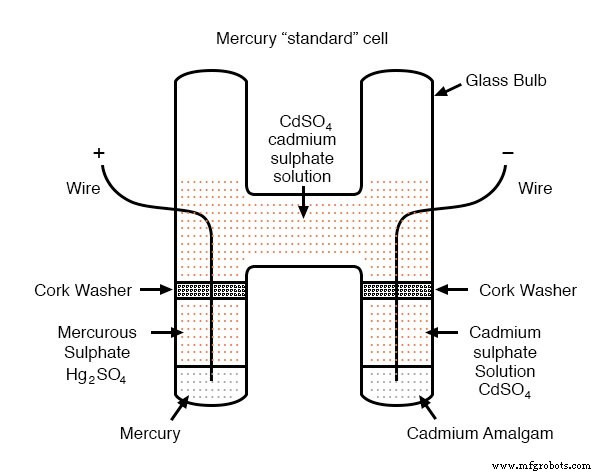
Mercury cells required extremely low current draw (<0.1 mA), and any excess would compromise accuracy. Consequently, they could only be measured with potentiometric (null‑balance) instruments that drew almost no current. Short‑circuits permanently degraded their precision, making them unsuitable for repeat use as standards.
Types of Mercury Standard Cells
Two variants were developed to balance long‑term stability against temperature sensitivity:
- Saturated cells – Offer exceptional long‑term stability (microvolts drift over a decade) but are more temperature‑sensitive (tens of microvolts per °C). Ideal for temperature‑controlled labs where precision over time is critical. Nominal voltage: 1.0186 V.
- Unsaturated cells – Provide consistent voltage across temperature variations at the cost of a yearly decline (~100 µV). Suited for field calibration where ambient temperatures vary. Nominal voltage: 1.019 V.
Today, semiconductor voltage references—such as zener‑diode regulators—have largely replaced mercury cells for laboratory and field standards.
Fuel Cells
Fuel cells are electrochemical power sources that convert chemical energy directly into electricity. Hydrogen‑oxygen fuel cells are the most mature, producing only water and heat as by‑products. When operated on hydrocarbon fuels, carbon dioxide is released, but because operating temperatures are far below those of combustion engines, nitrogen oxides are negligible.
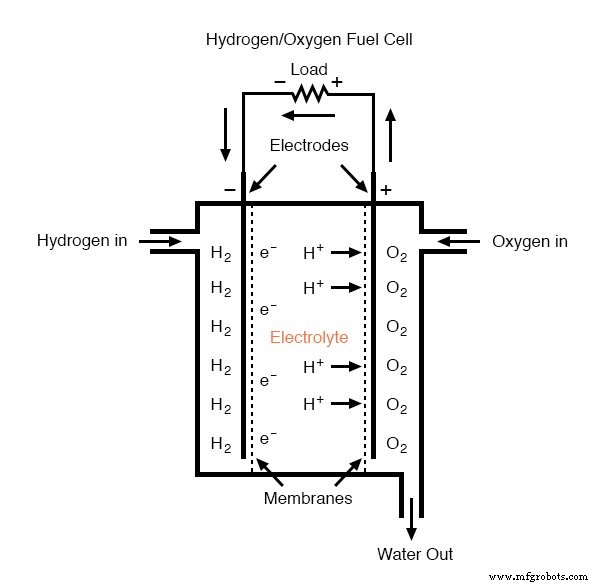
Fuel cells achieve energy conversion efficiencies that surpass the theoretical Carnot limit of internal‑combustion engines, making them attractive for power generation and hybrid electric vehicles.
Solar Cells
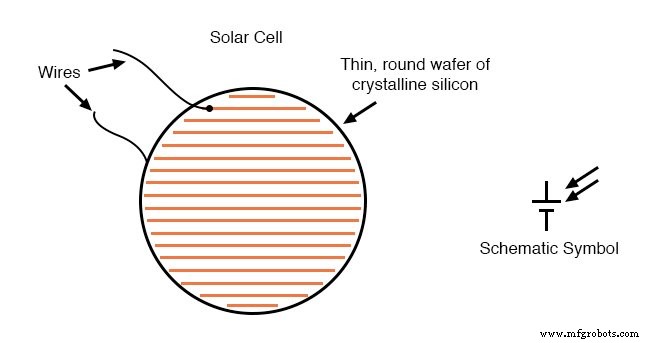
Solar cells, or photovoltaic devices, harvest ambient light through the photoelectric effect. Despite historically low efficiencies, they offer distinct advantages: no moving parts, zero operational emissions, and virtually indefinite lifespan. Current silicon‑based cells still require significant amounts of ultra‑pure silicon, keeping costs high, but ongoing research aims to break this barrier.
Chemical Detection Cells
These specialized voltaic cells generate a voltage proportional to the concentration of a target gas in ambient air. Portable oxygen analyzers, for example, rely on cells designed to react with oxygen, providing real‑time concentration readings. Cell chemistries are tailored to the analyte of interest and typically degrade over time as electrode materials are consumed or contaminated.
Key Takeaways
- Mercury standard cells were once the gold standard for voltage calibration but have been supplanted by semiconductor references.
- Fuel cells use chemical oxidation to produce clean electricity and promise high conversion efficiency.
- Solar cells convert light to electricity with no emissions and long service life.
- Chemical detection cells provide voltage signals that directly reflect gas concentrations in the environment.
Further Reading
- Batteries Worksheet
Industrial Technology
- Exploring Voltage Addition with Series Battery Connections
- Special-Purpose Diodes: Schottky, Tunnel, LED, Laser, Photodiode, and Solar Cell Innovations
- Solar Cells: From Early Experiments to Modern Photovoltaics – Technology, Production, and Future Outlook
- Solar Cell Types Explained: Functionality, Design, and Practical Applications
- Build a Basic Solar Cell: Step‑by‑Step Guide to Photovoltaic Technology
- HHO Fuel Cell Explained: A Comprehensive Beginner’s Guide
- Inside the Making of Car Batteries: From Cells to Power Packs
- Enhancing Patient Safety: Advanced Welding Cells in Healthcare Manufacturing
- ABB FlexArc: Standardized Robotic Welding Cells for Optimal Productivity
- Fanuc Work Cells: Boost Productivity with Precision Positioners