



Step‑by‑Step Guide to Wiring an SPDT (Single Pole Double Throw) 3‑Way Switch
Installation of SPDT – 3-Way Switch (NEC) AKA 2-Way Switch (IEC) for 120/240V & 230V AC – 3-Way & 2-Way Circuits
What is SPDT Switch?
SPDT (stands for Single Pole Double Throw) switch is used to control the ON and OFF operations of two circuits e.g. household appliances such as lighting points etc. It is used to control a single operation either ON or OFF between two electric circuits such as corridor or staircase wiring installation where a lighting point is controlled from two or more places.
Good to know: SPDT switch is known as single pole, double throw or Three Way switch in North America (US – NEC). While it is known as Two Way switch or Double Way Switch in the Europe, UK and IEC following countries.
Caution: Switches are always wired on the Phase (Line or Hot) wires same as fuses.
- Related Post: How to Wire Single Pole, Single Throw (SPST) as 2-Way & 1-Way Switch? IEC & NEC
Symbol of SPDT Switch
The following symbols represent the basic single pole double throw switches.
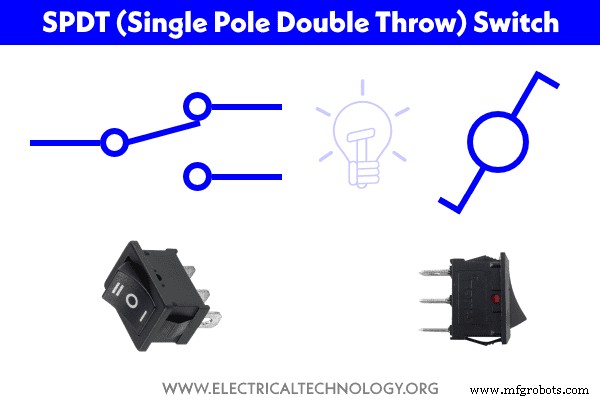
Construction of Single Pole, Double Throw Switch
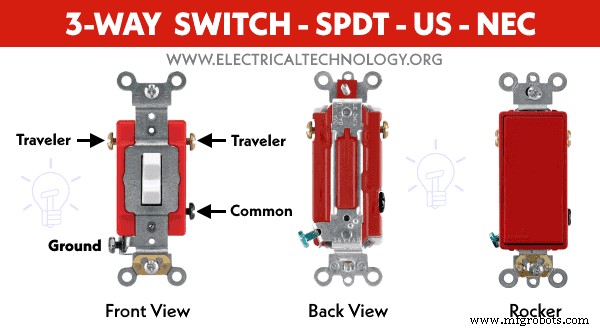
The Single Pole Double Throw switch has mainly three terminals viz one is common (incoming HOT) and the rest two as travelers and an extra terminal as ground pin in North America. In the UK and IEC following counties, the single pole switch has only three terminals without ground pin.
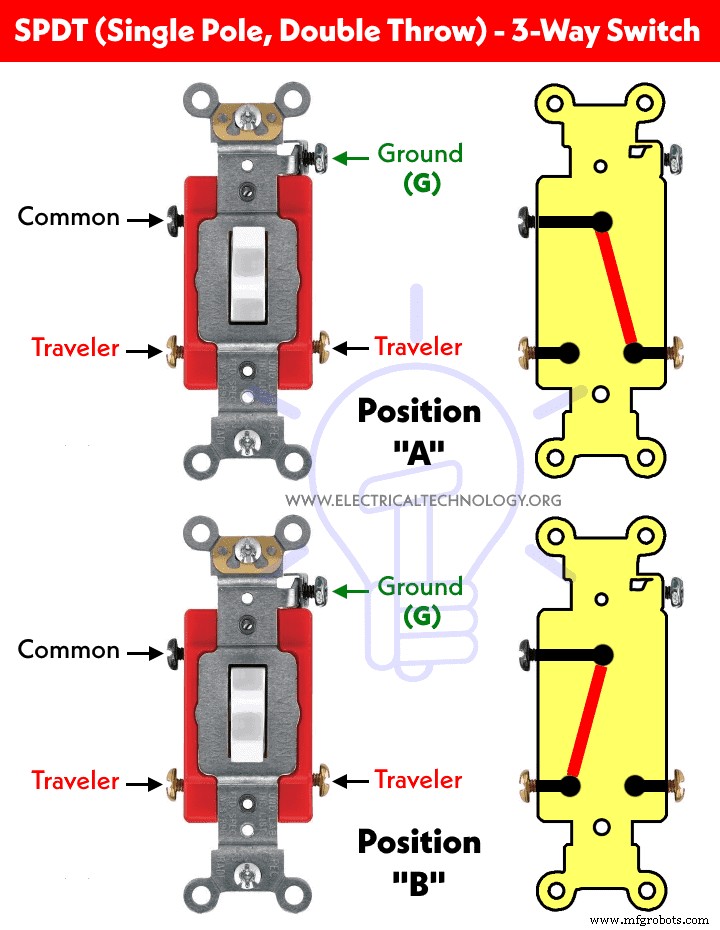
The following two figures show the main difference between US and UK single pole, double throw (SPDT) switches.
Three-Way Switch – SPDT, Single Pole, Double Throw – US – NEC
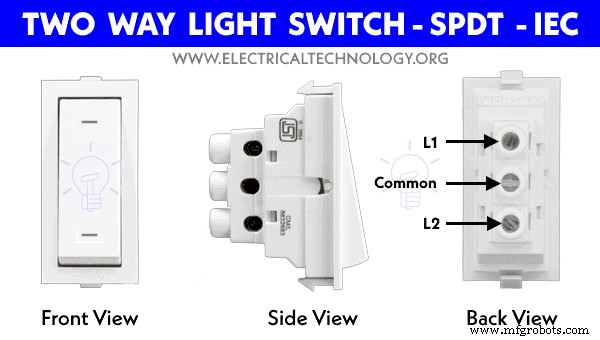
Two- Way Switch – SPDT, Single Pole, Double Throw – UK – IEC
Let’s begin and see how to wire them one by one for different load points.
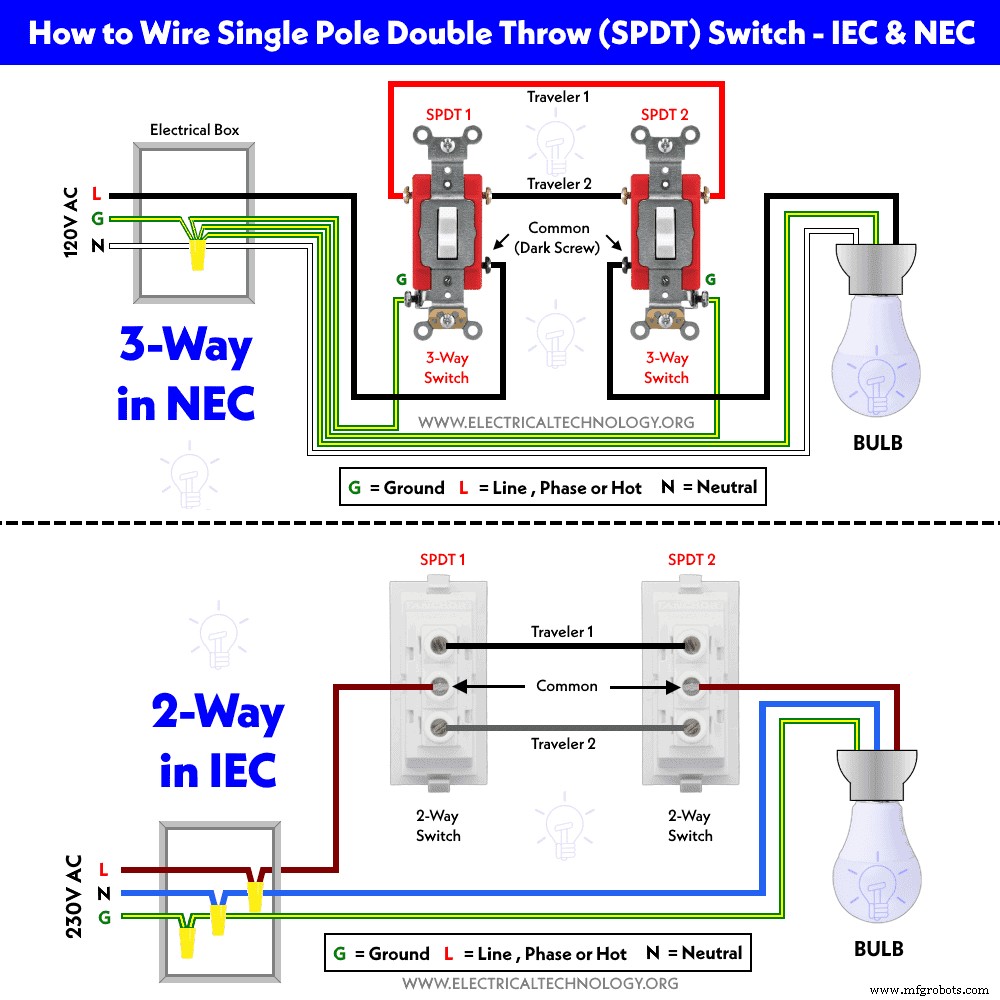
Wiring Single Pole, Double Throw 120V/240V Light Switches – NEC
How to Control a Light Bulb from Two Different Places using Single Pole, Double Throw Switches?
The following wiring diagram shows that a lighting point is controlled from two different places using the SPDT swishes. As shown, there are three incoming wires from the breaker in the electrical box e.g. L (Line or Hot), N (Neutral) and G (Ground).
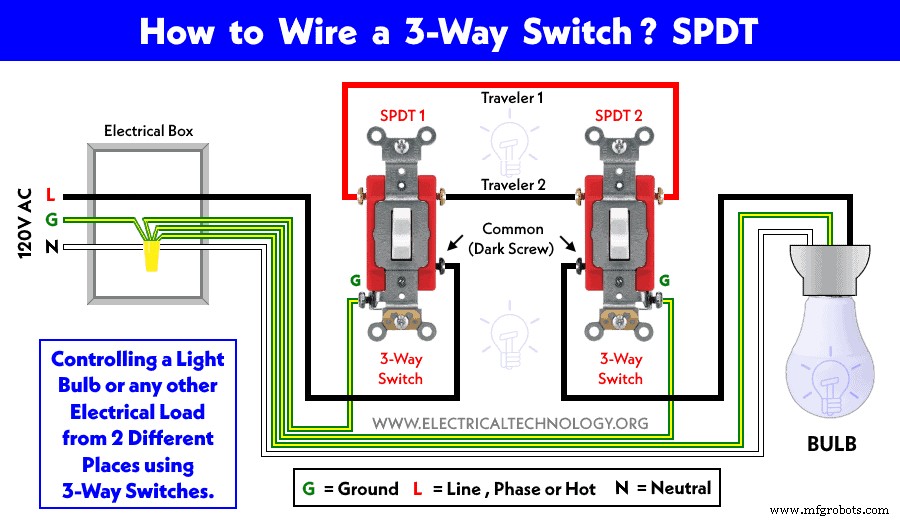
The ground wire is connected to the Ground terminals of both switches (Green with yellow stripe). The Line (as hot) is connected to the line terminal (common as black screw) of the first switch. The brass terminals of both switches are connected through travelers wires. The common terminal of the second switch is connected to the light bulb. Keep in mind that neutral wire is never connected to the switch.
Finally, The neutral and ground wire is connected to the light bulb holder. This way, the LED lamp is controlled from two different locations, the same as the staircase wiring configuration. This means, the same light bulb can be ON and OFF from two different locations using different SPDT switches.
How to Control an Outlet from Two Places using SPDT Switches?
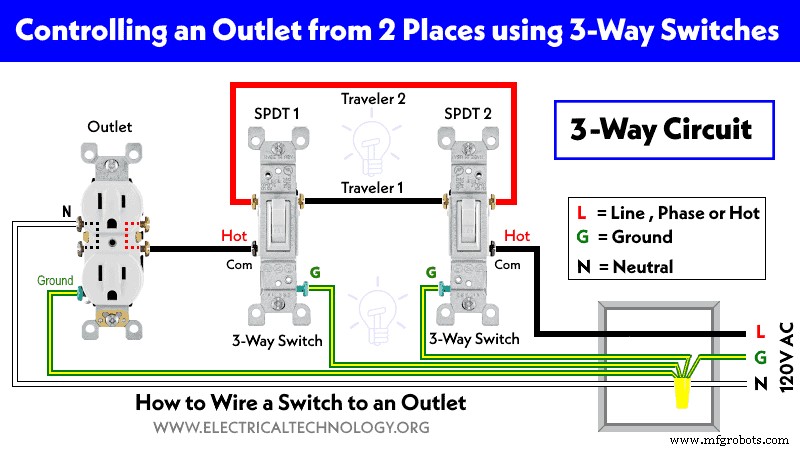
The SPDT switches can be used for different load points such as standard outlets receptacles etc. The following wiring diagram shows how to wire and control an outlet receptacle from two locations using a single pole, double throw switch.
How to Toggle a Water Heater between 120V and 240V using SPDT (3-Way) Switch?
The following wiring diagram shows a 4500 Watts heater is connected through a 30A, double pole circuit breaker and controlled via 30A, 3-way switch. The first line as Hot 1 (black color) is directly connected to the water heater while the second hot as Hot 2 (read color) from the breaker is connected to the first traveler terminal of the SPDT switch. The neutral wire is connected to the second traveler terminal of the 3-way switch. The ground wire and the common (dark screw terminal) of the three-way switch is connected to the water heater.
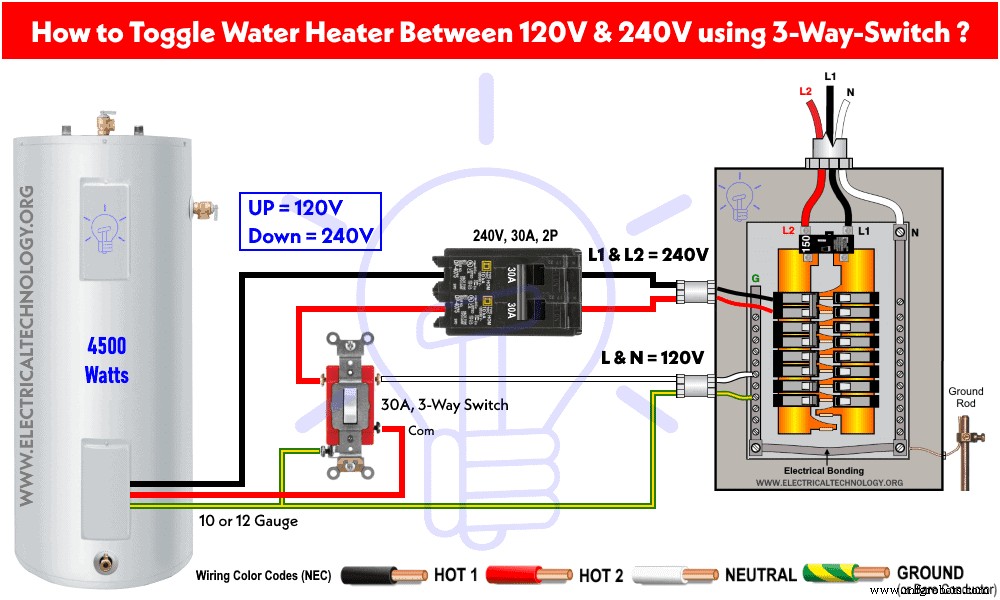
This way, the up position of the switch will run the water heater on 120V (Via Hot 1 and Neutral) while the down position will run the heater element on 240V AC via Hot 1 and Hot 2.
Wiring Two-Way SPDT Light Switches for 230V Circuits – IEC
A 1-Gang, single pole, double throw (also known as One-Gang, Two-Way switch) followed by IEC (International Electrotechnical Commission) is totally different from SPDT toggle & light switches by NEC (National Electrical Code) standards.
The two way switch has three terminals as shown in the above illustration. Mostly, the middle terminal is common and should be connected to the incoming phase supply while the rest two terminals (L1 and L2) are connected to the same terminals of the second two-way switch. The middle terminal of the second switch should be connected to the load point. This whole process is shown in the following wiring diagrams.
How to Wire a Two-Way Switch to a Light Bulb?
In the following wiring diagram for 230V AC supply system – IEC, a 1-gang two way switch is used to control a CFL or LED light bulb from two different locations using two-way switches. It clearly shows that the incoming Phase (Line) wire (brown Color) is connected directly to the common terminal of the first switch. The L1 and L2 terminals of both switches are connected through strappers (Black & Gray) Wires. The common terminal of the second switch is connected to the light bulb. Finally, the Neutral (Blue) and Ground (Green with yellow stripe) is connected to the light bulb holder.
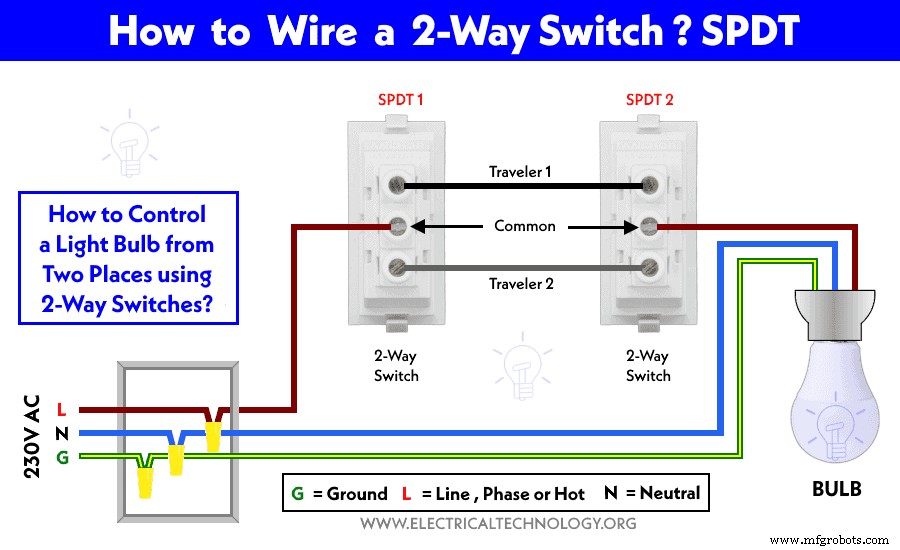
This way, the light bulb can be controlled for ON and OFF operations from two different places using two-way switches.
How to Wire a Two-Way Switch to a Socket?
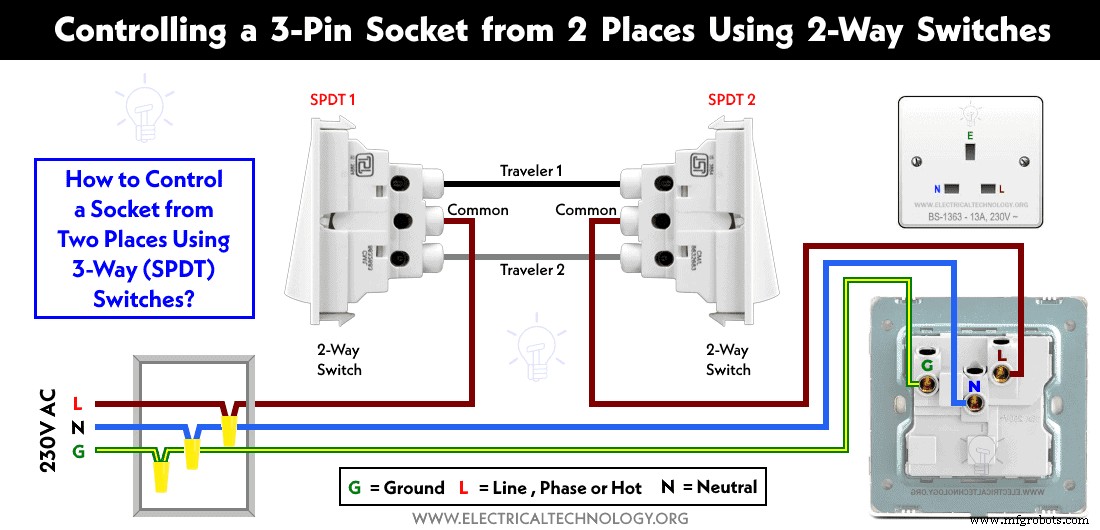
As stated above, the two-way switch can be used to control a single circuit (load point) from different locations such as light bulbs, fans, socket outlets etc. The following wiring diagram shows how to wire and control a 230V British socket from two different locations using two-way switches.
- The brass screws should be connected to the Hot (line, live or phase) wire using the IEC & NEC Wire color codes. In case of SPDT and 4-Way (Intermediate switches), black colored screws are used for Hot or common terminals. In short, the color for common terminal is different than other terminals.
- The silver screws should be connected to the Neutral wire (in case of switched outlet)
- The green screw should be connected to the ground / earth wire (Green/Yellow or naked wire)
- If there are no color coded screws on outlets, refer to the user manual or contact a licensed electrician.
- Neutral Wire is not required in 240V outlets wiring (US) Also, Neutral is never connected to the switches.
- Use the suitable voltage and ampere rating of switch with appropriate wire size and proper size MCB according to the load rating.
Precautions:
- Switch off the main circuit breaker to make sure the power supply is OFF before wiring an existing or new outlet or switch with an electrical/junction box.
- Contact the authorized and licensed electrician for switch installation if you are not sure about the wiring diagrams.
- The author will not be liable for any losses, injuries, or damages from the display or use of this information or if you try any circuit in the wrong format. So please! Be careful because it’s all about electricity and electricity is too dangerous.
Industrial Technology
- Step-by-Step Guide: Wiring Two Switches in Series to Control a Single Light
- Step-by-Step Guide: Wiring a Single-Location Light Switch to Control a Bulb
- Professional Wiring Guide for Combo Switch/Outlet Devices – Diagrams & Installation Tips
- How to Wire a Double 3-Way Combination Switch Device: A Complete Installation Guide
- Step‑by‑Step Guide to Wiring a 3‑Way Combo Switch with Grounded Outlet
- How to Wire a Double Switch (2‑Gang, 1‑Way) – IEC & NEC Guide
- Wiring 4‑Way (NEC) or Intermediate (IEC) Switches as 3‑Way: A Step‑by‑Step Guide
- Mastering DPDT Switch Wiring: Step-by-Step Guide for 120V/240V Control
- Professional Guide to Wiring a DPST Switch for 120V/240V Circuits
- Step-by-Step Guide: Wiring an SPST (Single Pole, Single Throw) as a 2-Way Switch