



Build a Simple AM Radio Receiver: A Step‑by‑Step Guide
Have you ever used a walkie-talkie or an audio amplifier? Or are you into radio listening as a hobby, switching from one FM/AM band to the other? For example, some typical applications use the AM receiver circuit. Also, they are essential components of radio systems, in general.
So today, we introduce a simple AM radio receiver circuit, including the what-and-how of construction.
1. What is an AM Receiver?
To begin with, AM stands for amplitude modulation. It is a strategy of electronic communication used in the transmission of data. Often, the most used transmission medium is via a radio carrier wave. However, in this modulation strategy, the radio carrier wave changes in amplitude with each message signal it transmits.
Therefore, the AM or radio receiver is an electronic device for receiving radio waves and making them usable. These could be moving images, digital data, or sound. However, more common is in reproducing sound transmitted via radio broadcasting stations.
AM receivers are of two stages: intermediate frequency and radiofrequency. For example, using a common-base Armstrong oscillator of the variable frequency helps you send RF to an IF receiver. Although, this variable frequency is different from the RF carrier frequency.
However, tuning to the receiver channel simultaneously adjusts the RF and adjacent oscillator signals. Therefore, you have stations providing fixed carrier frequency to enable sufficient selectivity.
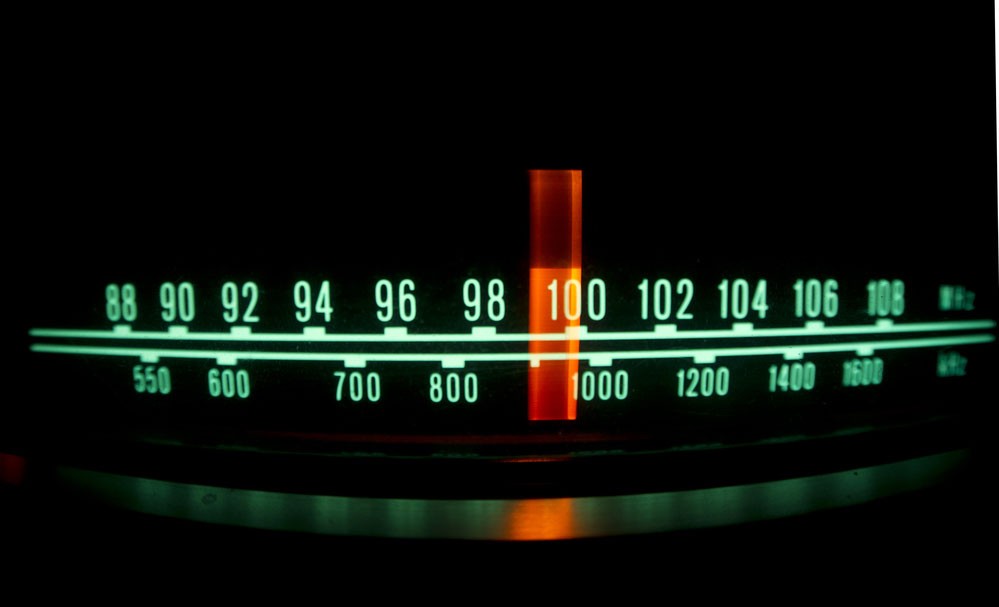
(AM receiver of a radio)
Types of AM Receivers
In most cases, the primary AM receivers in existence are of superheterodyne design.
A typical superheterodyne AM receiver comprises six components namely :
- a radio frequency amplifier,
- a wire antenna,
- an IF section,
- a mixer/local heterodyne oscillator,
- a detector/amplifier.
Furthermore, the above subsystems are crucial for building a radio receiver. For instance, we have the simpler tuned radio frequency circuit or a TRF electronic amplifier circuit.
So, going on, we elaborate more on the types of AM receivers which include:
- TRF Amplifier.
- AM Detection.
- Superheterodyne AM radio receiver.
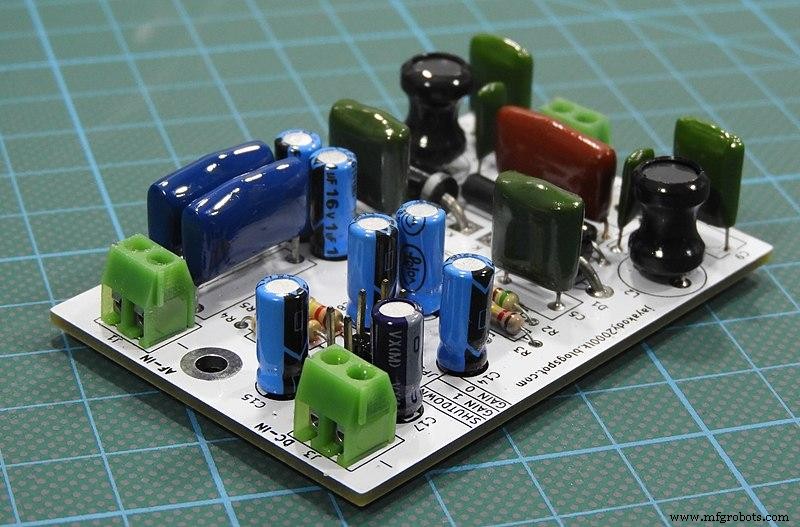
(An example of an audio power amplifier circuit built using TPA3001D1)
TRF Amplifier
Usually, a radio frequency amplifier has a design that receives a narrow band of frequencies. One example of this narrow-band frequency is an AM band with a single radio station.
So, to achieve short wave bands from the tuned circuit, you adjust the resonant frequency. In addition, the input filter helps you exclude any unwanted input signal.
By default, though, the frequency range of AM shortwave bands is between 500kHz to 1500kHz. Therefore, with the baseband signal at about 5kHz, each station needs at least 10kHz within this spectrum.
In conclusion, there is a variation in bandwidth with the tuning of the circuit.

(A block diagram illustrating the operation of a tuned radio frequency receiver).
Superheterodyne Receiver
This radio receiver is responsible for boosting the RF audio signal sent to the mixer. Generally, it amplifies several stations simultaneously, though with an amplified input noise ratio. Still, it enables tuning in broadcast bands.
On the other hand, the mixer has another input in high-frequency sine sound waves. This result is largely due to the action of the local heterodyne oscillator. However, these sine sound waves are often above 455kHz (the standard station carrier frequency for AM receivers). So, the mixer combines inbound carrier waves with the oscillator to resolve this. As a result, it then creates a sum and difference frequency.
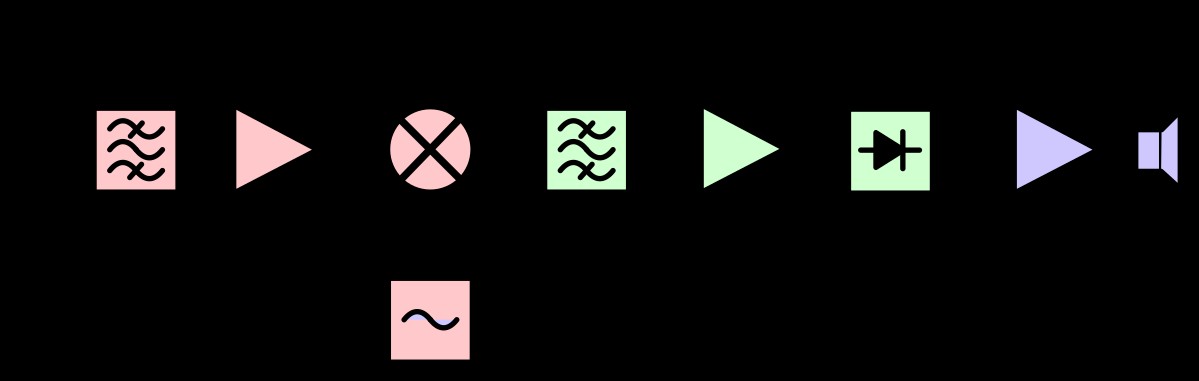
(A block diagram of a superheterodyne receiver operation).
However, an ideal mixer combines two weak signals and brings about a couple of new frequencies. These include:
- The original dual frequencies.
- A DC level.
- Harmonics of the dual input frequencies.
- The sum and difference of these two frequencies.
- As well as the sum and difference of the fundamental harmonics.
The two primary station frequencies are the Local Oscillator Frequency and Image Frequency respectively.
AM Detection
We have the coherent radio receiver among the basic AM detection techniques and the non-coherent one. However, the more straightforward approach is the non-coherent type of radio receiver.
By contrast, the non-coherent method does not depend on carrier signal regeneration. With the aid of a diode and electronic audio filters, you detect and remove the modulation envelope.
On the other hand, the coherent detector stage depends on regenerating and mixing the carrier and AM signals.
In general, AM detection is into three such as:
- Envelope detector.
- Square detector.
- Synchronous detector.

(A circuit diagram of the envelope detector. It shows the connections of a bypass capacitor in parallel to the coil and a diode in series).
2. How to Construct a Simple AM receiver circuit
To construct a simple AM radio receiver circuit, you first need to assemble a few hardware components, thus:
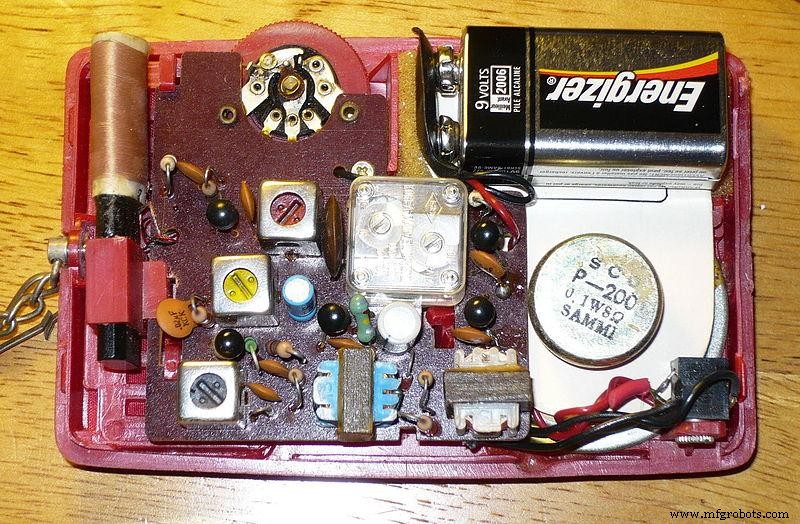
(A top view of a simple AM radio receiver circuit using five transistors).
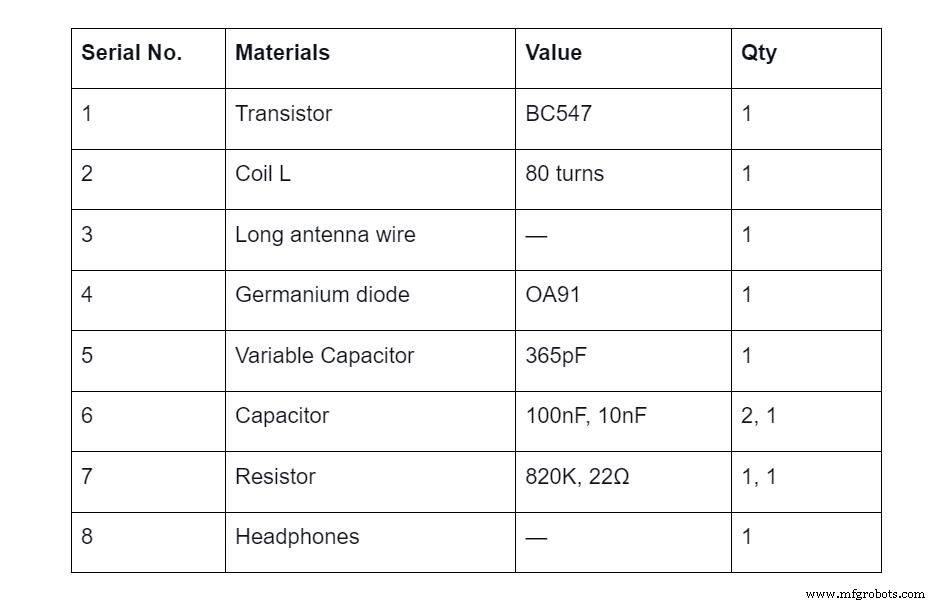
Materials needed for the circuit
Circuit Design
Furthermore, we illustrate the design of a simple AM receiver circuit with the aid of a video attached below.
Circuit Operation
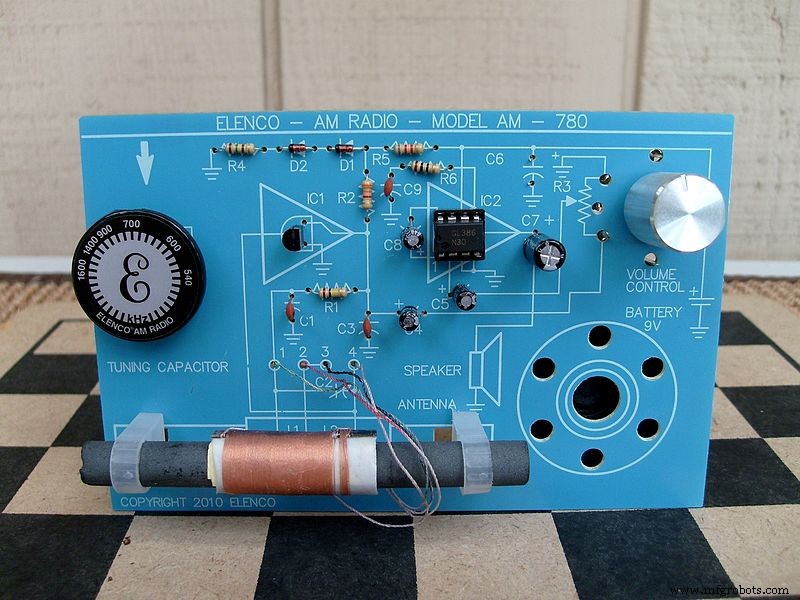
(A schematic showing a simple AM radio model).
So before constructing a simple AM receiver circuit, it is essential to have a good understanding of its working principles. For that reason, we have included a block diagram above for visual representation.
For the primary circuit, you need a single transistor, a 365pF variable capacitor, and the coil L, amongst others. These essential passive components, in conjunction, help to send signals via the wire antenna. Therefore, they work as a signal receiving cable.
Going further, the OA91 diode D1 identifies the original radio signal. However, the signal is relatively insignificant. As a result, the BC547 transistor amplifies the weak signal.
On the other hand, you need a coil L of 80turns of 26 s.w.g. So, you may twist the enameled copper coil of wire on a cardboard tissue paper roll to achieve this. Otherwise, open up an AM compact radio and use the coil wound inside.
In summary, a fully functional radio receiver requires an RF component area, the IF section, and a mixer (RF-to-IF converter). Also, it requires a demodulator and, of course, an audio speaker.
The demodulator, though, only functions with an incoming radio signal when converted. And this conversion of incoming radio signal is from carrier frequency to intermediate frequency. In the end, the radio receiver optimizes and utilizes the converted audio frequency.
3. AM Receiver Applications
Typically, a simple AM receiver detects amplitude fluctuations in radio waves. An example is in a crystal radio circuit like the customized crystal earpiece. Here, it operates at a frequency response resulting in amplification changes in signal voltage. Other applications include:
- In electronic analog telecommunication systems.
- Another common use is in the wireless transmissions of data via radio waves.
- In addition, it is crucial in AM radio broadcast bands and radio communication.
- Also, for use in analog mixers used in audio control.
- It is vital for use in two-way aircraft radios.
- Furthermore, it is a significant part of devices like computer modems, remote controls, etc.
- For use in dispatch radio systems of the navy and police.
- Also, there are some outdated applications of AM receivers. Some include telephones, transmitting Morse codes, controlling television screen pixels, etc.
Conclusion
The AM receiver is an electronic system for modulating amplitude signals. AM receivers are a mainstay in modern technology because they are essential in radio listening and other radio transmission applications. Other diverse uses range from radio communication and data transmission to audio amplification.
Now, we have learned how to build a simple AM receiver. However, if you need further directions on handling more complex projects, contact our team for assistance.
Industrial Technology
- Circuit With a Switch: A Practical Guide to Basic Electrical Circuits
- Building Resistor Circuits: From Alligator Clips to PCBs
- Inductive Proximity Sensor: Circuit Design, Functionality, and Practical Applications
- Build a Robot with Raspberry Pi and Python: A Complete Guide
- Enhancing Industrial Safety Through IoT and IIoT Integration
- Build a Mini Hydroelectric Power Station with a DIY Turbine – Step‑by‑Step Guide
- AM Radio Circuit Blueprint: Mastering Simple Transistor-Based Receiver Schematics
- RFID Wallets: How Smart Wallets Protect Your Identity and Money
- Mastering Tone Generator Circuits: How They Work & How to Use Them
- Master Resistor Circuit Diagrams: Expert Guide to Series, Parallel, and Hybrid Connections