



Laser Cutting: Expert Guide to Technology, Materials, and Industry Applications
Laser cutting has emerged as a cornerstone of modern manufacturing, redefining precision, efficiency, and design freedom. By directing a focused, non‑contact beam of light across a wide spectrum of materials, it delivers immaculate cuts with minimal distortion, even on the most intricate geometries. In this guide we unpack the science behind laser cutting, compare the leading laser technologies, and show you how to select the right system and settings for your project.
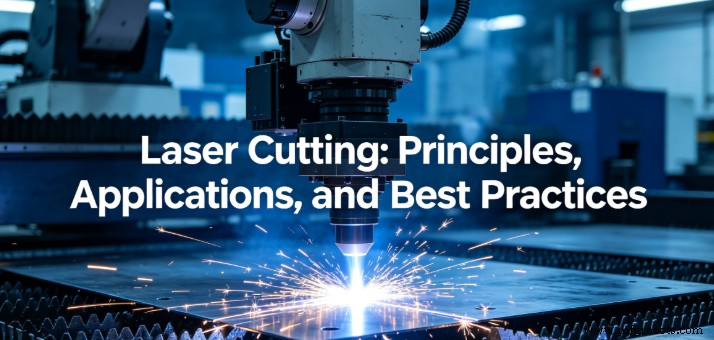
What Is Laser Cutting?
Laser cutting is a high‑precision, non‑contact manufacturing process that uses a focused laser beam to cut or engrave a wide range of materials. It is now standard in aerospace, automotive, electronics, signage, and many other sectors.
Key Advantages
- Ultra‑tight tolerances and fine detail
- Zero mechanical stress—no warping or burrs
- Fast throughput for both thin sheets and medium‑thick workpieces
Types of Laser Cutting Technologies
CO₂ Lasers
Ideal for non‑metal substrates such as wood, acrylic, and most plastics. They provide cost‑effective cutting up to medium thicknesses and produce smooth, decorative edges.
Fiber Lasers
Specialized for metals—including stainless steel, aluminum, and copper—fiber lasers offer higher cutting speeds, lower maintenance, and excellent edge quality, especially for precision parts in automotive and industrial applications.
Other Advanced Options
- Nd:YAG and disk lasers for high‑power industrial cutting and micro‑machining
- Ultrafast / pulsed lasers for ultra‑precise cuts with negligible heat‑affected zones
Materials Best Suited for Laser Cutting
| Material | Optimal Laser Type | Notes |
|---|---|---|
| Stainless Steel | Fiber (up to 20 mm thickness) | Requires higher power for thicker sheets |
| Aluminum | Fiber | Higher power needed for thick workpieces |
| Acrylic & Plastics | CO₂ | Produces smooth, decorative edges |
| Wood & MDF | CO₂ | Fire‑risk mitigation required |
| Copper & Brass | Fiber / high‑power CO₂ | Reflective surfaces need specialized optics |
Laser Cutting vs. Other Cutting Methods
| Feature | Laser Cutting | Plasma Cutting | Waterjet Cutting |
|---|---|---|---|
| Precision | High | Medium | High |
| Heat‑Affected Zone | Minimal | Moderate | None |
| Material Range | Metals + Non‑metals | Metals | Almost all |
| Cutting Speed (thin sheets) | Fast | Fast | Slower |
Pro Tip: For high‑precision metal parts, fiber laser cutting is usually the most efficient and cost‑effective solution.
Optimizing Laser Cutting Parameters
Successful cuts hinge on tailoring power, speed, focus, nozzle distance, and assist gas to the specific material and thickness. Oxygen is typically used for steel, nitrogen for stainless, and pure aluminum gas for clean aluminum cuts. Small test runs help fine‑tune kerf width and edge quality while minimizing thermal distortion.
Industry Applications
- Automotive Components: Brake parts, brackets, panels
- Aerospace Parts: High‑precision thin‑metal components
- Signage & Decorative Items: Acrylic signs, artistic patterns
- Electronics & Micro‑machining: PCBs, small metallic parts
Safety & Best Practices
- Always wear laser‑safety goggles rated for the laser’s wavelength.
- Maintain adequate ventilation to remove fumes.
- Perform regular machine calibration for consistent quality.
- Use fire‑retardant materials and surfaces when cutting wood or plastics.
Laser cutting delivers unmatched precision, versatility, and throughput across many sectors. By selecting the appropriate laser type, material, and parameters—and adhering to rigorous safety protocols—you can unlock maximum productivity while keeping costs in check.
Industrial Technology
- MPC’s Urethane Production Expertise – Precision, Consistency, Speed
- easymon Finder: Effortless Remote Monitoring for PLCnext Systems
- Machine Vision in Industry 4.0: How AI‑Powered Cameras Transform Manufacturing
- Circuit Board Assembly: Comprehensive Manufacturing Process Explained
- Flexible Circuit Solutions: Boosting PCB Production Quality & Cost Efficiency
- Zigbee Modules Explained: Features, Functionality, and Use Cases
- Key Advantages of Crosshead Engines for Power and Efficiency
- 12 Cutting-Edge Electronics Technologies Set to Transform Tomorrow
- Harness IoT to Streamline Seasonal Supply Chains and Meet Rapid Delivery Demands
- Overcoming the Top Seven Last‑Mile Delivery Challenges: Proven Solutions for Faster, Cost‑Effective Shipping