



Tensile Strength Explained: Why Engineers Must Know It
Tensile strength is a cornerstone property that governs how a material behaves under pulling forces. Engineers rely on it to ensure that structures, components, and assemblies can endure real‑world loads without failure.
In this article we unpack tensile strength, its related concepts, how it’s measured, and why it matters across sectors like aerospace, automotive, civil engineering, and energy.
What Is Tensile Strength?
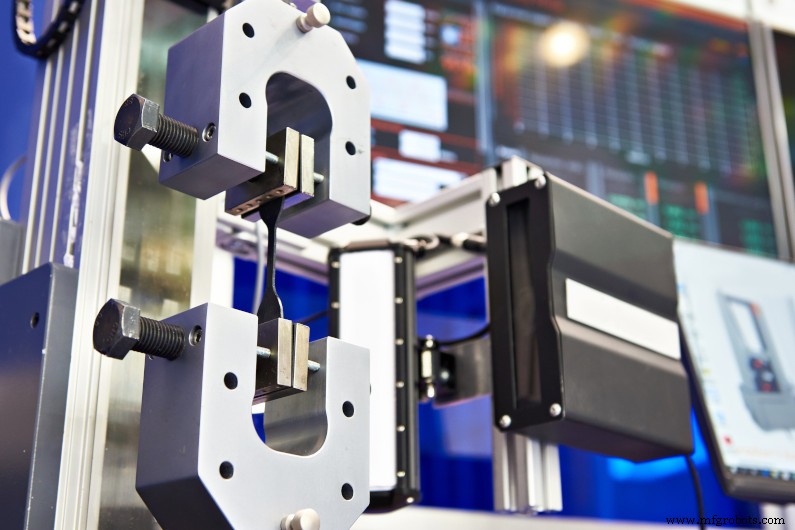
Tensile strength is the maximum stress a material can absorb before it breaks or permanently deforms when pulled apart. To fully grasp it, engineers first understand stress—the applied force per unit area—and strain, the resulting deformation.
Tensile stress stretches the material, whereas compressive stress squeezes it, and shear stress acts parallel to a surface. In practice, the most critical values are: yield strength (onset of permanent change), ultimate tensile strength (maximum stress before fracture), and fracture strength (actual breaking point).
Measurements are reported in units such as pounds per square inch (psi) or MegaPascals (MPa), depending on industry norms. For example, structural steel typically exhibits an ultimate tensile strength of 400–550 MPa, while high‑performance polymers may range from 50–150 MPa.
Factors That Influence Tensile Strength

Multiple variables affect tensile strength:
- Material composition: alloys, polymers, ceramics, and composites each have unique microstructures that dictate their mechanical limits.
- Temperature: most materials soften as temperature rises, reducing tensile strength.
- Strain rate: rapid loading (e.g., impact) can increase apparent strength for metals, whereas polymers may behave differently.
- Processing & heat treatment: quenching, annealing, and rolling can refine grain size, increase hardness, and boost strength.
- Defects & fatigue: cracks, voids, or surface flaws accelerate failure under cyclic loads.
Polymers can be tailored through cross‑linking or plasticization, and metals undergo controlled heat treatments to achieve desired balances of ductility and strength. Understanding these parameters enables engineers to select or engineer materials that meet stringent safety margins.
How Tensile Strength Is Measured
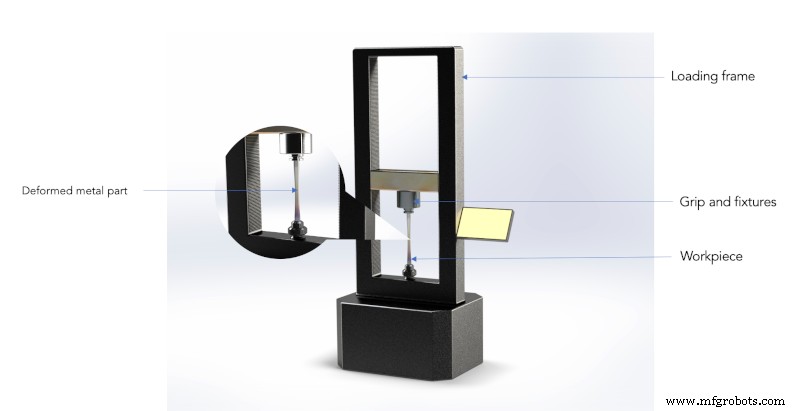
The gold standard is a tensile test conducted per ASTM E8/E8M or ISO 527‑1. A standardized specimen—often dog‑bone shaped—is clamped in a universal testing machine and pulled until failure, recording force and displacement to produce a stress‑strain curve.
Non‑destructive alternatives provide insight without damaging parts:
- Ultrasonic testing—high‑frequency waves reveal internal flaws or thickness variations.
- Magnetic particle inspection—magnetization highlights surface and near‑surface cracks.
- Eddy current testing—sensitive to changes in electrical conductivity, useful for conductive components.
These methods allow engineers to verify material integrity on production lines or in the field.
Why Tensile Strength Matters in Engineering

Accurate tensile strength data informs every step of engineering design:
- Material selection—choosing a material that meets load requirements while minimizing weight or cost.
- Safety factors—calculating margins of error to protect against unforeseen loads.
- Stress analysis—ensuring components operate within elastic limits under service conditions.
- Design optimization—leveraging high‑strength alloys or composites to reduce cross‑sectional areas without sacrificing integrity.
In high‑risk fields such as aerospace and civil infrastructure, a miscalculated tensile strength can lead to catastrophic failure. Consequently, engineers treat tensile data as a non‑negotiable baseline for all safety‑critical projects.
Partner with Gensun for Precision Components

Gensun delivers CNC machining and precision manufacturing that respect the stringent requirements of tensile strength. Our advanced tooling, rigorous quality control, and material expertise ensure that every part meets or exceeds the specifications your design demands.
Industrial Technology
- Resistor Color Code Calculator: Accurate 3‑Band to 6‑Band Resistor Value Estimation
- 5 Proven Strategies to Attract Manufacturing Talent in a Post-Pandemic World
- Accelerate Textile Manufacturing Growth with Proven Digital Marketing Strategies
- The Ultimate Guide to CNC Plastic Machining
- 6 Essential Replacement Parts for Repairing CNC Suction Cups
- Transform Your Team: How Leaders Can Foster Workforce Optimization Through Targeted Training
- Unit 5: Mastering Tapping Techniques
- 3D Printing Explained: Part 1 – From Raw Materials to Modern Innovations
- Switching to Additive Polymers: 4 Key Questions to Ensure Material Success
- Mastering Sheet Metal Bending: Fundamentals, Allowance, and Expert Tips