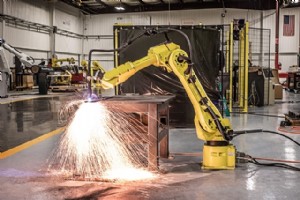
Industrial manufacturing
Industrial Technology

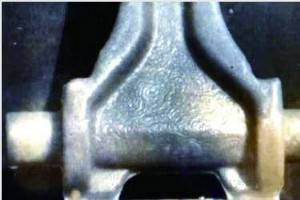
Wax pattern making is an important process in investment casting production and the primary condition for obtaining high-quality castings. However, due to the neglect of this process, the unqualified wax pattern flows into the shell making and even pouring process, resulting in irreparable
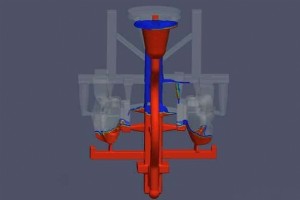
The solidification feeding mode of precision casting is closely related to the location of the internal sprue. Generally, the setting location of the internal sprue shall conform to the solidification feeding mode of the casting. Principle of Setting Location of Internal Sprue Fo
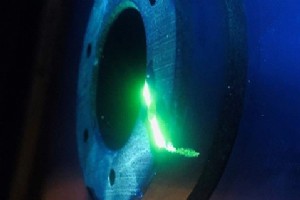
The inspection of castings mainly includes dimensional inspection, visual inspection of appearance and surface, chemical composition analysis and mechanical property test. For castings with high requirements, non-destructive testing is also required. For example, non-destructive testing te
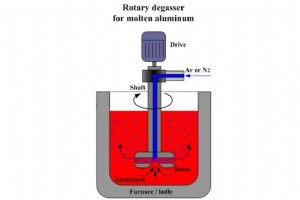
Air permeability is an important performance index of precision casting mold shells. The air permeability of the mold shell comes with a great influence on precision castings. For example, it is often found that the insufficient pouring of castings (including incomplete shape and rounded c

Everything in the universe conducts electricity, however, some materials are better at transferring a charge faster than others. Volume resistivity allows products designers to determine how strongly a material resists electrical current. In this post, we will discuss this fundamental physical prop

Silicone and polyurethane are common types of materials used to produce many products and components. While both materials may be used to create similar objects, the physical properties and environmental conditions in an application will ultimately dictate the appropriate material for your product

Cast molding is one of the oldest and most common manufacturing processes utilized in various industries. The versatility of cast molding makes it a good choice for many products and components where design flexibility and performance may be essential. In particular, cast molding with thermoset pol

Carbon black is one of the traditional additives used to create conductive materials. Since most polymers, such as rubbers, silicones, and polyurethanes, are natural insulators, incorporating conductive carbon black in the materials matrix can strengthen resistivity levels and performance. In this
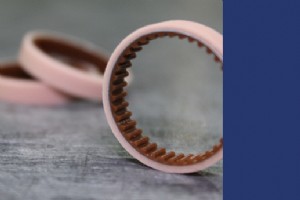
Paper & media handling applications are vital components of todays society - from performing self-service transactions, billing payments, to digital printing & imaging. Because of this, product designers continually seek out innovative materials, such as thermoset polyurethanes, to meet pre
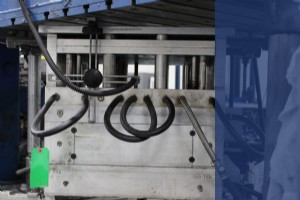
Due to the unique nature of thermoset polyurethanes, there are a key number of precise manufacturing processes available. Unlike thermoplastics, thermosets are formed through a chemical reaction between a polyol and diisocyante. For this reason, thermoset polyurethanes are often used in Reaction In

Cast molding and Reaction Injection Molding (RIM) are manufacturing processes that are commonly used with thermoset polyurethanes. So, what differentiates these two, you may ask? In this post, we will uncover both methods and their differences. What is Cast Molding?Cast molding can introduc

Cast molding is a manufacturing process that introduces liquid materials into a mold cavity where the material turns into a solid state – comparable to molding chocolate. Once in a solid state, the result should reflect the shape and surface of the engineered mold cavity. Due to the adaptability of

Conductive polyurethanes can play a significant role in many mechanical operations, including but not limited to medical, digital printing & imaging, and packaging devices. This powerful combination of electrical conductivity and superior physical properties makes conductive polyurethanes ideal
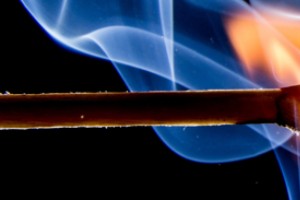
Flame resistance is a key physical property often found in many applications where fire may be an issue. In this post, we will break down the importance of flame resistance and how you can use it in your product design. What Is Flame Resistance Flame resistance is a material’s ability to wi
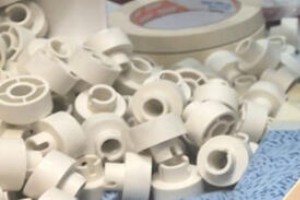
Bonding is a critical process in manufacturing, especially when a product or subcomponent requires a secure grip between two or more materials. While there are several bonding methods to consider, a chemically bonded process generally offers far greater reinforcement, design flexibility, and overal
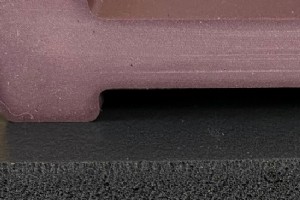
What is Integral Skin Foam? Integral skin foam, also commonly referred to as self-skinning” foam, is a dual-layer structure formed through a materials foaming process. This composition, similar to a loaf of bread, features a foam inner core surrounded by a solid outer crust or “skin”. While several

Insert molding is a key design technique to improve fit and function of your product or component. While there are several manufacturing processes available to include inserts in molded products, identifying the right process is key to delivering the products required performance. In this post, we
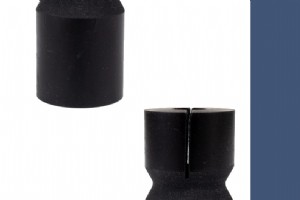
Now more than ever, hospitals and medical facilities rely on the best medical devices to improve patient health and safety. Because of this, product designers often demand innovative materials that can meet exact performance and quality requirements, such as thermoset polyurethanes. This versatile

If you are designing products for medical devices, packaging systems, or anything else that may encounter human or veterinary use, you should be informed of the regulations set forth by the FDA. While the realm of regulations is exceptionally vast, this post is solely intended to focus on a general

Metals have traditionally been the materials of choice for many applications due to their conductive properties. Engineered plastics, however, have rapidly evolved to include materials that can be lighter and tougher than metals and also be made to conduct electricity. Because of this, product desi
Industrial Technology