


Industrial manufacturing
Industrial Technology


Metalworking is complex, as there is a vast range of materials with unique properties that make each metal useful for different applications. As many fabricators and machinists progress in the metallurgical industry, they often encounter confusing metallurgical terminology that can require years of
Projects involving highly complex and intricate designs require precision metals. The word “precision” refers to the metal’s uniformity in terms of dimension, element composition, and performance during the metal cutting process. One of the best ways to achieve this is to use an advanced cutti
Today’s virtual world offers limitless opportunities to explore creativity, and with the help of technologies such as 3D printing, you can even design sophisticated projects from the comfort of your home. Many of these projects can be taken to an even higher level if the right materials and me
Many students can more easily learn and retain information through project-based learning than through traditional teaching methodologies, as it gives them hands-on experience and allows them to problem solve in a real-world context. This is especially true for college STEM (science, technology, eng
Custom alloys are used in an increasing number of industries for applications ranging from high-tech research and development to everyday structural applications. However, because the metals used in these custom alloys tend to be somewhat rare, companies that mix custom alloys for special orders oft
When you’re finishing the design stage of product creation and the product needs to get to market fast, you’re likely considering rapid prototyping. Rapid prototyping uses turnkey fabrication technologies like 3D printing and CNC machining to produce prototypes quickly and avoid the costs and bottle
New technologies in manufacturing have allowed small shops and individual fabricators to develop parts and products previously only possible for large manufacturers. For these smaller operations, building a prototyping materials list for a sophisticated prototype can be daunting. They may need metal
Steel and aluminum are the most commonly used metals in the world. Aluminum is the second-most abundant metallic element on Earth, while steel is by far the most utilized alloy worldwide. However, while they may look similar, there are major differences in steel and aluminum, and they each have uniq
If your machine shop doesn’t have a comprehensive metal recycling plan, you may be missing out on a significant untapped revenue stream. It’s often assumed the cost for shipping recyclables is cost-prohibitive. While this is true for many recyclable materials, metals are an exception. Recycling meta
Aluminum and steel are the two most commonly used metals in manufacturing. However, despite their different properties and applications, it can be difficult to distinguish between them by appearance alone. Furthermore, aluminum and steel come in countless different alloys and grades, some of which l
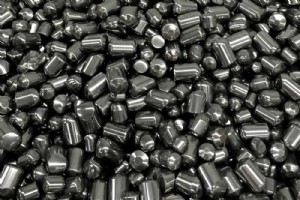
As metals increase in temperature, their strength and oxidation resistance tend to diminish. To perform effectively at high temperatures, metals must be able to retain their strength, creep and corrosion resistance, and other physical and mechanical properties, but only specific types of metal can a
When choosing a material for a metal part, two of the most important considerations are the metal’s strength and weight. Many applications require both high strength and low weight, but finding a material that can meet both of those requirements can be tricky. Titanium and aluminum are two of the mo
Inconel and titanium are both high-specification metals suitable for a wide variety of high-stress and corrosive applications. Though both have desirable physical and mechanical properties that make them suitable for extreme conditions, Inconel and titanium are very different metals. Here, we’ll loo
The benefits of stainless steel recycling are clear—it’s good for the environment, and it makes efficient use of raw materials while saving money. It uses less energy than new metal production, and steel can be recycled over and over again. Many companies recycle stainless steel because it’s cheaper
Steel and aluminum are in short supply in the United States, and prices are surging, driving up costs and squeezing manufacturer margins. We’ve seen steel and aluminum prices rising steadily since the end of 2020 as global production begins to recover from the pandemic shutdowns. Steel and aluminum
When you’ve carefully designed a product or structure, you don’t want to jeopardize its quality by using materials of questionable quality or origin. Consider the importance of the welding process; clearly, welding quality depends heavily upon the skill of the welder, their technique, and the use of
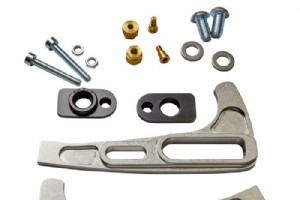
Titanium was first discovered in 1791, but we didn’t begin to realize its industrial potential until 1948 when the U.S. government began funding titanium research for use in aviation, aerospace, and defense applications. Titanium is an abundant mineral—however, the process of transforming titanium o
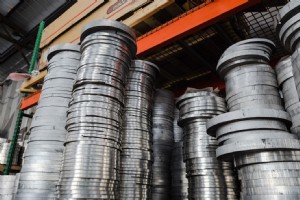
If you’ve been involved in machining or fabrication for some time, you’ve almost certainly run into situations where you’ve committed to a production deadline, but your ability to meet that deadline is at risk because: The shipment of material you needed to machine a critical part or fabricate a po

Super duty alloys, or exotic nickel-based metals, are often the only choice a company has when it is seeking materials that can stand up to harsh conditions. Industries like oil refining, aviation, energy generation, and heavy manufacturing have to contend with a variety of severe conditions that ex

Titanium is strong, lightweight, and corrosion-resistant and is the most familiar of the high specification metals. To most people, titanium is synonymous with high-quality, and American automaker Ford Motor Company called its top trim level Titanium for several years due to this perception. Titaniu
Industrial Technology

Professional 360° Photography Turntable – Automated Rotation for Stunning Captures
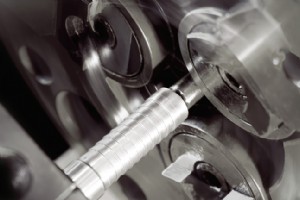
BLM Enhances E‑FORM Tube End Forming Machine with Advanced CNC Rolling Technology
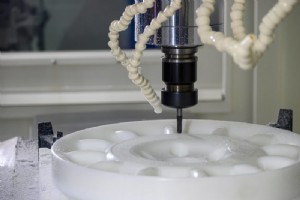
Delrin Plastic CNC Machining: A Comprehensive Guide for Professionals

Direct Extruder Explained: Function, Applications, and Compatible Materials
