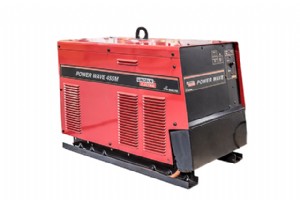
Industrial manufacturing
Industrial Technology


The term casting refers to a manufacturing process whereby molten metal is poured into 3D molds. Due to the infinite variety of mold shapes, sizes, and configurations that are available, casting allows manufacturers to create nearly anything they want out of metal. Sand casting is just one
Investment casting can produce a wide variety of products and prototypes, but it is important to choose the correct investment casting material for your application. The right material helps you get the desired functionality, save on the cost of materials, eliminate unwanted casting defect
Part Two: 3D Printing Technologies 3D printing—also known as additive manufacturing (AM)—offers a wide range of different printing technologies to choose from. While significant differences may exist between each method, all 3D printing techniques operate on the same basic principle: Addit
According to avionics expert Greg Morris from GE Aviation, post-build procedures for 3D printed engine parts take up to 25% of the total production time. Complex inspection processes make it difficult to deliver products quickly and efficiently. Quality and inspection routines must assess p
Investment casting enables manufacturers to produce precision-engineered parts while minimizing material and energy waste. The word “investment” refers to the way that wax patterns are invested by a shell to create a vessel, which is then filled with molten metal. Numerous aeros
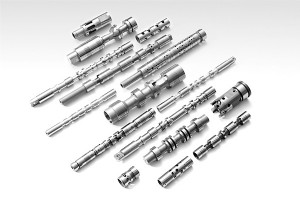
Precision machining is a manufacturing process that allows for the production of high quality, accurate components with desirable surface finishes and tight tolerances. The process encompasses a wide range of machining operations—including turning, milling, grinding, drilling, gear cutting,
Precision Machining Series, Part 1 provided a general introduction to precision machining, including what the process is, how it works, and what materials can be used with it. In this next installment of our precision machining blog series, we will overview the kinds of industries and appli

Precision Machining Series, Part 1 provided a general introduction to precision machining, including what the process is, how it works, and what materials can be used with it. Precision Machining Series, Part 2 walked through the kinds of applications and industries that are a great fit for
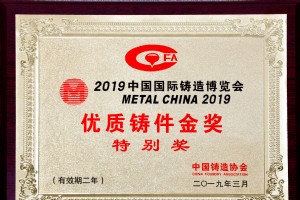
2019 was a year of significant growth and success for the team at Impro, a trend we aim to continue in 2020. As we work to meet our goals in the new year, we want to take a moment to reflect on everything we accomplished in the past year. The following blog post provides an overview of our
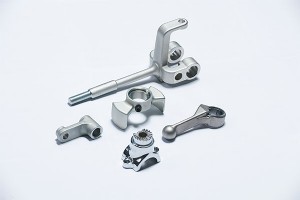
At Impro, we offer one-stop solutions to a diverse set of industries. In addition to our investment casting, sand casting, and precision machining capabilities, we also offer a broad selection of value-added services—ranging from design and prototyping to full-scale production—to guide and
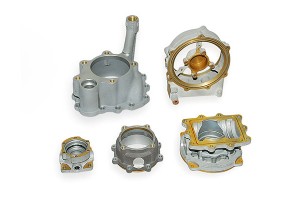
Part One: Investment Casting Investment casting is one of the oldest manufacturing processes that is still in use today––in fact, investment casting has been widely used to form metal parts for thousands of years. This versatile metalworking method allows manufacturers to create complex com
Part Two: Sand Casting Sand casting is a manufacturing technique used to produce high performance metal components. This ancient casting process involves compacting sand around a 3D model or pattern to form a mold for use with a metal or alloy. Sand casting is generally used to make structu
Part 3: Precision Machining Precision machining entails the transformation of metal sheets, bar stocks, and other formed materials into specially designed parts and shapes with machinery. Because it’s compatible with a wide range of processes and materials, precision machining can produce

Freedom with Designs Investment Casting can yield any required shape using almost any metal alloy; design functionality can be maximized due to the amount of materials to choose from. Various features can also be incorporated with the right mold. The most popular materials that are suitable
One of the oldest casting methods, sand casting is a remarkably versatile metal forming process. Its ability to form complex shapes, in a wide range of sizes, from various metal materials, makes sand casting an integral process for providing components in a diverse array of industries. Ther
Some type of precision machining process is usually employed to turn the workpiece into the final end product. Material is removed in some manner to improve surface quality and tolerance levels. Modern manufacturers rely on the use of computer numerical controls, or CNC, during these machin
Precision machining refines the workpiece, creates complex shapes, and achieves the desired results for a specific application. Computer numerical control (CNC) machine tools are engaged because they have the capability of meeting demanding requirements for accuracy, as well as high-volume
In pursuit of minimizing weight, aircraft components like manifolds, adapter ports and housings are brought closer to their design ideal, but also demands less variability in manufacturing. Casting is an important process for weight reduction, but a thorough understanding of casting toleran
We pride ourselves on offering precision machining services. At the same time, we know not everyone has the same understanding of what this means. Rather like the word, “accuracy”, “precision” is a surprisingly ambiguous term, so here we’ll explain how we go about undertaking CNC precision
Impro prides itself on strict attention to quality control, and works to achieve the highest industry standards. That is why we undergo rigorous audits to obtain various Nadcap certifications: Nonconventional machining Chemical processing Heat treating Materials testing NDT (Non-Destructiv
Industrial Technology