


Industrial manufacturing
Industrial Technology


When customers want assurance their castings are free from internal defects, they can request Non-Destructive Testing (NDT). NDT encompasses a range of techniques used for verifying the quality of metal castings. Reasons For Inspecting Castings Casting involves pouring molten metal into a c
Sand casting is a metal forming process in which a mold is first formed from a three-dimensional pattern of sand, and molten metal is poured into the mold cavity for solidification. As part of the process, castings may undergo a series of heating and cooling processes to ensure they meet th
Investment casting is one of the oldest and most sophisticated casting processes, allowing intricate shapes to be produced, while still maintaining high dimensional accuracy and high surface quality. Investment casting can be used to cast almost any metal, satisfying application requirement
Aviation and aircraft companies face unique challenges with equipment and components because such huge safety issues are involved. Highly complex and precise machined parts must perform their functions reliably and efficiently. These components may also experience extreme environmental stre
Investment casting is a sophisticated casting process which produces intricate shapes while still maintaining high dimensional accuracy and surface quality. Investment casting can be used to cast almost any metal, satisfying application requirements in diverse end-markets. This metal formin
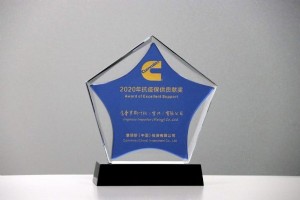
As has been true throughout the entirety of the pandemic, 2021 was certainly not the easiest year for many organizations. Despite the fact that vaccines are currently rolling out around the world, we’re all still figuring out in real-time how to navigate the “new normal” t
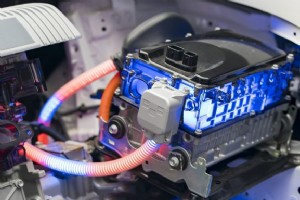
Investment casting is a process that uses a disposable wax mold to create a permanent ceramic mold which is used to shape an object. After the ceramic mold has hardened, it is heated, causing the wax to melt and drain away. Molten metal is then poured into the ceramic mold to form the desir
Casting component production process ranges from tooling design and manufacturing to casting, secondary machining, heat treatment, surface treatment, testing, and assembly. These capabilities enable casting manufacturers to offer ready-to-use products to customers. The quality of components
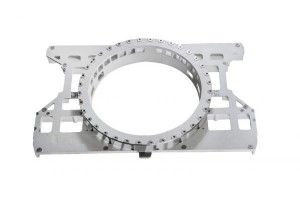
Medical devices and tools require a high degree of precision and strength. Just a fraction of an inch variation can make the device unusable or even harmful. Sand casting is versatile manufacturing process capable of producing simple to complex parts with desirable specifications to your bu
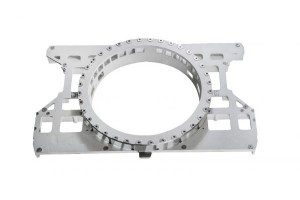
Medical devices and tools require a high degree of precision and strength. Just a fraction of an inch variation can make the device unusable or even harmful. Sand casting is versatile manufacturing process capable of producing simple to complex parts with desirable specifications to your bu
Since our founding in 1998, Impro has become a global top 10 manufacturer of high-precision, high-complexity and mission-critical casting and machined components for diverse and dispersed end-markets, serving a number of globally recognized industry leaders. Many customers rely on our preci
Precision machining requires CNC machines that are structurally stiff and well-maintained, high quality cutting tools, and usually, cutting fluids. Cutting fluids are one of the most underappreciated parts of a successful machining process and yet they play a major role in both efficiency a
When a precision machine shop receives an RFQ one of the things they check the print for is deep holes. Deep holes pose a number of machining challenges. Addressing them adds time and cost to the production process, especially when the tolerances are tight. This blog post discusses the diff
The process of forming raw materials into useful shapes is critical to the smooth functioning of many types of equipment in just about every industry imaginable, including automotive, aerospace and agricultural equipment. Metal shaping is used to create everything from small components to l
If the lands on a valve spool aren’t perfectly round and mirror-smooth the valve isn’t going to perform as expected. The same applies to the journals on a crankshaft or camshaft, to control rods, turbocharger rotors and a host of other high-precision machined parts. Cylindricity, concentric
“Precision machining” refers to maintaining tighter than normal geometric tolerances and superior surface finishes across a batch of parts. Not every machine shop is capable of achieving this level of performance. Others may have the CNC machine tools needed but don’t see it as something th
With handmade vases or jewelry, it’s understood that no two pieces will be the same. Buyers like this variability as it adds a degree of uniqueness that makes each piece special. In industrial manufacturing though, such variability would be disastrous. Variability in component manufacturing
Traceability means the ability to follow the chain of custody for a product forwards and backwards through some or all of its manufacturing journey. In precision machining, traceability extends from information about the materials to inspection records and where the part was shipped and use
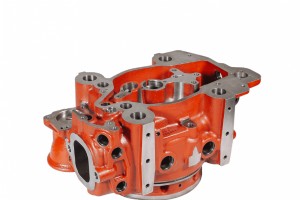
Sand casting is a cost-effective way of producing parts in a wide range of metals. However, a close look at the process and the part being made can sometimes reveal opportunities to save money. The key is knowing which factors contribute most to the cost. Recurring and Non-Recurring Costs S
Sand casting uses sand to create a mold for casting metal parts, from iron machine bases to cooking vessels. The process has been used for more than 3500 years and approximately 60 percent of all castings is still done using this method. Advantages of sand casting Sand casting offers a numb
Industrial Technology

Reverse Vending Machine (RVM): DIY Smart Recycling System Kit
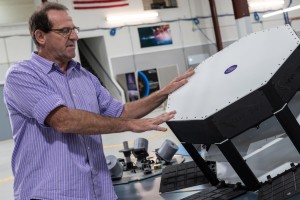
Revolutionizing Flight Hardware: 3D Printed Aerospace Components in Orbit
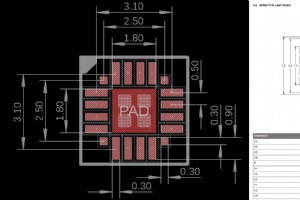
Optimizing PCB Fabrication: Proven Best Practices for Rapid, Reliable Assembly

Why FRP (Fiberglass Reinforced Plastic) Is Truly Waterproof and a Superior Choice for Industrial Structures
