Industrial manufacturing
Industrial Technology


It’s a face-melting 100 degrees on the rig. The skin on the back of your neck is near blistering from the sun. As you go to wipe the beads of sweat from your brow you notice the dirt, oil and grime caked under your fingernails. You’re already looking forward to clocking out and hitting
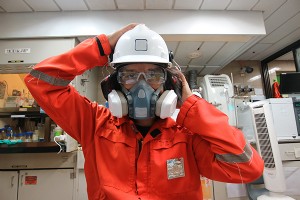
Whether you work on an oil rig, in a body shop or in a factory, there are conditions that require your workers to be protected with a respirator of some kind. In fact, about 5 million employees in the U.S. should be wearing respirators on a regular basis. Those who are exposed to harmfu

The temperatures are cooling down while daylight hours are slowly slipping away into the dark, cold night. Winter is here and for many, it symbolizes the start of the holiday season — full of cheer and goodwill towards men and women. For industrial workers however, the colder weather me
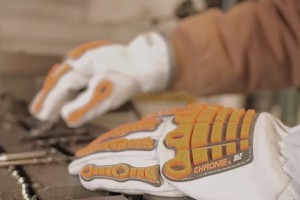
For years, workers have had no choice but to take chances with their safety glove selection with regards to back-of-the-hand and finger protection. When it comes to protection from cold, punctures, chemical exposure or lacerations, there are numerous options that offer workers peace of
Working in dangerous conditions requires specialized clothing and accessories designed to protect workers from occupational hazards. In cases where the risk of explosions or fire are heightened, especially in the oil and gas industry, what you put on your body matters. Work in the oilfi
Two types of sawing machines are used to cut through metals with ease—the power hacksaw and the band saw. The power hacksaw mimics the back-and-forth action of a regular hacksaw using two pulleys to cut metals of very large diameters into squares or angles. On the other hand, band saw machines are g
Additive manufacturing, also known as 3D printing, is the process of creating a product by using 3D object scanners or computer-aided design (CAD) software to deposit layer upon layer of material in precise geometric shapes, unlike in traditional subtractive manufacturing processes that involve remo
In the metal industry, tensile strength is one of the most important properties that fabricators and engineers look for when trying to design products for high-stress applications. While many metals can withstand these applications, what metal has the highest tensile strength? With an ultimate tensi
Metal machining is often a very difficult process, and there are many aspects to consider, including material costs and preparation times, as some metals require special considerations before machining. If high-quality tools specifically made to cut specialty metals aren’t used during the machining
A light metal is a metal that has a relatively low density; the first seven metals in the periodic table, which include lithium, beryllium, sodium, magnesium, aluminum, potassium, and calcium, are collectively known as the “lightest metals.” In this regard, aluminum and magnesium are commonly used t
In 1784, the first industrial revolution began with machines powered by water and steam. The second revolution came in 1870 with the mass production of steel and electricity; the world also witnessed the invention of airplanes during this period. In 1960, the third industrial revolution introduced s
In environments where temperatures are high, many metals lose their strength, corrosion resistance, and other unique selling properties. However, superalloys of nickel and other specialty metals can be extremely useful for high-temperature applications. In this regard, Monel is one of the best nicke
Invar 36 is a nickel-steel alloy containing 36% nickel and 64% steel, coupled with 0.5% each of carbon and manganese, with metallurgically negligible quantities of sulfur, phosphorus, and other elements. It has a low thermal expansion, which makes it highly sought-after for applications requiring di
In many ways, the metals business has never been better. High demand across virtually every industry has given metal fabricators fantastic business opportunities—but can the metal supply chains keep up? The truth is that even in 2019, before the pandemic, metal manufacturing was still much lower tha
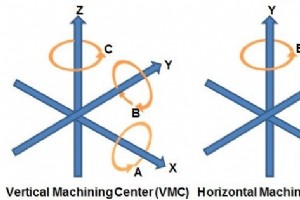
CNC machining has become one of the most popular methods of cutting and producing parts and components in the manufacturing industry, as the computer-controlled processes can perform quickly and accurately while offering significant cost savings compared to traditional machining processes. However,
Humans have been producing and using brass, one of the oldest alloys, for millennia. Its workability, hardness, corrosion resistance, and attractive appearance made it a staple of ancient metallurgy for both practical and decorative purposes. Brass is such a versatile material that it is still used
Aluminum 6061 is the most commonly used aluminum alloy in the world—and for good reason. In addition to its light weight, excellent corrosion resistance, and other desirable properties, it also tends to be highly workable, weldable, and machinable, making it great for all types of manufacturing proc
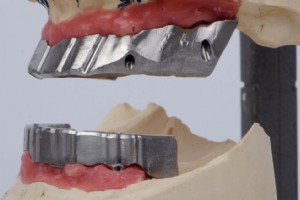
Titanium and its alloys are widely used for structural applications in aerospace, automotive, defense, sporting equipment, and healthcare because of their high strength, low weight, excellent corrosion resistance, and generally stable properties at high and low temperatures. However, titanium’s uniq
If you’re a luthier looking for new sources of titanium, aluminum, or brass, you’ve likely experimented with several methods when trying to set apart your designs from the rest of the guitar building market. There are so many choices for the playing surface of the fingerboard alone! You may have tes
Welding titanium can be highly challenging for even the most skilled and experienced welders, as titanium is highly reactive with oxygen. The free oxygen that exists in ambient air can infiltrate the weld and make it prone to premature cracks. Thus, it is imperative to perform the entire welding pro
Industrial Technology