



Birdseed Production: From Raw Ingredients to Market – A Comprehensive Guide
Background
Birdseed is a carefully curated blend of seeds, nuts, fruits, and vegetables that provides essential nutrition for both wild and pet birds. The production process is split into two primary stages: ingredient preparation and blend formulation in a mixing kettle.
In the United States, bird feeding is a national pastime. According to the U.S. Fish & Wildlife Service, one‑third of the population feeds wild birds, and the American Pet Products Manufacturers Association reports that 6.9 million households keep pet birds. These statistics underpin an industry that distributes over 500,000 tons of birdseed annually.
History
Humans have long kept birds for aesthetic, practical, and companionship purposes—from Egyptian pharaohs to Roman elites. The modern U.S. birdseed industry began in the mid‑19th century when small grain‑based feed companies began producing seed blends. The 1940s saw a pivotal partnership between Simon Wagner of Wagner Brothers Feed Company and Bill Engler Sr. of Knauf & Tesch (now Kaytee), which created the first commercial market for wild birdseed. Post‑World War II suburban expansion further fueled demand as new homeowners sought to attract birds to their yards.
Raw Materials
The core ingredients are sunflower seeds, corn, millet, fruit (raisins, cherries), and peanuts. The majority of these crops are grown in Nebraska, Kansas, North Dakota, and South Dakota.
Sunflower seeds—approximately 0.25 in (0.64 cm) long and 0.13 in (0.32 cm) wide—contain 20 % protein, 30 % lipids, iron, and fiber. Other seeds used include cottonseed, pumpkin, safflower, hemp, and palm kernel.
Cereal grains, especially corn, contribute bulk and energy. Each ear yields about 800 kernels; an average kernel measures 0.15 × 0.31 in (4 × 8 mm) and contains 60 % starch and 4 % oil. Millet is smaller (≈0.15 in long, 0.11 in wide) and offers 11 % protein, 3 % fat, and 8 % fiber, making it ideal for smaller birds.
Peanuts provide 25 % protein and 50 % oil but require careful handling because they can harbor the mold pergillus, which poses serious liver risks to birds.
Fruits such as raisins and cherries add high sugar content that appeals to certain species. Cherries are pitted and dehydrated, while raisins are produced by sun‑drying or forced‑air drying grapes.
Pet bird diets are more complex, often incorporating exotic nuts and fruits to meet all nutritional needs. Ground hot peppers are sometimes added to deter squirrels, and algae extracts can enhance feather coloration.
The Manufacturing Process
Birdseed manufacturing is streamlined into three key phases: raw material procurement, blending, and packaging.
Seed Procurement
- Raw materials are sourced from processors who obtain grain directly from growers or brokers.
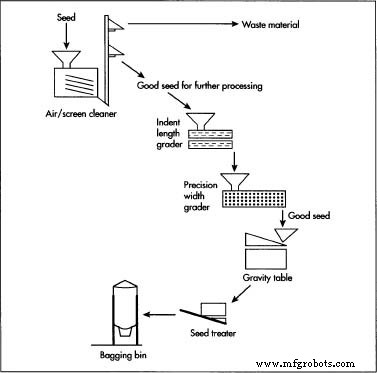
- Processors clean seeds to 98 % purity, using a three‑stage air‑sorting system that removes hulls, stems, dirt, and rocks. The residual waste, known as chilton, can be repurposed for other animal feeds.
- Cleaned seeds are transported—often within a week—to manufacturers located near processing facilities.
- Blending occurs in large stainless‑steel vessels where ingredients are automatically measured and mixed. Additives such as anise or orange oil may be incorporated for flavor or color enhancement.
Packaging
- Quality packaging prevents contamination by rodents, mites, and other pests. Materials range from paper to polyester films, with companion birdseed typically receiving more robust barrier protection.
- Each bag is nitrogen‑flushed to reduce oxygen exposure, mitigating rancidity—especially critical for high‑oil seeds like sunflowers.
- Airtight bins are used during storage to further guard against infestation and spoilage.
Quality Control
Quality assurance starts at the field. Growers monitor crops for disease, isolating and removing affected plants before harvest. Upon receipt, raw materials undergo laboratory testing for size, nutritional value, and microbial contamination. Finished blends are sampled to verify ingredient proportions and overall safety.
The Future
Current trends shift toward pelleted diets that provide complete nutrition without supplementation. While pelleted foods reduce the need for additional nutrients, some birds reject them. Consequently, manufacturers are developing seed blends with enhanced protein, essential minerals, and balanced fat content to meet health standards while maintaining palatability.
The industry is also moving toward greater standardization. With a mix of cottage producers and large corporations, state‑to‑state regulations vary widely. Trade associations are working to unify quality standards, promote best practices, and address challenges such as noxious weed control.
Where to Learn More
Books
Alderton, David. The Cage Bird Question and Answer Manual. Barron’s Publishing, 2000.
Armstrong, Holly, et al. Gourmet Bird Food Recipes. San Leandro, CA: Bristol Publishing, 2001.
Gallerstein, Gary A. The Complete Bird Owner’s Handbook. Macmillan Publishing, 1994.
Periodicals
Allen, Carolyn. “We Have Roots: Early History of the Wild Bird Seed Marketplace.” Birding Business (Summer 2001).
Rouhi, A. M. “Chili Pepper Studies Paying Off With Hot Birdseed and Better Analgesics.” Chemical and Engineering News (4 March 1996).
Other Resources
American Pet Products Manufacturers Association Web Page. December 2001. https://www.appma.org.
Kaytee Products Web Page. December 2001. https://www.kaytee.com.
Sandy De Lisle & Perry Romanowski
Manufacturing process
- What is VMC Machining? An Expert Overview of Vertical Machining Centers
- Expert Guide to Aluminum Laser Marking: Precision, Durability, and Industry Applications
- MIG vs. TIG Welding: Selecting the Right Arc Welding Technique for Your Project
- Comprehensive Guide to Laser Marking: Types, Benefits, and Applications
- Key Considerations for High‑Volume Swiss Machining
- Birdseed Production: From Raw Ingredients to Market – A Comprehensive Guide
- Warehouse Directors Beat Bird Infestations with Ultrasonic Deterrents
- Canadian Air Force Eliminates Bird Nuisance from 40,000‑sqft Hangar with Bird‑X Repellents
- Toronto Bus Shelters Adorned with 3‑D‑Printed Origami Birds for 'Kubo & the Two Strings'
- Complete Arduino & Intel Edison Starter Kit with Sensors, Webcam, and Essential Accessories