



The Evolution and Engineering of Movie Projectors
History
The birth of motion pictures traces back to the intersection of theater, circus, and magic shows, coupled with a growing understanding of the persistence of vision. Though the phenomenon had been known for centuries, it was Roget’s 19th‑century treatise that sparked widespread curiosity. Persistence of vision allows the brain to retain an image slightly longer than the eye sees it, creating the illusion of motion when successive frames are displayed rapidly.
Early 1800s saw the arrival of novelty devices such as the Thaumatrope and Phenakistiscope. Dr. John Ayrton Paris invented the Thaumatrope in 1825—a simple spinning disc that merged two images into one. Joseph Antoine Ferdinand Plateau introduced the Phenakistiscope in 1832; a spinning disc with alternating images and slits, viewed through a mirror, required 16 frames per second for optimal fluidity.
Baron von Uchatius’ 1853 projecting Phenakistiscope incorporated a lantern, marking the first projected motion picture. William George Homer's 1834 Zoetrope, a rotating drum with a paper strip of images, became the most popular animation toy, allowing interchangeable strips for fresh content. The 1868 kineograph (a flipbook) further refined sequential imaging.
Thomas Edison’s 1891 Kinetoscope mechanized the Zoetrope, adding a motor and film reels. The film moved past a light source and projected onto a screen within a closed booth. The Lumière brothers’ 1895 Cinematograph expanded this concept, serving simultaneously as camera, printer, and projector, enabling shared viewing experiences. The Vitascope in 1896 pushed projection onto larger screens.
Throughout the 20th century, projector design grew in complexity: spools improved film transport; film lengths increased; sound sync emerged in the 1920s; color arrived in the 1930s; the 1960s platter system allowed single‑projector feature runs; digital sound rose in the 1970s‑80s. Today’s projectors retain the core principles of light, film, and frame‑by‑frame motion.
Design
Movie projectors comprise four primary subsystems: spool assembly, lamp assembly, lens assembly, and audio assembly.
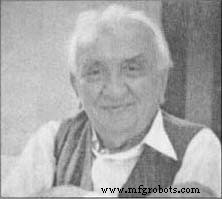
Auguste Marie Louis Lumière (born 19 October 1862) and his brother Louis Jean (born 5 October 1864) began refining Edison’s Kinetoscope in 1894. Their Cinematograph used a sewing‑machine presser foot to advance film quickly across the lens, maintaining brief pauses for exposure—12 frames per second at the time. The first public projection at Paris’s Grand Café on 28 December 1895 famously startled audiences with a startling train scene.
Louis died in 1948 at 83; Auguste passed in 1954 at 91. The Lumières remain emblematic of technological innovation, shaping a global entertainment industry.
Spool Assembly
The spool assembly ensures film moves through the projector smoothly. While the motion appears continuous, each frame experiences a slight pause, allowing light to expose the image on the screen. The assembly includes spools, a platter (up to four 5‑ft diameter discs), sprockets, tension rollers, and an intermittent motor synchronized to 24 frames per second. A 2‑hour film can span over 2 mi (3.2 km) of film; theaters therefore load multiple reels that are spliced before use.
Lamp Assembly
The lamp assembly delivers the core illumination. Modern projectors use xenon bulbs, prized for brightness and longevity. A quartz envelope houses the cathode and anode; when energized, the bulb emits intense light reflected by a parabolic mirror onto a condenser lens system. Cooling fans and exhaust vents mitigate the heat generated, preventing film scorching.
Lens Assembly
Light passes through a shutter—rotating 24 times per second—to eliminate flicker. An aperture limits illumination to the image area. The main lens focuses the image onto the screen; lens turrets enable quick swaps between flat (1.5–1.8 in) and CinemaScope (2.8–3.3 in) lenses, catering to different genres. Some projectors feature automated turret systems for seamless lens changes.
Audio Assembly
Audio is extracted via optical or magnetic methods. Optical systems record a transparent waveform on film; a light source passes through this line, and a photocell detects variations, converting them to audio signals. Magnetic systems use a pickup head to read magnetic fields encoded on the film; though less common due to fragility, they remain an option.
Raw Materials
Projectors rely on aluminum alloys, hard plastics, and stainless steel for housings, gears, and structural elements. Xenon gas powers the bulb, while quartz is essential for high‑temperature resilience. Rubber, glass, and specialized coatings complete the construction.
The Manufacturing Process
Key components—spool system, console, audio reader, lenses—are produced by specialized manufacturers and assembled on-site in theaters.
Making the Main Body
- Steel sheets are die‑cut and pressed into the projector’s rectangular housing. An adjustable base allows viewing angle adjustments.
Making the Picture Head
- Steel housing is punched and formed. Sprockets, rollers, and an intermittent motor set to 24 fps advance film.
- A shutter blade rotates in sync with the film, eliminating dark gaps.
- A lens turret sits in front of the aperture, allowing quick lens swaps.
- A loading door facilitates film insertion. The assembled head bolts to the main housing.
Making the Audio Head
- Built similarly to the picture head, it houses optical components: a light source on one side of the film path and a photocell on the opposite side.
- The photodetector feeds into amplifiers that drive theater speakers.
Making the Lamphouse
- Xenon bulbs are crafted inside quartz tubes, with cathode and anode terminals, then vacuum‑sealed with xenon gas.
- The bulb is mounted in a parabolic mirror; cooling fans and exhaust systems manage heat.
- Wires are hand‑soldered to the anode and cathode, connecting to the power supply.
Making the Lens
- Glass elements are cut, polished, and coated with anti‑reflection layers. Multiple elements form a single lens system.
- Lenses are assembled in a barrel, then mounted on the turret.
Making the Spool Assembly
- Metal frames are stamped and welded to form a sturdy support pillar.
- Support arms host bearings and motors that spin the platter.
- Aluminum alloy platters (5 ft diameter, 0.5 in thick) sit on the arms, holding film reels and ensuring smooth rotation.
Final Assembly
- The console and spooling system are delivered to theaters, connected electrically, and loaded with film for screening.
Quality Control
Every manufacturing step includes rigorous visual inspection and precision measurements. Lens makers use laser calipers; lamp producers assess luminosity, heat, and power. After assembly, a test film runs through the projector, with technicians fine‑tuning timing and alignment. Ongoing maintenance ensures optimal performance.
The Future
Advances in digital storage hint at a shift away from physical film. Projects are underway to render movies directly from hard drives, reducing distribution costs and improving image clarity. While theaters are cautious, digital projectors are poised to replace film-based systems in the coming years.
Where to Learn More
Books
Barclay, S. The Motion Picture Image: From Film to Digital. Focal Press, 1999.
Case, D. Film Technology in Post Production. Focal Press, 1997.
Other
Boegner, Ray F. “Everything You Wanted to Know About Xenon Bulbs.” Xenon Bulb Web Page. December 2001. https://www.cinemaequipmentsales.com/xenon1.html.
Boegner, Ray F. “Film Technology in Post Production.” Scientific American Web Page. 1998. December 2001. https://www.sciam.com/1998/1098issue/1098working.html.
Harrigan. Movie Projection Lens. United States Patent 6,317,268. November 13, 2001.
Perry Romanowski
Manufacturing process
- Amber: From Ancient Resin to Scientific Treasure – History, Properties, and Modern Uses
- The Guillotine: History, Design, and Legacy
- Silicon: Properties, Production, and Market Outlook
- The Ukulele: From Portuguese Roots to Modern Craftsmanship
- The Complete Guide to the U.S. Chicken Industry: History, Production, and Quality Control
- Compost: The Ultimate Soil Enrichment Solution
- Gelatin: From Ancient Protein to Modern Applications – Production, Uses, and Safety
- The Evolution and Manufacturing of Modern Pin‑Tumbler Locks
- Vodka: From Ancient Distillation to Modern Production
- Early Career Lessons that Shaped My Maintenance Leadership