



The Art and Science of Tattoos: History, Techniques, and Care
Background
A tattoo is a permanent design etched into the skin with needles and ink. The term derives from the Tahitian word tatua, meaning “to mark.” While tattoos have appeared across cultures for millennia, they have only recently gained mainstream acceptance in the United States.
History
Skin decoration has been practiced since ancient times. Egyptian clay dolls date back to 4000 B.C., indicating early use of tattoos. By 500 B.C., Japanese artists employed fine metal needles for both cosmetic and religious purposes, even marking criminals as a form of punishment. Inuit tribes used bone needles to thread soot-covered fabric through the skin.
Captain James Cook visited Tahiti in the 1700s and documented the local custom in The Voyage in H.M. Bark Endeavour. He described how natives used bone instruments to indent the skin and fill the marks with a dark‑blue mixture made from oily nut smoke. These practices spread across the Pacific through sailors and traders.
In the 19th century, tattoos entered English upper‑class society; Lady Randolph Churchill famously wore a snake design on her wrist. In the United States, tattooing was historically linked to sailors, motorcyclists, and inmates, largely because tattoo parlors were seen as seedy establishments. Since the 1980s, societal attitudes have shifted, and tattoos are now embraced by people of all ages and backgrounds.
Design
Tattoo designs, known as flash, range from simple symbols to complex illustrations. Parlors display thousands of flash options on walls and in books, while clients can bring personal concepts or collaborate with artists on custom pieces.
Choosing a design requires consultation with the artist to determine optimal size, placement, and color palette—all of which influence cost. Clients should also verify that the studio adheres to the Association of Professional Tattooists (APT) guidelines, which include consent forms, hand hygiene, latex gloves, sterilized instruments, disinfected surfaces, and proper waste disposal to prevent blood‑borne disease transmission.
Raw Materials and Equipment
Flash
Flash is a line art sketch used as a template for the tattoo. It may be presented in color or black and white and is typically displayed in books or on studio walls.
Stencil
A stencil is a copy of the flash made with a special copier, allowing the artist to transfer the outline onto the skin for precise tracing.
Ink
Professional inks are liquid dispersions of pigments, packaged in 4 oz plastic squeeze bottles. In the U.S., these inks are FDA‑approved. They contain metal‑based dyes, which can trigger allergic reactions in some individuals.
Tattoo Machine
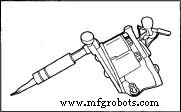
The machine consists of a handheld needle gun attached to a power unit. The needle bar, which may hold 3–5 needles, is driven by a foot pedal to oscillate at roughly 3,000 strokes per minute, depositing ink into the dermis.
Miscellaneous Supplies
Artists use skin disinfectants, disposable razors, bandages, petroleum jelly, and biocidal cleaners during the procedure.
The Manufacturing Process
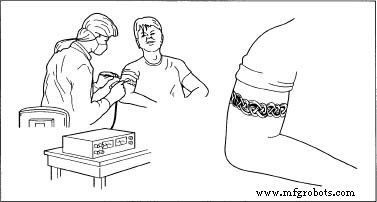
- Before starting, the client signs a waiver confirming they are over 18, understand the permanence of the tattoo, and acknowledge the creation of an open wound. The artist then inspects the skin for cuts or scrapes, cleans it with an antiseptic, and shaves the area, discarding the razor immediately.
- The artist copies the flash onto the skin using a specialized carbon‑type paper. The stencil is applied to the chosen location, ensuring the client does not disturb it. Once confirmed, a thin layer of ointment such as petroleum jelly is spread over the area.
- The client assumes a comfortable position—often reclining in a dentist‑style chair—to expose the target skin. The artist sits on a stool beside the client to maintain ergonomic access.
- Ink is prepared on a pallet: black is typically used for outlines, while other colors fill the design. The needle bar is dipped in ink, then the foot pedal is depressed to trace the stencil. The needles penetrate the dermis (0.64–0.16 in or 1.6–0.4 cm deep), depositing pigment. This phase lasts from 5 minutes to an hour, depending on size and complexity.
- After outlining, the artist switches to a shader needle bar (5–13 flat or 5–7 round needles) to fill color within the outline. The machine is moved across the skin, periodically pausing to wipe blood and ink. Shading may take an hour or more, depending on the artwork. The process ends when the entire design is fully colored.
Quality Control
Immediate aftercare is critical. The tattooed area is washed with mild soap, covered with antibiotic ointment and gauze, then left uncovered for two hours to allow drying. For the first week, a vitamin‑enriched lotion is applied daily. Afterward, a regular, mild moisturizer keeps the skin hydrated until healing completes, typically around two weeks. Avoid hot tubs, pools, and hot baths during this period, as excess moisture can compromise the tattoo.
Tattoo Removal
Removal is a complex, costly, and often incomplete process. Historically, abrasive brushes, salt solutions, and acids were used, but these methods caused pain, scarring, and pigment loss. Modern laser removal targets ink pigments with minimal scarring, yet it remains expensive and may not restore normal skin pigmentation.
The Future
Tattoos are increasingly viewed as a medium for self‑expression and are finding novel applications in medicine and cosmetics. They are used to conceal port‑wine stains, cover vitiligo patches, and provide permanent makeup for individuals with burn or disfiguring injuries.
Where to Learn More
Books
Graves, Bonnie. Tattooing and Body Piercing. Capstone Press, 2000.
Wilkinson, Beth. The Dangers of Tattooing, Body Piercing, and Branding. Rosen Publishing Group, 1998.
Other
Tat2studio.com Web Page. December 2001. https://www.tat2studios.com.
Randy Schueller
Manufacturing process
- Understanding the Skin Effect: Impact on AC Conductors and RF Applications
- Innovative Needle‑Free Injection Systems: Advancing Safe and Pain‑Free Medication Delivery
- Professional Hair Removal: Depilatories, Epilatories, and Manufacturing Insights
- Temporary Tattoos: From Artistry to Advanced Manufacturing
- Artificial Skin: Advanced Tissue Engineering for Burns, Wounds, and Future Regenerative Therapies
- Sunscreen: Science, Production, and the Future of Sun Protection
- Safe and Effective Fiberglass Splinter Removal Using Tape
- Integral Skin Foam: Advanced Dual-Layer Polyurethane Technology
- Why Clean Machining Coolant Matters: 5 Essential Benefits
- Innovative Electronic Skin Mimics Human Pain Sensing in Real Time