



Professional Hair Removal: Depilatories, Epilatories, and Manufacturing Insights
Hair removal products, collectively known as depilatories and epilatories, have evolved from ancient practices to sophisticated chemical formulations. They are essential in daily personal care routines worldwide, and modern research continues to improve their effectiveness while minimizing skin irritation.
Background and Types
The earliest hair removal methods involved mechanical removal—tweezing or waxing—to pull hair out from the follicle. Waxing, which heats a resin‑based mixture and then removes it in one motion, removes roughly 80% of surface hairs but can cause mild discomfort. Wax remains popular in professional salons, where skilled technicians can control the technique and post‑treatment care.
Depilatories, on the other hand, rely on a chemical reaction that breaks down the keratin structure of hair. Compounds such as thioglycolate salts or sulfides attack disulfide bonds, rendering the hair soft enough to wipe away. Because the reaction occurs only on the portion of hair above the skin, depilatories provide a painless alternative that can be applied at home. Manufacturers design formulas to limit skin contact time and to reduce irritation, ensuring that consumers can use them safely when following label instructions.
Manufacturing Overview
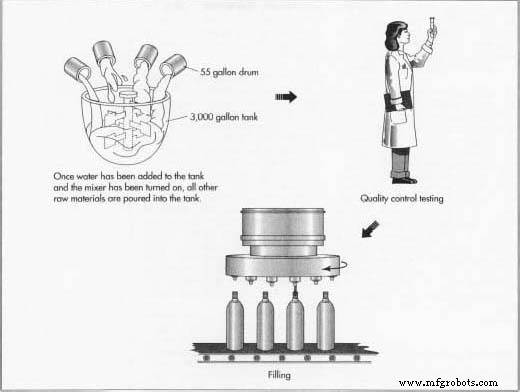
The production of a hair removal product generally follows two major stages: compounding a large batch and filling it into individual containers. While the basic workflow is similar across creams, gels, and aerosols, the following description focuses on a lotion‑type depilatory, as illustrated in the accompanying diagram.
Compounding
- 1. In a dedicated production area, a skilled compounding team follows a tightly controlled formula. Stainless‑steel tanks, equipped with computer‑regulated mixers, heaters, and coolers, allow precise control over temperature and shear rate. Typical batches may exceed 3,000 gallons (≈11,355 liters). The process begins by adding water, followed by the systematic introduction of active ingredients, thickeners, pH adjusters, and cosmetic excipients. Each addition is fully blended, and the mixture may be heated or cooled to accelerate the reaction and ensure uniformity. A complete 3,000‑gallon batch typically takes between two and five hours to complete.
Quality Verification
- 2. Once the batch is ready, the quality‑control laboratory evaluates it against critical specifications: viscosity, pH, appearance, odor, and the activity of the thioglycolate component. If any parameter falls outside the acceptable range, the formula can be adjusted—adding a base to raise pH or a salt to increase viscosity—before the product is transferred to a holding tank for filling.
Filling and Packaging
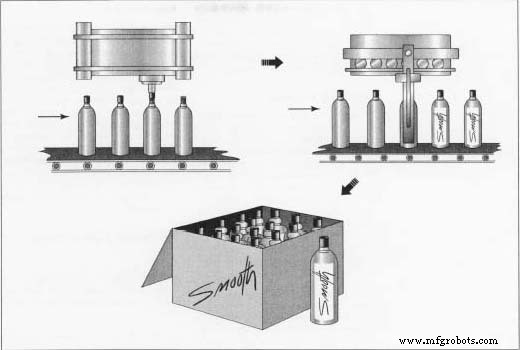
- 3. The filling line consists of an automated conveyor system that delivers pre‑sterilized bottles to a carousel‑type piston filler. The filler dispenses the precise volume required for each container, after which the bottles pass to a capping station that applies and secures the closure. Finally, labeling machines affix product information, and the items are boxed, palletized, and shipped to distributors. A modern line can process over 500 bottles per minute, ensuring high throughput without compromising quality.
Raw Materials and Formulation
The active ingredients that enable hair removal differ between depilatories and epilatories. Depilatories typically use thioglycolate salts (e.g., calcium or potassium thioglycolate) or sulfides (e.g., barium sulfide). These reagents are converted to a reactive acid under the right pH, targeting the hair’s protein matrix while sparing skin proteins. Epilatories rely on waxes such as beeswax combined with polymeric resins that set upon cooling and adhere to hair for easy removal.
Supporting excipients—diluents, emollients, thickeners, fragrances, and colorants—are chosen to enhance product stability, sensory attributes, and safety. Water is the primary diluent for depilatories, whereas mineral oil is common for waxes. Emollients such as silicones or esters soothe the skin, while thickeners like carbomers or modified clays control viscosity. Preservatives, antioxidants, and botanical extracts may be added for extended shelf life and added skin benefits.
Packaging materials also play a role in product integrity. Most depilatories are sold in PVC or HDPE bottles, whereas aerosol variants use steel or aluminum cans. Labels and outer graphics are applied via silk‑screen or adhesive printing, providing clear product information and branding.
Quality Assurance
Maintaining consistency across every batch is critical. Raw‑material suppliers are vetted and their incoming materials undergo rigorous testing for purity, pH, and viscosity. During manufacturing, in‑process checks—such as pH monitoring and sampling for microbial contamination—ensure that deviations are caught early. Inspectors positioned along the filling line can immediately remove defective containers, preventing any compromised product from reaching the market.
Future Directions
Research into hair removal continues to prioritize formulations that reduce skin irritation, lower odor, and extend the duration of smoothness. Scientists are also exploring non‑chemical approaches, such as hair‑growth inhibitors that target follicle activity, potentially offering a longer‑lasting solution. While the market for hair removal remains niche compared to broader personal‑care categories, ongoing innovation keeps the industry responsive to consumer demands for gentler, more effective products.
Manufacturing process
- Comprehensive Guide to Modern Epilation Devices: Design, History, and Future
- The Modern Hair Dryer: Design, Safety, and Future Innovations
- The Science and Manufacturing of Hairspray: From Chemistry to Consumer Use
- The Art and Science of Tattoos: History, Techniques, and Care
- Temporary Tattoos: From Artistry to Advanced Manufacturing
- Artificial Skin: Advanced Tissue Engineering for Burns, Wounds, and Future Regenerative Therapies
- Hair Dye: From Ancient Roots to Modern Manufacturing
- The Art and History of Wigs: From Ancient Ritual to Modern Fashion
- Sunscreen: Science, Production, and the Future of Sun Protection
- Integral Skin Foam: Advanced Dual-Layer Polyurethane Technology