



The Science and Market of Baby Wipes: Materials, Manufacturing, and Future Trends
Background
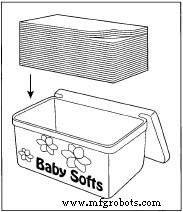
Baby wipes are disposable, pre‑moistened cloths designed to cleanse an infant’s delicate skin. They are made from non‑woven fabrics—similar to those used in dryer sheets—and saturated with a gentle, water‑based solution. The wipes are packaged in plastic tubs that keep the cloths moist and provide easy dispensing.
History
The technology for disposable, non‑woven towelettes emerged in the late 1970s. Early adopters were industry leaders such as Kimberly‑Clark’s Huggies and Procter & Gamble’s Pampers, who held the market until production costs fell. By the 1990s, many supermarket chains introduced private‑label brands, offering lower prices while still meeting quality expectations. Today, wipes typically sell in the $3–$5 range for a 64‑count tub and represent a significant revenue driver for retailers, offsetting the thin margins on diaper sales. According to industry reports, pre‑moistened towelettes grew from $251.4 million in 1996 to $263.9 million in 2000—a 5% increase—highlighting steady consumer demand.
Design
Design focuses on durability, cost, and absorbency. Manufacturers select a fabric that balances these factors and then saturate it with a mild, effective cleansing solution. Packaging innovations—such as thermo‑formed plastic tubs with hinged lids—enable single‑sheet dispensing while preserving moisture. Recent product differentiators include larger refill packs, eye‑catching graphics, and even character‑themed wipes, such as those featuring Jim Henson’s Muppet Babies. Premium Canadian brands tout attributes like higher thickness, greater absorbency, hypo‑allergenic formulations, alcohol‑free and pH‑balanced ingredients, and natural additives such as aloe vera and oatmeal.
Raw Materials
Non‑Woven Fabric
The core material is a non‑woven fabric, produced by pressing a mass of separate fibers into a single sheet. Common fibers include cotton, rayon, polyester, polyethylene, and polypropylene. Unlike woven fabrics that interlace fibers, non‑wovens achieve strength through mechanical bonding or chemical adhesives.
Cleansing Ingredients
The base is water, which dilutes and carries other components. Key ingredients include:
- Amphoteric surfactants—e.g., sodium diamphoacetate and coco phosphatidyl PG‑dimonium chloride—provide gentle cleansing without stripping natural oils.
- Humectants such as propylene glycol and glycerine keep the wipe moist and moisturize skin.
- Softening agents like mineral oil, lanolin, or silicones add a protective film.
- Thickeners (e.g., hydroxymethyl cellulose) control viscosity.
- Preservatives such as methyl and propyl paraben prevent microbial growth.
- Optional fragrance or fragrance‑free formulations cater to consumer preference.
- Featured natural ingredients—aloe vera, oatmeal extract—enhance skin comfort and appeal.
Packaging Components
Packaging must keep wipes sterile, moist, and accessible. Thermo‑molded polyethylene tubs dominate the market, featuring hinged lids for easy access. Production involves injection molding: molten plastic is poured into a two‑part mold, cooled under pressure, and ejected once solidified.
The Manufacturing Process
Non‑Woven Preparation
- Dry‑laid meltblown—plastic pellets are melted, extruded through fine nozzles, and cooled to form a fiber sheet. Hot rollers flatten and bond fibers.
- Wet‑laid—suitable for cotton blends, fibers are mixed into a slurry, pressed into sheets, dried, and slit into narrow rolls. Finished cloths typically weigh at least 1.4 oz/in² (40 g/m²) and can absorb 200–600% of their weight in solution.
Formula Preparation
Ingredients are mixed in large batch tanks. Water is usually the first component, heated if necessary to dissolve powders or melt solids. Subsequent ingredients are added sequentially and blended to achieve a homogeneous solution.
Non‑Woven Treatment
- The wet or dry‑laid cloth is fed onto coating machinery where the cleansing solution is applied via trough immersion or nozzle spray.
- For pouch‑filled wipes, laminated foil pouches are formed, heat‑sealed, and simultaneously filled with cloth and liquid through integrated conduits.
- A final heat sealer ensures the pouch is airtight.
Packaging Operations
- Cloths are automatically folded, stacked, and inserted into inner plastic packs. These packs are then placed in outer tubs with hinged covers, a process patented by Rockline Inc. of Sheboygan, Wisconsin.
Quality Control
Each component undergoes rigorous testing:
- Plastic tubs are inspected for mold defects that could cause leakage.
- Non‑woven fabrics are tested for uniformity and tear strength.
- Pre‑manufacture, the cleansing solution is evaluated for shelf stability, mildness, and potential chemical reactions.
- Human Repeat Insult Patch Tests (HRIPT) determine irritancy by applying the formula to volunteers’ forearms and scoring redness after a set period; scores near 0–1 indicate minimal irritation.
- Batch weights, pH, viscosity, and microbial content are re‑tested before final packaging.
The Future
Marketing and technical trends continue to shape the category. Supermarkets are expanding private‑label wipes to improve margins on baby food and diapers, while consumers gravitate toward larger, cost‑effective packs—Huggies’ recent 160‑count refill is a prime example. Travel‑size options also persist. Technically, the development of milder, more efficient surfactants will enhance safety and efficacy. Fragrance choices and natural ingredients will further differentiate future formulations.
Manufacturing process
- Embracing Cloud Confidence: Key Insights for 2017 IT Strategy
- Designing Baby Products: Ensuring Safety, Compliance, and Market Success
- Pacifier: Design, Safety Standards, and Manufacturing Insights
- Baby Carrier: History, Design, and Safety of Infant Carriers
- Baby Formula: Science, Production, and Future Outlook
- The Evolution and Manufacturing of Baby Strollers: From Cradleboards to Modern Prams
- Build a Budget‑Friendly Raspberry Pi Baby Crying Detector – DIY Guide
- Porsche Design Unveils the P'4911: A Carbon Fiber Baby Stroller for Luxury Parents
- Build a Two-Legged Arduino Robot: Baby Dino DIY Guide
- Navigating Retirement: How Baby Boomers' Knowledge Transfer Shapes Organizational Success