



Telephone: History, Technology, and Future
History
Throughout human history, innovators have sought ways to bridge distances. Early techniques—drum beats, smoke signals, and optical telegraphy—gave way to electric telegraphy by the early 19th century. The very first crude telephones, consisting of a string and two metal cans, appeared in the early 18th century.
In 1863, Johann Philipp Reis demonstrated a working electrical voice‑transmission system. His device used a vibrating membrane to modulate an electric circuit, proving that sound could be converted into an electrical signal. While Reis focused on acoustic principles, other inventors pursued practical applications. Alexander Graham Bell, leveraging his background in vocal physiology and deaf education, filed the first operational telephone patent in 1876.
Bell’s breakthrough came on June 2, 1875, when he and assistant Thomas Watson converted a harmonic telegraph’s intermittent current into a continuous current, enabling the transmission of audible speech. Bell’s original design was a modified telegraph that could carry true sound. Within two years he introduced the magnetic telephone—an ancestor of modern devices—using diaphragm‑based transmitters and receivers.
Early magnetic phones required shouting and suffered from noise and latency, prompting successive refinements. By 1878, the first manual telephone exchange opened in New Haven, Connecticut, serving 21 customers. Automatic dialing arrived in 1891, and long‑distance service began in 1881. Innovations such as loading coils (1900), vacuum‑tube amplification (1912), and the first transcontinental line (1915) dramatically improved range and clarity.
Subsequent milestones include the 1956 Atlantic submarine cable, the 1962 deployment of orbiting satellites, and the 1980 introduction of fiber‑optic networks—each reshaping global connectivity.
Background
Modern telephones still rely on the principles Bell pioneered over a century ago. Picking up a handset connects the device to a routing network; pressing digits on a touch‑tone keypad generates DTMF tones that route the call to the intended recipient, who hears the connection as a ringing tone.
The mouthpiece acts as a microphone: sound waves vibrate a plastic diaphragm, altering the electric field between two metal plates and generating a variable current that travels down the line. On the receiving end, electromagnets drive a metal diaphragm to reproduce the original voice. Amplifiers enhance audibility, and hanging up breaks the circuit, terminating the connection.
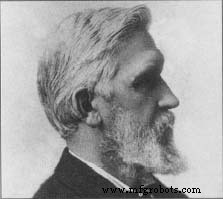 Elisha Gray
Elisha Gray, a rival to Bell and holder of roughly 70 patents, also advanced harmonic telegraphy and telephone technology. Born in Barnesville, Ohio on August 2, 1935, Gray’s career spanned from electrical experiments to founding Western Electric, which became a cornerstone of the Bell Telephone Company.
Raw Materials
Telephones are constructed from glass, ceramics, paper, metals, rubber, and plastics. Circuit boards are silicon‑based; housings are high‑impact polymers with added fillers and colorants; speakers incorporate magnetic materials.
Design
Contemporary handsets integrate transmitter and receiver into a single unit. Dialing mechanisms transitioned from rotary dials to touch‑tone keypads, and ringer systems alert users to incoming calls. Variants include speaker phones, cordless models that use radio waves, and cellular devices that rely on antennae.
The Manufacturing Process
Components are sourced from specialized suppliers and assembled by the phone manufacturer.
Plastic Parts
- Injection molding creates housings, casings, and buttons. Plastic pellets are melted, injected into a chromium‑coated mold, and cooled to form the desired shape.
- After ejection, parts undergo visual inspection; damaged pieces are remelted and reformed.
Internal Electronics
- Printed circuit boards are fabricated with non‑conductive substrates and conductive traces. Chips, diodes, capacitors, and other components are placed by automated pick‑and‑place machines in clean rooms.
- Wave soldering melts a molten solder wave that bonds the components to the board via capillary action, ensuring reliable electrical connections.
Assembly and Packaging
- Transmitters and receivers are mounted by robots, inserted into molded headsets, and secured with screws. The handset is then attached to the base, and the telephone cord is added.
- Completed units are wrapped in protective plastic, boxed with polystyrene cushioning, and shipped to distributors.
Quality Control
Visual and electrical inspections occur at each stage, followed by functional tests under simulated environmental extremes. Mechanical components undergo endurance testing—for example, touch‑tone keys are cycled to match forty years of use. Supplier‑provided parts must meet strict specifications to ensure consistent quality.
The Future
Future telephone designs will emphasize smaller form factors, extended transmission ranges, and superior sound fidelity. Integration with computers, smart TVs, and voice‑activated dialing is already emerging, promising a more seamless communication experience.
Manufacturing process
- Amber: From Ancient Resin to Scientific Treasure – History, Properties, and Modern Uses
- The Guillotine: History, Design, and Legacy
- Silicon: Properties, Production, and Market Outlook
- The Ukulele: From Portuguese Roots to Modern Craftsmanship
- The Complete Guide to the U.S. Chicken Industry: History, Production, and Quality Control
- Compost: The Ultimate Soil Enrichment Solution
- Gelatin: From Ancient Protein to Modern Applications – Production, Uses, and Safety
- The Evolution and Manufacturing of Modern Pin‑Tumbler Locks
- Vodka: From Ancient Distillation to Modern Production
- Milk: Production, Processing, and Nutrition in the United States