



Beef Jerky: Production, History, and Future Trends
Background
Beef jerky is a high‑protein, low‑fat snack created by marinating beef in a curing solution and then drying it. This ancient preservation method yields a flavorful, shelf‑stable product that has become a staple of the growing meat‑snack market, which reached over $240 million in sales in 1996.
Jerky is any meat that has been cured with salt and dried to less than 50% moisture, resulting in a brown, rough texture and concentrated flavor. Compared to fresh meat, jerky is tougher but offers a nutrient‑dense, low‑calorie alternative that is low in cholesterol and fat while delivering high protein and energy.
Flavor innovation drives consumer acceptance. Common varieties include pepper, teriyaki, hot, barbecue, hickory smoked, and maple‑spiced. Turkey jerky has emerged as a popular, perceived‑healthier option.
History
Beef jerky’s origins trace back to the 1800s in South America. The Quechua people of the Inca Empire produced ch’arki (or charqui) by salting strips of game meat and drying them in the sun or over fire. This technique preserved protein for lean seasons and was later adopted by Spanish colonists, who spread it across the Americas. It became a staple for American cowboys and pioneers, with early methods involving smoke huts and fire‑curing. Spices were added over time to improve palatability.
Raw Materials
Quality begins with the meat. Premium, range‑fed USDA‑inspected flank steak is the gold standard for jerky, though some producers use ground beef, which can alter texture. Typically, 5 pounds of raw beef yields 1 pound of finished jerky. Turkey and pork are alternative meats that offer different flavor profiles and tenderness.
The curing solution shapes taste, color, and shelf life. A standard blend contains water, salt, sodium nitrite, and optional sodium ascorbate for enhanced pink hue. Brines may include soy sauce, lemon juice, pepper, MSG, garlic powder, Worcestershire sauce, or teriyaki sauce, along with sugars such as sucrose, dextrose, brown sugar, or dark corn syrup. Liquid smoke and tenderizing agents like polyphosphates or papain are sometimes added to mimic smoky flavor or soften the texture, respectively.
The Manufacturing Process
Initial Meat Preparation
- Defat and debone the meat using centrifugation, mechanical pressing, or filtration. Additional cleaning steps—magnetic separation, X‑ray inspection, and manual screening—ensure purity.
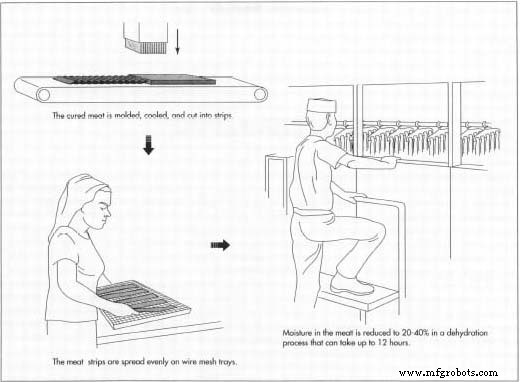
- Slice the frozen, seasoned meat into strips that run parallel to the muscle fibers to preserve natural texture.
Preparing the Curing Solution
- Mix water, salt, seasonings, and additives in a large tank with stirring blades. Heat as needed to dissolve all components.
Meat Processing and Curing
- Submerge or inject the meat with the curing solution; optional tumbling further enhances penetration.
- After curing, cool the meat to 18–28 °F (–8 °C to –2.2 °C) before slicing.
- Dry the strips in ovens at 160 °F (71.1 °C) and gradually cool to 90 °F (32.2 °C). Moisture is reduced to 20–40% over 6–12 hours, depending on the method.
Packaging
- Vacuum‑seal each piece to remove oxygen and inhibit oxidation. Some manufacturers use triple‑barrier bags filled with nitrogen for extra protection.
- Resealable zip‑lock options maintain freshness after opening.
- Pack into boxes, palletize, and ship by truck to retailers.
Quality Control
Regulatory compliance and stringent testing ensure safety and consistency. Raw materials are evaluated for pH, moisture, odor, taste, and appearance. Final products undergo similar inspections to guarantee flavor, texture, and microbial safety. Sanitization of equipment is also rigorously monitored.
The Future
Upcoming innovations focus on expanding flavor palettes, reducing sodium content, and streamlining production for faster, more consistent output. Environmental sustainability will drive waste‑minimizing technologies, positioning beef jerky as both a convenient and eco‑friendly snack.
Manufacturing process
- Imitation Crab Meat: Production, Ingredients, and Future Trends
- Why Structural FRP Is the Ultimate Choice for Meat Processing Facilities
- Silver Fern Farms Navigates Pandemic, Securing Global Meat Exports
- Why Meat Packaging & Labeling Matter: A Key to Consumer Trust and Product Success
- PMI Boosts Welding Efficiency with Collaborative Robots
- Industrial Robot Arms Revolutionizing the Meat Industry
- ABB Robotics: Safeguarding Meat Processing with Advanced Automation
- Reducing Food Contamination in Meat Processing with Fanuc Robots
- Motoman Robotics: Cutting-Edge Automation for Meat Processing
- Rotary Screw Technology Proven to Cut Energy Costs in Meat Processing