



Rice Cakes: History, Production, and Future Trends
Background
Rice cakes have surged in popularity as a low‑calorie, low‑fat snack. Their appeal is rooted in the physics of rice grains, which expand explosively when heat and pressure are applied—a phenomenon also seen in popcorn. Though marketed as a modern, high‑tech treat, rice cakes have a heritage that stretches back thousands of years. Producers celebrate the pop, snap, and crackle, but must manage a delicate balance of moisture, ingredients, timing, and temperature to avoid breakage and ensure consistent quality.
History
The origins of rice cakes are largely undocumented, yet the concept has likely existed as long as rice cultivation itself. Rice, a member of the grass family, has been grown for more than 7,000 years. The 19 known species thrive in warm, humid climates, and early cultivation probably began in southern China or northern Thailand. From Southeast Asia, rice spread across warmer parts of Asia, southern Europe, and eventually the New World. Today, over half of the global population relies on rice as a staple, and its bran layer—rich in fiber, oils, minerals, protein, and vitamins (E, K, B‑complex)—adds nutritional value.
Rice cakes appear in many cultures. In Japan and the Pacific Rim, rice is an economic cornerstone, and rice‑based snacks are integral to daily life. Soft varieties have been popular in Japan for centuries. The sweet confection mochi was enjoyed by the nobility during Japan’s Nara Period (710‑794 A.D.) under strong Chinese influence. Its popularity grew during the Kamakura Shogunate (1192‑1333), with varieties such as botamochi, yakimochi, and chimaki. The Edo Period (1601‑1868) saw rice cakes become festival treats and roadside specialties, a tradition that persists across Asia today.
In China, New Year celebrations feature sticky rice balls, rice candy, and a classic steamed cake blended with milk, sugar, pork fat or lard, and pastes like date or bean paste. The cake can be fried, baked, or boiled. During the British Empire, rice from India, China, and Southeast Asia was imported to England and Europe, giving rise to dishes such as rice pudding and the rice‑bearing “griddle” cake. Puffed rice technology eventually led to the packaged rice cakes that are now a favorite among health‑conscious snackers. 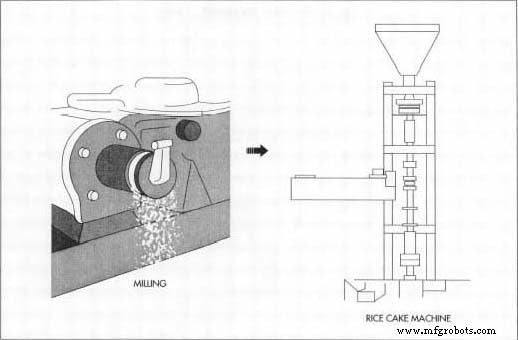
Raw Materials
Rice cakes rely on just two core ingredients: rice and water. The rice must possess the right characteristics—sticky rice (white or brown) works best, while long‑grain varieties expand less vigorously. Water is added early to achieve optimal moisture. Additional seasonings like salt, flavorings, or herbs are applied after popping to preserve texture and avoid breakage.
Product Conceptualization
Ease of production and market appeal drive new product development. Popping machines are significant capital investments, so a new variety must be easily integrated. Trials show that mixing spices, herbs, or seeds into the rice before popping increases breakage; these are therefore added post‑pop. Some manufacturers have discontinued mini rice cakes because the cost of production outweighs sales. Ongoing innovation focuses on flavor diversification while ensuring consumer satisfaction and minimal manufacturing challenges.
The Manufacturing Process
- Rice is soaked until it reaches the target moisture level, then fed into hoppers above popping machines. A typical plant may operate 80–90 machines, each with one to three cooking heads that produce one cake every 15 seconds.
- The moist rice is gravity‑fed into a cast‑iron mold or cooking head. The mold heats to several hundred degrees, a slide plate creates a vacuum, and after 8–10 seconds the lid expands, generating a stronger vacuum. The rice then explodes, filling the mold with a dense, flavorful core. Proper moisture‑density balance prevents “styrofoam”‑like cakes or overly solid “hockey‑puck” cakes.
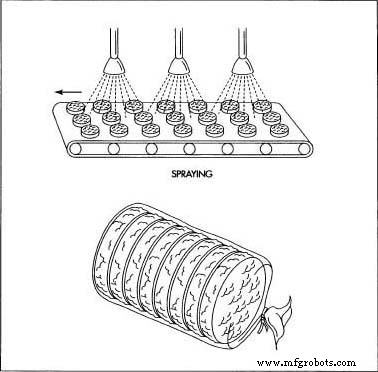
- Once popped, the cake falls onto a conveyor belt that passes beneath spraying heads. Salt or natural flavors—such as strawberry, caramel, apple‑cinnamon, blueberry, almond, salsa, nacho, taco, or tamari seaweed—are sprayed onto the surface. Some manufacturers offer private‑label flavor options.
- The conveyor then travels through a tunnel dryer that removes moisture added by the sprayers.
- Finally, the conveyor reaches the bagging area where each cake is hand‑inspected for breakage, stacked, shrink‑wrapped, and sealed in an overwrap bag bearing product branding. The bags are then cartoned for bulk distribution.
Quality Control
Maintaining moisture levels and clean popping machines is critical, as any breakage translates to revenue loss. Ambient humidity can affect production; on dry days, additional moisture may be needed. The entire process from popping to bagging is completed within minutes to minimize moisture absorption. Machines are cleaned every few hours to prevent residue buildup that can cause brittleness. Hand‑sorting allows defective cakes to be removed before packaging, ensuring a shelf life of over a year without loss of taste or texture. A quick toast can revive crispness in even the freshest cakes.
Byproducts and Waste
Breakage is the only significant waste in rice cake production. Innovative producers repurpose broken cakes as cereal, candy bar ingredients, or snack bags. When a flavor falls out of favor, the product line is refreshed, often guided by trends in chips, crackers, and other snack foods.
The Future
Health consciousness and convenience continue to fuel rice cake demand. Consumers now reject inferior textures and are drawn to designer flavors that pair well with fruit, peanut butter, or other toppings. In an era that values energy, health, and time efficiency, the 15‑second rice cake remains a compelling snack rooted in a long, adaptable tradition.
Manufacturing process
- What is VMC Machining? An Expert Overview of Vertical Machining Centers
- Expert Guide to Aluminum Laser Marking: Precision, Durability, and Industry Applications
- MIG vs. TIG Welding: Selecting the Right Arc Welding Technique for Your Project
- Comprehensive Guide to Laser Marking: Types, Benefits, and Applications
- Key Considerations for High‑Volume Swiss Machining
- CNC Prototyping Guide: Precision, Speed, and Cost‑Effective Production
- Sushi Roll: Craft, History, and Modern Production
- Rice Cakes: History, Production, and Future Trends
- Optimizing Cloud Connectivity: Seamlessly Manage Layer 3 Routing for Agile Multi‑Cloud Environments
- Ensure Quality Without Sacrificing Speed: Advanced Vision Inspection for Your Production Line