



Salsa: From Tradition to Modern Production
Background
Salsa is the Spanish word for sauce, and in Mexico it refers to a broad family of sauces that serve both as ingredients in dishes and as condiments. Most varieties are pepper‑rich, giving them a characteristic heat, and there are literally hundreds of regional recipes, including fruit‑based salsas that balance sweetness and spice. In the United States the term usually denotes a raw tomato‑based sauce—often called salsa cruda—that accompanies tortilla chips and other snacks. By 1991 salsa surpassed ketchup as America’s most popular condiment, and today it accounts for almost half of all sauces sold in the country. In 1992 salsa sales reached $802 million, a figure expected to climb to $1 billion by 1995.
Salsa has been part of Mexican culinary tradition for a millennium, yet the sauce we know today is a balanced blend of Old World and New World ingredients. Tomatoes, tomatillos, and chilies—native to the Americas—combine with onions, garlic, and spices that originated in Europe. Mexican cuisine bears traces of Aztec, Spanish, French, Italian, and Austrian influences. Many of the ingredients that now appear in salsa began in regions as distant as India and the Near East, but they had already become staples of European agriculture before Spain’s conquest of Mexico in the early 16th century. Thus, most of salsa’s core components can be traced to Spanish influence.
Mexican cooking is renowned for its meticulous preparation. Complex dishes such as mole require days of grinding spices, fruits, and even chocolate. Fresh salsa, on the other hand, was traditionally ground in a molcajete and tejolote—a mortar and pestle made from black basalt that has been in use for 3,500 years to produce a variety of foods.
Raw Materials
The basic formula for salsa consists of tomatoes and/or tomato paste, water, a variety of chili peppers—green, yellow, serrano, and/or Anaheim—optional jalapeño peppers, vinegar, onions, garlic, green bell peppers, and a blend of spices such as black pepper, cilantro, paprika, cumin, and oregano. The most common alternative is salsa verde, made with tomatillos. Tomatillos, a member of the Physalis genus, are tart, green fruits encased in papery pods that replace red tomatoes in the classic recipe. Other specialty blends may include green tomatoes, carrots, black‑eyed peas, or even cactus.
Commercially produced salsas often contain additives to preserve flavor and appearance: salt, sugar, vegetable oil, calcium chloride, pectin, modified food starch, xanthan gum, guar gum, dextrose, and potassium sorbate. Colorants such as beet powder and canthaxanthin, and preservatives like sodium benzoate or citric acid, are also common.
The Manufacturing Process
Selecting the produce
- 1. The manufacturer sources fresh, frozen, or dehydrated produce—such as tomatoes, peppers, and onions—from trusted growers. The initial steps involve inspecting, peeling, and stemming tomatoes; roasting, washing, and blanching chili peppers; and cleaning other vegetables. Machines pre‑set to the desired fineness cut the produce. For chunky salsa, vegetables are diced while cilantro is minced; for a smoother consistency, all ingredients are processed to match the texture of tomatoes.
Preparing the produce
- 2. Tomatoes are first inspected and then peeled using a lye solution. Stems, seeds, and any residual skin are removed. Some manufacturers roast green chilies before washing them, then trim stems, seeds, and calyx. The chilies are blanched, and the pH is adjusted with citric acid.
- 3. Remaining produce is cleaned through water tanks or high‑pressure sprays to remove inedible parts. Cutting machines then reduce the vegetables to the desired consistency.
Cooking the salsa
- 4. Because salsa is often transported long distances, it must have a shelf life that prevents mold growth. Most salsa is minimally processed. Tomato paste or processed tomatoes, water, vinegar, and spices are blended in a pre‑mix kettle. This mixture is transferred to a batch kettle with onions and chilies. Cooking methods vary: a slow cook runs at 163 °F (71 °C) for 45 minutes, while a fast cook reaches 253 °F (121 °C) for 30 seconds under pressure.
Vacuum‑sealing the salsa
- 5. After cooking, the salsa is ladled into heat‑resistant containers—glass jars or plastic bottles made of polyethylene or polypropylene. Fresh salsa is placed cold and then steam‑heated; cooked salsa is poured while still warm. The filling machine dispenses by volume, then seals and cools the containers. The cooling contraction creates a partial vacuum that preserves the product.
Packaging
- 6. Unlabeled jars and bottles are stamped with product information and packed in corrugated cardboard boxes for shipment to retailers.
Quality Control
As a food product, salsa undergoes rigorous testing to ensure safety and consistency. All incoming produce and spices are inspected for quality, with a focus on uniformity—especially of chili peppers, whose heat level must fall within a specified range. A salsa labeled “mild” should deliver a gentle piquant flavor, while one labeled “hot” should meet expectations for more daring consumers.
Chili peppers are selected by seed or germplasm that matches the desired Scoville Heat Units (SHU) range. Manufacturers typically limit the highest heat to jalapeño, though some blends use serrano or Anaheim. After production, seasoned tasters evaluate flavor and heat to confirm adherence to brand standards.
Equipment is cleaned daily with chlorides, quaternary ammonium compounds, or other effective antimicrobials, then rinsed thoroughly. Swab tests—where a cotton swab is rubbed over a kettle surface—followed by dilution and incubation in a laboratory incubator, determine microbial counts. FDA and state inspectors routinely audit factories to verify compliance with food safety regulations.
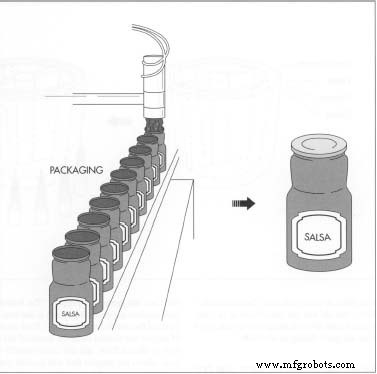
Salsa is packaged automatically using large machines that vacuum‑seal glass or plastic jars after filling them with the appropriate amount of salsa. The surging popularity of this condiment has made it the United States’ most beloved sauce.
Manufacturing process
- What is VMC Machining? An Expert Overview of Vertical Machining Centers
- Expert Guide to Aluminum Laser Marking: Precision, Durability, and Industry Applications
- MIG vs. TIG Welding: Selecting the Right Arc Welding Technique for Your Project
- Comprehensive Guide to Laser Marking: Types, Benefits, and Applications
- Key Considerations for High‑Volume Swiss Machining
- CNC Prototyping Guide: Precision, Speed, and Cost‑Effective Production
- The Art and Science of Lipstick: From Ancient Origins to Modern Production
- Salsa: From Tradition to Modern Production
- Food Color: How Vibrant Hues Enhance Appetite and Presentation
- Key Drivers of Maintenance Excellence at BakeMark's Bakery Plant