



Punch & Die Clearance Guide: Selecting Optimal Gaps for Mild Steel, Stainless Steel & Aluminium
Punch & Die Clearance Guide: Selecting Optimal Gaps for Mild Steel, Stainless Steel & Aluminium
October 24, 2025
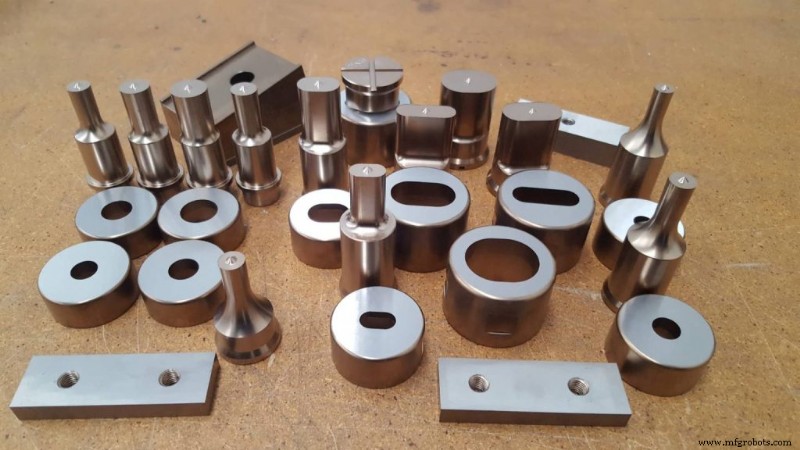
Choose the right punch‑die clearance with Gunna Engineering in Melbourne. We supply high‑precision tools for mild steel, stainless steel, and aluminium.
What is Punch & Die Clearance?
Punch‑die clearance is the measured gap between the punch and die. It is the single most critical parameter for achieving clean, accurate cuts in sheet‑metal fabrication. A gap that is too tight accelerates tool wear and produces rough edges, while a gap that is too wide leads to distortion, poor edge quality and higher material waste. Every metal – mild steel, stainless steel, aluminium – demands its own optimal clearance.
Factors That Affect Clearance Selection
Choosing the correct clearance is a balanced decision that depends on several interrelated factors:
- Material Type & Thickness: Harder or thicker materials generate higher cutting forces and therefore need a slightly larger gap to avoid deformation or tool damage.
- Tooling Quality: Sharp, high‑grade tooling delivers cleaner cuts and slows wear. Investing in precision tooling pays off in lower downtime and longer life.
- Production Requirements: Speed, precision, and tool longevity all influence the clearance setting. Tailoring the gap to your workflow maximises output without compromising quality.
Recommended Clearances by Material Type
Below are industry‑accepted starting points for each material. Adjustments may be required based on specific alloys, thicknesses, or machine capabilities.
- Mild Steel: A slightly wider clearance (0.05–0.10 mm) helps prevent chipping and keeps edges sharp. Regular inspection keeps the tool geometry within spec.
- Stainless Steel: Hardness demands a larger clearance (0.10–0.15 mm). Pair this with proper lubrication to reduce galling and extend tool life.
- Aluminium: A tighter clearance (0.02–0.05 mm) is ideal to avoid bending or tearing. Smooth, polished tooling ensures burr‑free cuts and preserves the material’s integrity.
Benefits of Correct Punch & Die Clearance
Setting the right clearance unlocks several operational advantages:
- Superior Cut Quality: Consistent, uniform components that meet tight specifications.
- Reduced Material Stress: Less distortion means fewer rework cycles and lower waste.
- Extended Tool Life: Proper clearance reduces wear, lowering replacement frequency and cost.
- Higher Production Efficiency: Fewer tool changes and fewer rejected parts keep machines running and profit margins healthy.
For technical depth, consult the Australian Steel Institute’s guide on punching and piercing practices.
Why Choose Gunna Engineering
Gunna Engineering specialises in precision punch‑die solutions. Our punches, dies, and blades are forged from premium European tool steel and shaped with state‑of‑the‑art CNC machining, guaranteeing superior accuracy and durability. By selecting the correct clearance with our help, you’ll achieve consistent performance and outstanding product quality.
Contact us today to discuss your specific requirements and unlock the full potential of your fabrication process.
Explore our gallery to view our premium tool range.
Related Blog Article: Australian‑Made Tool Steels for Punches, Dies & Blades – Built for Industries That Demand Quality
Optimized by: Netwizard SEO
Manufacturing process
- Professional Surface Finishing Techniques for Machined Metal Parts
- Optimizing CAD Drawings for Precision Machining: A Complete Guide
- Arduino IoT Cloud & Amazon Alexa Integration: A Step-by-Step Guide
- Exploring Maintenance Cultures in Industry: Types, Benefits, and Best Practices
- Paper Clip: From Invention to Industrial Staple
- TV Dinners: History, Production, and Future Innovations
- Eggs: Nutrition, Production, and Quality Control in the U.S. Industry
- Lights‑Out Machining Explained: Fully Automated Production Without Human Presence
- Automation in Steel Production: Enhancing Efficiency and Sustainability
- Unleashing Precision: The Power of CNC Swiss Lathes