



TV Dinners: History, Production, and Future Innovations
\n
TV dinners—frozen trays of pre‑cooked meals—have become a staple of modern grocery shelves. As automated conveyor systems assemble each tray, the food is first cooked, portioned, and then flash‑frozen to lock in flavor and nutrition. Since the 1950s, the frozen dinner has generated more than $4.5 billion in annual sales and continues to grow as convenience and technology evolve.
\nHistory
\nThe concept of frozen food dates back centuries, but commercial use accelerated in the 19th century with the advent of mechanical refrigeration. In 1842, H. Benjamin patented an early freezing apparatus, and in 1861, Enoch Piper secured a U.S. patent for freezing fish. The first commercial meat‑freezing plant opened in Sydney, Australia, in 1861, followed by the first successful shipment of frozen meats in 1869.
\nProgress in the beef market spurred the development of additional freezing techniques, such as the 1905 “cold‑pack” slow‑freezing method. Though effective, slow freezing produced large ice crystals that damaged texture and quality. Clarence Birdseye revolutionized the industry by inventing a rapid‑freezing technique that reduced the freezing time from days to minutes. In 1924 he founded Birdseye Seafoods, and by 1930 he had patented a flash‑freezing system that used waxed‑cardboard containers. His collaboration with the grocery industry in 1934 introduced refrigerated display cases, paving the way for widespread adoption of frozen meals.
\nThe breakthrough came in 1945 when airlines began serving frozen meals on board, and by the early 1950s, domestic freezers became affordable. In 1954, the first TV dinners—comprising a protein, starch, vegetable, and dessert—hit U.S. grocery aisles, offering an unprecedented level of convenience for home cooks.
\nBackground
\nFreezing slows enzymatic reactions and inhibits microbial growth, thereby extending shelf life. However, the formation of ice crystals can alter texture and flavor. Birdseye’s quick‑freezing process minimized crystal size, preserving the appearance and taste of fresh food.
\nNot all foods freeze equally. While meats, fish, and poultry generally tolerate freezing, high‑fat varieties may degrade more quickly. Extensive research identifies specific vegetable varieties—such as certain peas—that maintain quality after freezing.
\nDesign & Varieties
\nTV dinners are prized for their convenience, consistent quality, and ease of preparation. Most consumers simply heat the tray in a microwave or oven, though the choice of appliance affects texture—microwaves tend to leave meats soggy, whereas ovens produce a crisper finish.
\nToday’s product lineup spans classic meat and vegetable combos, pasta dishes, Asian‑inspired meals, ethnic specialties, and diet‑friendly options. Each dinner is housed in a partitioned tray—originally aluminum with cardboard, now commonly plastic or paper—to keep components separate and microwave‑safe.
\nTypical sizes range from 10 oz (0.28 kg) to 1 lb (0.45 kg). Packaging materials include aluminum foil, paper, and vacuum‑sealed liners to prevent freezer burn and maintain moisture.
\nRaw Materials
\nHigh‑quality ingredients—meats, potatoes, vegetables, fruits, pasta—form the core of TV dinners. Complementary items such as flour, water, eggs, salt, sugar, onion powder, pepper, and spices enhance flavor, while preservatives like sodium benzoate extend shelf life. Artificial colorants may be used to preserve visual appeal.
\n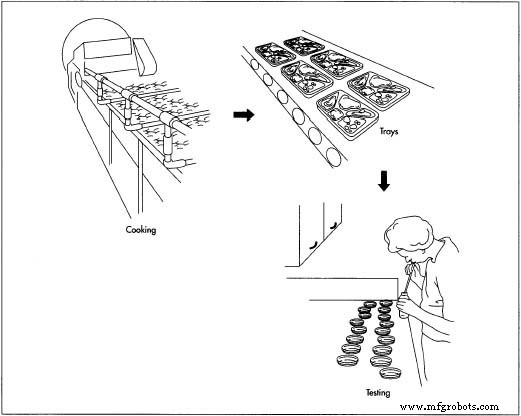
Fresh harvests are frozen within four hours to lock in nutrients. Packaging components—aluminum trays, cardboard, paperboard, or plastic—are sourced from contract manufacturers and printed with product labels and usage instructions.
\nManufacturing Process
\nThe production line is fully automated and divided into three core stages: processing, loading, and freezing.
\nFood Preparation
\n- \n
- Raw‑material inspection. Each ingredient is tested for pH, moisture, odor, and appearance to meet USDA standards. \n
- Processing. Vegetables and fruits are washed, blanched (steam or boil 1–3 min) to deactivate enzymes; meats are trimmed, filleted, or dressed; poultry is washed and dressed. \n
- Cooking. Meats are seasoned and roasted; vegetables are steamed or boiled; potatoes are whipped or baked; sauces and desserts are prepared. \n
- Quality check. Final dishes are tasted and analyzed for flavor balance before moving to the filling line. \n
Tray Loading
\n- \n
- Automated filling. Conveyors feed trays to robotic dispensers that deposit precise portions into each compartment. \n
- Sealing. Once filled, trays are covered with foil, paper, or a plastic lid and a partial vacuum is applied to prevent evaporation and freezer burn. \n
Freezing & Shipping
\n- \n
- Rapid freezing. Most manufacturers use cold‑air blast tunnels that reach –75 °F (–59 °C) to instantly freeze the trays. \n
- Packaging. Frozen trays are stacked, boxed in cardboard cases, and palletized. \n
- Cold chain. Products are stored at 0 °F (–18 °C) during transit and in retail freezers to preserve quality. \n
Quality Control
\nU.S. regulations impose rigorous standards for food safety. Quality control spans from raw‑material inspection to final product verification. Sterilization, microbial testing, and sensory evaluation ensure that each tray meets the highest safety and flavor benchmarks.
\nFuture Innovations
\nAdvancements such as cryogenic freezing—ultra‑fast cooling that produces microscopic ice crystals—allow previously unsuitable foods to be frozen without compromising texture. New packaging materials and “smart” trays that create a baked texture in microwaves are under development, promising even greater convenience and culinary quality.
\nManufacturing process
- Amber: From Ancient Resin to Scientific Treasure – History, Properties, and Modern Uses
- The Guillotine: History, Design, and Legacy
- Silicon: Properties, Production, and Market Outlook
- The Ukulele: From Portuguese Roots to Modern Craftsmanship
- The Complete Guide to the U.S. Chicken Industry: History, Production, and Quality Control
- Compost: The Ultimate Soil Enrichment Solution
- Gelatin: From Ancient Protein to Modern Applications – Production, Uses, and Safety
- The Evolution and Manufacturing of Modern Pin‑Tumbler Locks
- Vodka: From Ancient Distillation to Modern Production
- Milk: Production, Processing, and Nutrition in the United States