Industrial manufacturing
Manufacturing process

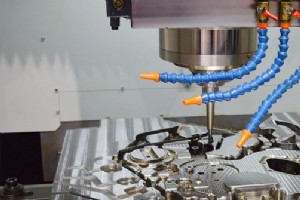
Process planning refers to the entire process, and cannot be judged by the nature of a process and the processing of a certain surface. For example, some positioning reference planes need to be processed very accurately in the semi-finishing stage or even in the roughing stage. Sometimes in orde
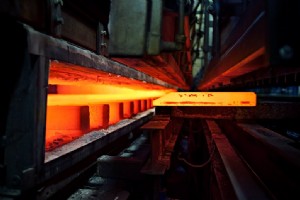
In order to improve the viability and competitiveness of precision machining enterprises, among many factors, the key is to rely on advanced technology. With the development of modern industry, more and more companies have begun to pay attention to craftsmanship. Craft documents are the foundati
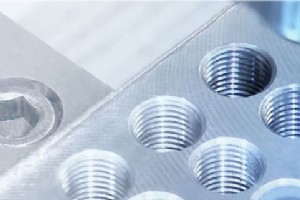
Screws still play an important role in the machinery industry. To connect the screw to another component, an internal thread is required. It is also possible to cut threads on the outer surface of the machined part. Threads allow parts to be easily connected together at low cost. Manufacturers u
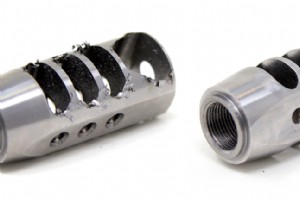
At present, almost most customized CNC machining parts will produce more or less burrs after processing. They not only affect the beauty of the parts, but also fail to meet high-precision standards, and even affect the assembly, performance and life of the product. So we must remove them in orde
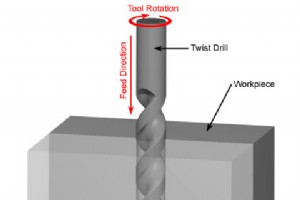
Depending on the size and accuracy requirements, the machining of macro-size holes on solid surfaces requires several different metal cutting operations. Drilling, boring, reaming, and honing are common processes used by manufacturing companies. All processes involve, to some extent, creating ne
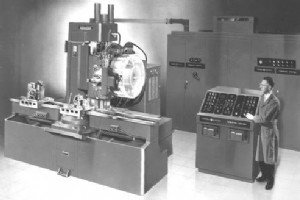
CNC machining is a series of subtractive manufacturing techniques that use a computer-controlled process to manufacture parts by removing material from larger blocks. Since each cutting operation is controlled by a computer, multiple processing stations can manufacture parts based on the same de

Drilling is a material-removing or cutting process in which the tool uses a drill bit to cut a hole of circular cross-section in solid materials. We will introduce the drilling techniques from the use of coolant, chip control, feed and cutting speed control, and a rough introduction to the techn
The objects of precision parts processing are roughly divided into two types: one is the machining of standard parts, and the other is the machining of non-standard parts. Relatively speaking, the machining of non-standard parts is more difficult than standard parts. Many newcomer
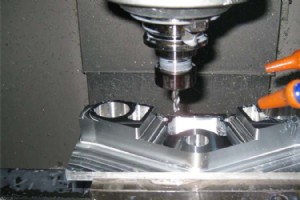
Many companies’ newly developed products require high-precision parts machining and customization services, and models are made to verify during the development process. High-precision parts machining and customization are mainly used to test the rationality of product structure and user e
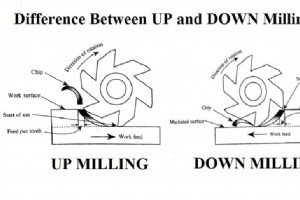
Experts use countless CNC milling techniques to make the most of CNC machine tools, depending on the size, shape, features and materials of the parts being machined. One of these techniques used in the machinery industry is the use of different cutting methods, namely down-milling and post-milli
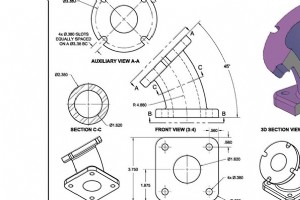
Technical drawings (and the drawing process) are a way of transferring information between engineers and manufacturers. Technical drawings usually supplement digital CAD files to provide additional information. Engineering drawings use standardized language and symbols. This makes the understand
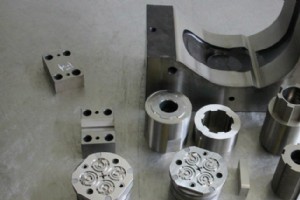
As EDM machining has many incomparable advantages in traditional cutting, its application fields are expanding day by day, and it has been widely used in machinery, aerospace, aviation, electronics, motors, electrical appliances, precision machinery, instruments, automobiles, light industry, etc

Today, medical device contract manufacturing is a booming industry. Medical equipment is made of specific metals to ensure that the equipment will work properly for a long time without the risk of corrosion or being affected by the surrounding environment, as this may affect the recovery of the
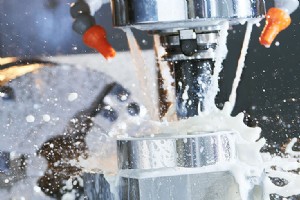
The purest chemical element, aluminum, is soft, malleable, non-magnetic and silver-white. However, this element is not only used in pure form. Aluminum is usually alloyed with various elements (such as manganese, copper, and magnesium) to form hundreds of aluminum alloys with various significant

In order to achieve high-speed and high-precision boring machining, it is necessary to pay attention to the impact of tool tooth vibration on the surface roughness and tool life. In order to prevent the reduction of machining accuracy and tool life, the selected machining center must be equipped
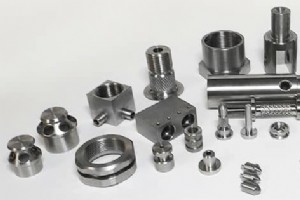
The continuous emergence of new products puts forward higher requirements for the materials of the parts. Sometimes the required materials must meet the special requirements of high hardness, high wear resistance, high toughness, etc., resulting in a batch of difficult-to-process materials, and
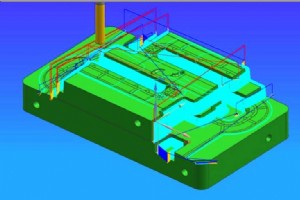
Over-positioning is also called repeated positioning. The positioning in which the same degree of freedom of the workpiece is repeatedly restricted by 2 or more support points is called over-positioning. Whether the workpiece is allowed to be over-positioned or not should be determined according
Although CNC milling has surpassed manual milling with better technology and wider applications, manual processing still occupies an important position in the field of machining. Therefore, in this article, we will introduce some related content about manual milling, hoping to help you. What Is

What does the formation of the milling surface depend on? The resulting milled surface may be an axial surface, a radial surface or a complex surface, depending on the type of tool and process used. Tool Type For Milling Surface 01. Axially Generated Surface The shape of the bottom of
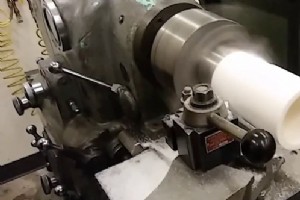
Polytetrafluoroethylene (PTFE), the most well-known brand name is Teflon, is a synthetic fluoropolymer thermoplastic. PTFE-Teflon is different from most engineering plastics because it has a high melting point, low friction coefficient and chemical Inert. Despite its general mechanical propertie
Manufacturing process