Industrial manufacturing
Manufacturing process


Punching and blanking runs are two entirely different processes. Using sheet metal to illustrate that assertion, two singular products pop out of the production line. Let’s start with the punching equipment. The sheet metal is struck repeatedly by the tool, waste is stamped free, and the sheet
Metal fabrication is one of the largest industries in the engineering world. The reason? Metal fabrication allows for companies to effectively, safely, and quickly punch, cut, and bend metal into the form needed for their products. From motor vehicles to skyscrapers, metal fabrication is a necessary
Punches are indentation tools. If you strike the blunt head of this narrow shaft with a hammer, the opposing end of the tool creates an indented mark in a metal workpiece. To look at it, a punch is obviously manufactured from an equally rigid metal. It’s shaped a little like a pen, but the bus
CNC punching is a computer controlled means of indenting sheet metal. Instead of a manually held punch tool, it’s a punch pressing machine that carries out this automated process. Think of a simplified example of this equipment station. A single head is mounted on a stationary arm. Sheet metal
Tool steel has to be much tougher than a regular alloy. The materials are hard, abrasion and impact resistant, and they’re designed to defy wear. All things considered, then, machine dies and punches are obviously substantially harder than those workpiece alloys. That’s because they must
Sophisticated punches and dies indent metal surfaces with clearly detailed outlines. The marks are precise, easy to identify, and they repeatedly stamp out identical tags. It seems like these hardened alloy tools will last forever. Regrettably, nothing lasts forever, not even a super-toughened punch
There’s no need to get ahead of ourselves, no desire to put the proverbial cart before the horse, so let’s define an EDM Spark Eroding Machine before taking it apart and explaining its various inner workings. This is Electrical Discharge Machining (EDM), a manufacturing technique that us
When processing workpieces, manufacturers utilise different tools to produce quality output. Two tools that have been consistent in generating excellent parts and products are punches and dies. Punches are tools that pierce through a workpiece, creating holes that are necessary for its production. T
Different industries maximise cutting blades in carrying out their operations. Some industries that use them are food processing, metal fabrication, and wood manufacturing industries. By investing in quality industrial cutting blades, these industries can carry out processes such as trimming, scorin
Various industries today prefer computer numerical control (CNC) machining due to its associated benefits. CNC machining, for instance, can automate everything, which makes industrial processes be done in a short time. The automation of CNC machining also cuts costs and demand for manual labour. The
When it comes to making current manufacturing products, sheet metal punching can’t be overlooked. The tool called punch die is forced into a sheet metal workpiece to make a hole in the process known as shearing. Slugs, little waste metal fragments formed during the punching process, are anothe
Hydraulic mechanisms are generally considered to be the technology that is both the most cost-effective and the most energy-efficient when it comes to cutting metal sheets or plates. Shearing machines are developed to fulfil particular industry requirements, such as simplifying the process of produc
There is a lot of carbon in tool steels, as well as a variety of alloying elements. Physical qualities may be enhanced by these components, making them ideal for a variety of applications. Tool steel may be used in a variety of ways. Cold-working tool steels, which include oil-hardening tool steels,
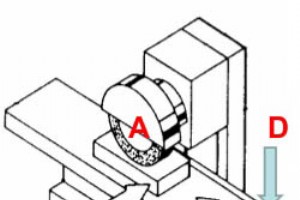
In the metalworking shop, surface grinding is a vital process that plays a function. When it comes to the finishing of a product, a surface grinder is a necessary instrument. This is true whether your goal is to maintain tight tolerances or to improve your appearance. Grinding is done on flat surfac
You’ve come to the correct site if you’re interested in learning about CNC turning. CNC turning is a CNC procedure that removes material from a spinning rigid object using a cutting tool, which is often a non-moving part of the lathe or turning centre. A variety of forms and sizes may be
Shock-resistant steels are a subset of tool steels with extremely high impact toughness, poor abrasion resistance, and the ability to achieve reasonably high hardness (HRC 58/60). According to the AISI categorisation system, shock-resistant steels are classified as Group S. Chromium-tungsten, silico
Many fabricators have high-volume, active punches and die that must be properly maintained to function effectively. Regular maintenance increases the equipment’s capacity to deliver clean, sheared, straight-cut edges and ensures that the tooling will keep very tight dimensional part tolerances

Grinding mode refers to welding helmets that have an external grind control option. This option allows the welder to put the helmet into grind mode with a flip of a switch or a push of a button. Grind mode has proven to be important in improving the safety and productivity of the welding helmet
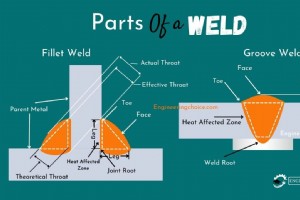
When we examine welding in detail, it is important to know the names of the different parts of a weld. To understand the different parts of a weld use the image above along with the definitions. Fillet Weld Fillet welding refers to the joins of two pieces of metal when they are perpendicu
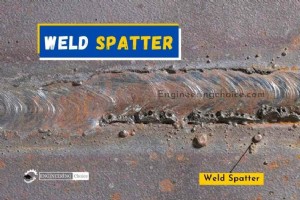
What is Welding Spatter? Weld spatter consists of droplets of molten metal or non-metallic material that are scattered or splashed during the welding process. These small bits of hot material may be fly and fall on the workbench or on the floor, while others may stick to the base material or
Manufacturing process