



How to Build and Measure a Lean Maintenance Strategy: A Practical Guide
Professional racing showcases unparalleled efficiency—waste is not just disliked, it’s eradicated. Every millisecond of a pit stop serves a purpose, and every component of a race car is scrutinized to operate at peak performance. Translating this precision to the shop floor yields a lean maintenance strategy that relentlessly eliminates waste at every stage of your maintenance program, enabling you to move faster, farther, and more cheaply.
This guide explains how to design, implement, and measure a lean maintenance strategy, covering:
- What lean maintenance means
- The types of waste in maintenance
- A step‑by‑step formula for building a lean maintenance plan
- Key metrics that track lean maintenance success
What Is Lean Maintenance?
Lean maintenance mirrors lean manufacturing: it is an ongoing cycle of identifying, reducing, and eliminating waste from maintenance activities. Waste is anything that does not increase output, lower costs, or enhance productivity.
Typical maintenance waste includes:
- Paying for parts that become obsolete before use
- Time spent clarifying maintenance requests
- Collecting data that never gets used
Because waste is often subtle, lean maintenance requires iterative improvement—small, continuous changes that refine processes over time. It is a long‑term mindset, not a one‑time project.
Benefits of Lean Maintenance
Lean maintenance eliminates the recurring “what a waste” moments you encounter in day‑to‑day operations. The four core benefits are:
1. Cost Savings
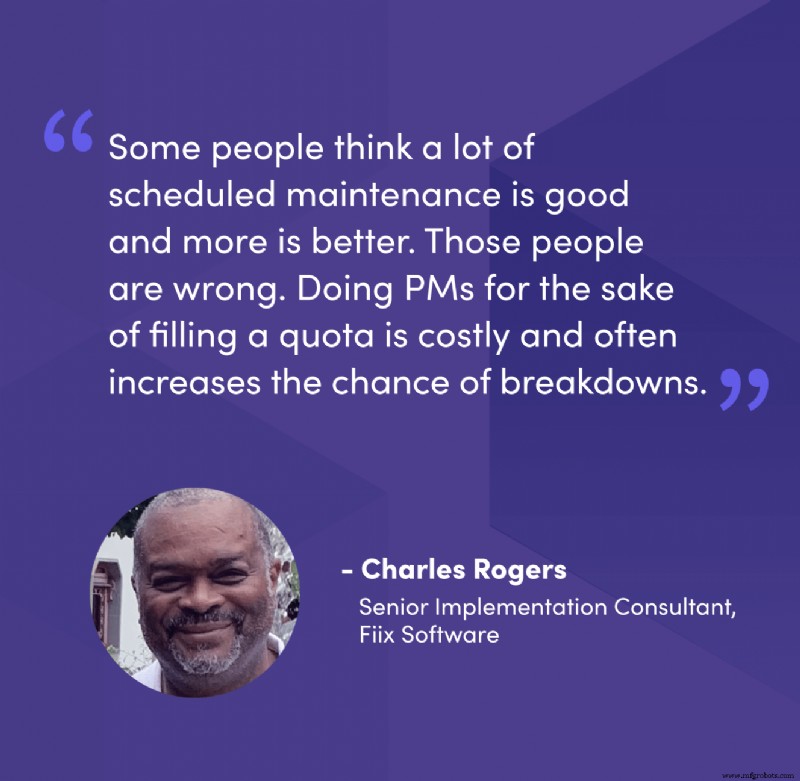
By cutting direct labor and resource costs—and reducing indirect losses from downtime—lean maintenance delivers significant savings. For instance, reducing routine maintenance from weekly to monthly can lower labor costs by 75%.
2. Efficiency Gains
Lean strategies uncover activities that consume excessive time, enabling teams to streamline or eliminate them. Voltalia’s maintenance team cut 40 hours of weekly travel by opening a satellite office near an off‑site facility.
Read more about how Voltalia achieved data‑driven maintenance
3. Maximized Potential
When technicians focus on core tasks rather than redundant support, both equipment and personnel perform at full capacity. Tom Dufton’s team reclaimed technicians’ time by adding operators, allowing them to concentrate on maintenance.
4. Employee Engagement
Reducing administrative burden frees technicians to up‑skill and adopt new technologies. This engagement is critical for realizing ROI on maintenance software investments.

Three Types of Waste in Maintenance
Waste manifests across three domains: environmental, financial, and human potential. Identifying where waste occurs is the first step toward elimination.
Environmental Waste
Examples:
- Increased scrap or rework after maintenance
- Fuel overuse due to poorly maintained vehicles or unnecessary travel
- Overstocked parts from outdated purchasing schedules
Consequences include higher pollution, carbon emissions, low‑quality products, and safety hazards.
Mitigation strategies:
- Frequent inventory cycle counts and just‑in‑time purchasing to prevent excess stock
- Batching scheduled maintenance to reduce travel
- Mandatory second‑technician checks before production to avoid rework
See how your maintenance team can increase sustainability
Financial Waste
Financial waste covers unnecessary labor, parts, and lost production due to inefficient maintenance.
- Over‑frequent preventive tasks inflate labor and parts costs
- Incorrect assembly or rebuilding leads to defective products
- Delays from parts shortages increase downtime
Impacts: higher costs, increased CAPEX, lost revenue, and missed growth opportunities.
Lean strategies:
- Eliminate or reduce redundant preventive tasks
- Shift to maintenance while equipment runs when possible
- Implement a FRACAS system to pre‑empt critical failures
- Create parts kits to speed repairs and avoid stockouts
- Hold regular meetings with production to align maintenance and operations
Wasted Human Potential
Administrative overload drains skilled technicians from high‑value tasks, leading to burnout, low morale, and turnover.
- Excessive work‑order creation, review, and sorting
- Repetitive fixes of the same component
- Inspection of non‑critical equipment with minimal failure risk
- Intermittent production support duties
- Time spent locating parts in storerooms
Consequences: knowledge loss, low wrench time, low system adoption, and inaccurate data.
Lean tactics:
- Hold frequent team meetings to surface challenges and brainstorm solutions
- Automate routine tasks like work‑order generation and reporting
- Remove low‑yield scheduled maintenance
- Train operators to perform routine upkeep
Get tips for reducing turnover on your maintenance team
Creating a Lean Maintenance Mindset
Adopting a lean mindset requires asking the right questions, challenging status‑quo practices, and embracing continuous change.
1. Shift from Small Details to the Big Picture
Daily firefighting can dominate a maintenance team. A lean mindset aligns activities with business and production goals, deprioritizing work that does not add value.
For example, if a weekly report does not eliminate waste, consider replacing it with a more impactful analysis or reallocating that hour to waste‑removal initiatives.
Download this template to connect maintenance goals to business targets
2. Embrace Data Collection as a Core Habit
Lean maintenance hinges on data. The extra minutes spent filling out work‑order fields build a knowledge base that drives improvement. Build time into schedules for thorough data capture and communicate its importance to avoid rushed or inaccurate entries.
3. Replace Big‑Picture Fixes with Iterative Improvements
Leaders often chase dramatic wins, but lean success stems from incremental, consistent gains. Set small, measurable targets—such as reducing scheduled‑maintenance delays by 10–15% over a year—track progress, celebrate wins, and gather technician feedback to maintain ownership.
4. Question the Status Quo
Accepting “that’s how we’ve always done it” stifles innovation. Adopt a win‑or‑learn mindset, allowing your team to critique processes without blame. For example, reassess a decade‑old preventive schedule to determine if it still meets current equipment and workforce realities.
Building a Lean Maintenance Strategy
Use the following three‑step formula:
- Map your current processes and performance.
- Identify and eliminate waste.
- Establish repeatable processes to sustain improvements.
Step 1: Map Your Maintenance Process
Document every aspect of maintenance, from equipment criticality and failure modes (use the FMEA template) to inspection schedules, emergency response, and parts inventory. Align this map with business variables such as seasonal production, sales cycles, and strategic goals.
Step 2: Identify Immediate Improvement Opportunities
- Engage technicians in process reviews to spot bottlenecks. Simple fixes—like color‑coding lubricants—can prevent costly mistakes.
- Perform root‑cause analyses on tasks that exceed time or cost estimates. For instance, inconsistent repair times may indicate the need for specialist scheduling.
- Audit preventive maintenance to verify necessity, frequency, and resource allocation. Trigger maintenance based on usage rather than arbitrary intervals.
- Develop KPIs that reveal hidden inefficiencies, such as turnover rates or knowledge‑sharing metrics.
Step 3: Build a Long‑Term Vision
Document every iteration, its impact, and future directions. When a change yields negative results, analyze the root cause and explore alternative adjustments rather than reverting immediately. Continuous refinement is the essence of lean.
Choosing Metrics and Tracking Success
While specific KPIs will vary, the following categories provide a robust foundation:
| Environmental Waste | Financial Waste | Human Potential Waste |
|---|---|---|
| Idle times, travel times, raw material disposal | Maintenance costs, equipment downtime, carbon emissions/energy use | Employee turnover, time spent on production support, time on administrative tasks |
| Rate of corrective maintenance after inspections | Number of steps in a maintenance process, raw materials usage |
Start with a manageable set of metrics that directly support business objectives. Two approaches work well:
- Small‑scale focus: Target the top 10 most costly tasks and reduce waste in those areas.
- Broad impact: Pursue cross‑site standardization to improve multiple metrics simultaneously.
Celebrate and communicate wins—small gains compound into major performance leaps, driving momentum and securing future resources.

Lean Maintenance Is Ongoing
At its core, lean maintenance aligns practices with business needs, transforming maintenance from a cost center into a value driver. This shift may face resistance, but it positions your team as a strategic partner, opening doors for further investment and influence.
Equipment Maintenance and Repair
- Donsco Incorporates eMaint to Accelerate Manufacturing Excellence
- Ensure Peak Truck Performance: Edmonton Heavy‑Duty Mechanics for Reliable Fleet Maintenance
- Salty Rentals Enhances Asset Management with eMaint Maintenance Calls
- Maintenance Software Costs & Benefits: How to Justify Your CMMS Investment
- Key Maintenance Gaps That Prolong Clinical Trial Timelines
- Absolute Energy Powered by eMaint: Advancing Sustainable Fuel Solutions
- How Sensors are Transforming Manufacturing Today and Tomorrow
- Why Leasing Equipment Outperforms Buying for Your Business
- Why Accurate Equipment Bill of Materials Is Critical for Reliable Operations
- How a CMMS Drives Efficiency and Compliance in Large Enterprise Asset Management