



Audit Your Preventive Maintenance Schedule to Maximize Team Efficiency
Ryan Robinson set out to transform his equipment maintenance program. As the shop manager of a wholesale tree‑grower in Oregon, he wanted to shrink breakdowns and trim labor costs by tightening his preventive maintenance (PM) schedule. The obstacle? A mountain of binders – hundreds of them, chronicling 70 years of maintenance data.
“It was impossible to spot trends or build an effective schedule when all the information was buried in paper stacks,” Ryan explains. “We were losing time and productivity.”
His journey illustrates a common challenge: a maintenance program is only as strong as its schedule. Over‑scheduling drains budgets and creates redundant work; under‑scheduling raises failure rates and cuts output. Finding the sweet spot is tough, especially when the crew is stuck in a business‑as‑usual mindset.
This article gives you a proven framework to audit your PM schedule, determine whether you’re doing the right work at the right time, and adjust your plan for maximum impact.
What Is an Equipment Maintenance Program?
At its core, an equipment maintenance program keeps assets safe, reliable, and productive. It balances budget constraints, production targets, and limited labor hours. The goal is to allocate resources to the most valuable work at the optimal moment, extending asset life while minimizing waste.
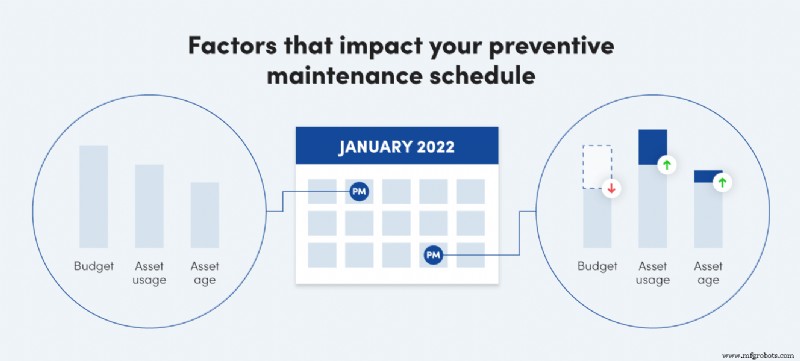
A world‑class program never rests on a static PM calendar. Assets age, operating conditions change, and budgets fluctuate. Continuous data collection lets you measure how your schedule affects performance, making regular audits essential to remove inefficiencies and adapt to evolving circumstances.
What Is a Preventive Maintenance Audit?
A PM audit evaluates whether your maintenance tasks:
- Are the right activities that genuinely improve availability, performance, and safety?
- Occur at the correct frequency to catch failures early without unnecessary work?
- Are executed in a way that minimizes risk and maximizes labor and capital investment?
By answering these questions, you can realign your schedule to build a top‑tier maintenance program.
Which PM Tasks Should You Audit?
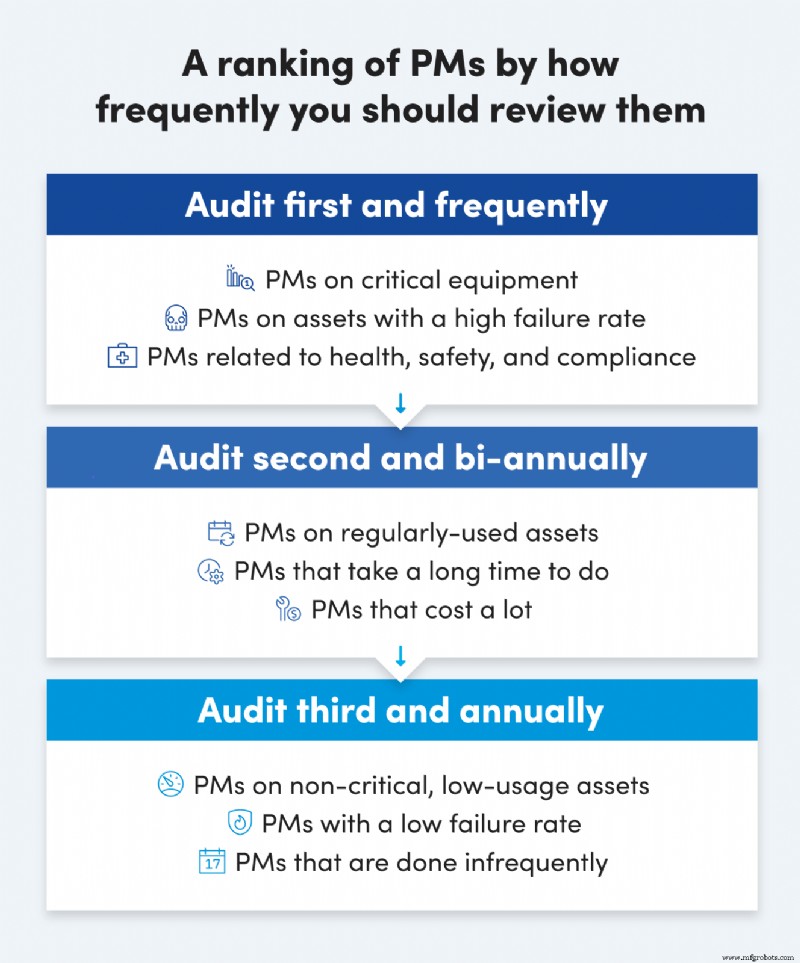
Most maintenance programs generate over 2,200 PM work orders annually. Auditing every single one is impractical. Start with the components that matter most:
- Critical assets that drive production volume or product safety (e.g., x‑ray machines, metal detectors).
- Equipment that frequently breaks down or underperforms.
- Tasks mandated by compliance or regulatory requirements.
Focusing on these areas yields quick wins and long‑term efficiency.
How to Audit Your Preventive Maintenance Tasks
Frequency
Examine the interval between inspections and the triggers that schedule them. Ask: should the task be performed more, less, or at the same frequency? Adjustments can dramatically improve ROI.
- If a task consistently prevents corrective work, keep the interval.
- Frequent breakdowns between checks suggest shortening the interval or switching to usage‑based triggers.
- Zero findings across many inspections may allow you to extend the interval and reduce labor.
Equipment Criticality
Understanding criticality helps prioritize repairs, allocate technicians, and decide whether to add spare capacity during peak seasons.
- Prioritize high‑criticality machines when resources are limited.
- Address missed PMs on critical assets first to avoid costly downtime.
Use the scorecard template below to rate criticality.
Specialization
Assess the skill level required for each task:
- Does the task need a specialized skill?
- How many technicians possess that skill?
- Do you need an external contractor?
Group specialized tasks into single time blocks to reduce travel and re‑tooling costs.
Backup Equipment
Leverage redundant assets to test new strategies safely. Experiment with longer intervals, operator‑led maintenance, or sensor‑based triggers on backup units while keeping a ready fallback for the primary machine.
Estimated vs. Actual Time
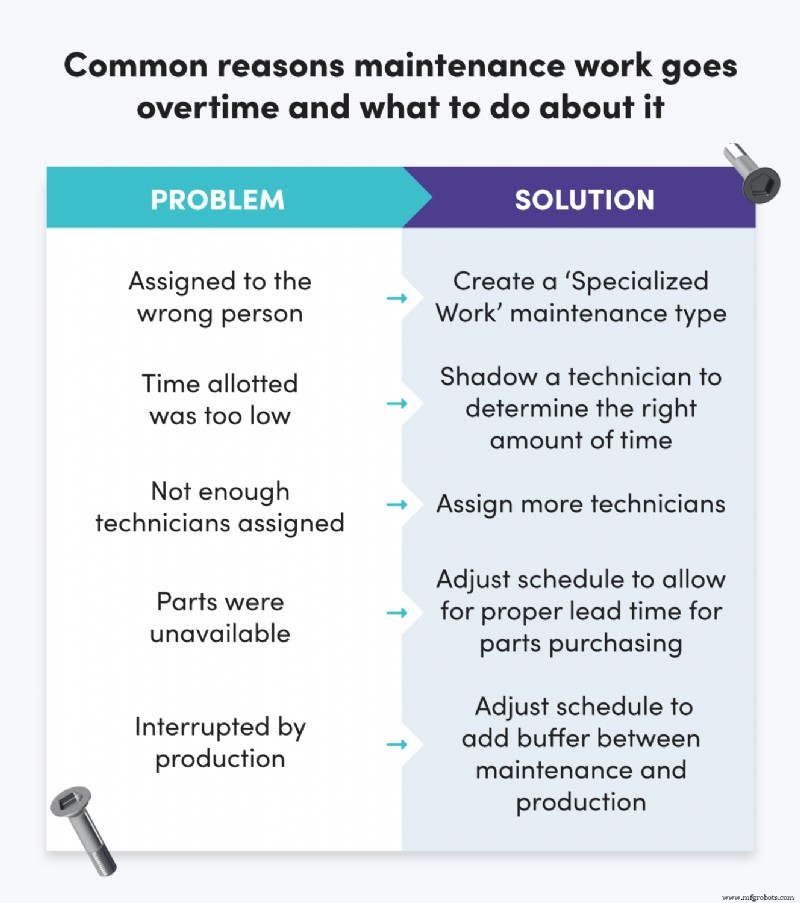
Track PMs that routinely exceed estimates. Common causes include wrong personnel assignment, unrealistic time budgets, insufficient staffing, parts shortages, or production interference. Adjust schedules or add buffers accordingly. Shadow technicians on frequent tasks to capture realistic completion times.
Operation Mode
Identify tasks that can be performed while equipment is still running. Re‑scheduling such work frees downtime for critical maintenance.
Impact of Failure
Not all failures are equal. Use failure codes and FMEA templates to prioritize PMs that prevent high‑impact failures. Consider grouping low‑impact corrective actions to save labor.
Key takeaways:
- Escalate high‑impact failures promptly.
- Batch low‑impact corrections to reduce cumulative labor.
- Monitor quality and start‑up performance post‑maintenance; adjust if issues arise.
Preventive Maintenance Audit Scorecard
| Scoring Criteria | Score (1‑10) |
|---|---|
| Follow‑up tasks created after this task | |
| Criticality of the equipment | |
| Specialization of the work | |
| Availability of required skill on the team | |
| Backup equipment availability | |
| Frequency of exceeding estimated completion time | |
| Proportion of task completed while equipment remains operational (10 = all while operational) | |
| Impact on asset health |
How Often Should You Audit Your PM Schedule?
Trigger audits by pain points—when teams hit roadblocks or when the schedule feels stale. Jason Afara recommends an audit every six months to a year, depending on resources. Break the workload into monthly subsets for manageable progress.
Ensuring Successful Change
Engage technicians individually and as a team to explain the rationale and benefits of any change. Post‑implementation, track production schedules and work orders for new trends. Use the 10 maintenance metrics outlined earlier to evaluate impact.
Building a Streamlined Maintenance Program, Step by Step
A sustainable maintenance program relies on continuous improvement. Regular PM audits ensure each task adds value, has an appropriate frequency, and delivers measurable impact. Over time, the schedule will evolve into a lean, cost‑effective system that fully leverages your team’s expertise and maximizes asset uptime.
Equipment Maintenance and Repair
- Maximize Efficiency: Expand eMaint Across All Departments and Worksites
- Begin With Preventive Maintenance, Then Move to Root‑Cause Elimination
- Employee Involvement & Problem‑Solving on the Factory Floor: A 4‑Step Guide
- Strengthen Your Maintenance System Before Adding New Programs
- Enhance Reliability: Optimize Your Maintenance Strategy with PMO and FMEA
- Mastering Plant Maintenance Shutdowns: A Proven Guide to Budget & Schedule Success
- Is Continuous Monitoring the Right Choice for Your Operations?
- Essential Hydraulic Hose Standards for Optimal Safety and Performance
- Digital Transformation in Maintenance: 19 Key Insights from Our IDC Webinar
- Top 7 Manufacturing Trends Shaping 2020 and Beyond