



5 Proven Strategies to Boost Production Efficiency Through Maintenance
Every day, meat‑processing plants rely on accurate metal‑detector checks to guarantee product safety and regulatory compliance.
Traditionally, this involves running test balls through the equipment—a 45‑minute routine comprising 25 minutes of manual inspection and 20 minutes of documentation.
Replacing manual checks with an automated test‑ball launcher shrinks the task to five minutes and adds more than 160 hours of annual equipment availability.
That single improvement illustrates how fine‑tuning maintenance can unlock production gains. The following article explores additional tactics that align maintenance activities with higher throughput.
- How maintenance drives production efficiency
- Five actionable strategies for the maintenance team
- Measuring the ROI of maintenance on output
What is production efficiency?
In manufacturing, production efficiency measures how closely actual output matches a defined standard rate, reflecting both speed and quality.
Higher efficiency delivers three core benefits:
- Lower resource consumption: Produce the same volume with fewer inputs.
- Improved margins: Cost savings translate into healthier profit across the supply chain.
- Reliable customer experience: Consistent, on‑time delivery builds trust.
See how maintenance underpins a world‑class customer experience.
Calculating production efficiency
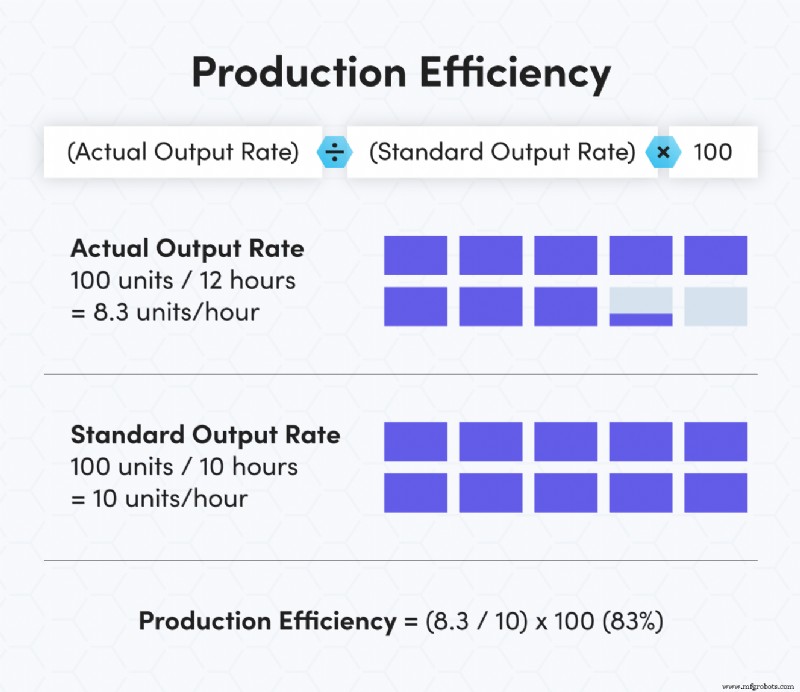
Production efficiency = (Actual Output Rate ÷ Standard Output Rate) × 100.
For example, a plant expected to complete 100 units in 10 hours but took 12 hours. Actual output = 8.3 units/hr; Standard output = 10 units/hr; Efficiency = 83 %.
Get a complete guide to maintenance metrics and how to use them at your facility.
How maintenance boosts production efficiency
Effective maintenance maximizes Total Effective Equipment Performance (TEEP). Preventive programs that keep assets operating at peak condition achieve:
- Reduced downtime: Early fault detection prevents major breakdowns and aligns scheduled maintenance with production plans.
- Root‑cause resolution: A FRACAS system targets recurring failures, improving availability and product quality.
- Smoother shift handovers: Clear, timely communication minimizes hand‑off delays.
- Consistent SOPs: Well‑defined procedures train operators to perform routine checks, lowering accident and failure rates.

Five actions your maintenance team can implement immediately
While long‑term projects are essential, quick wins demonstrate value and build momentum. Here are five initiatives that can be launched today.
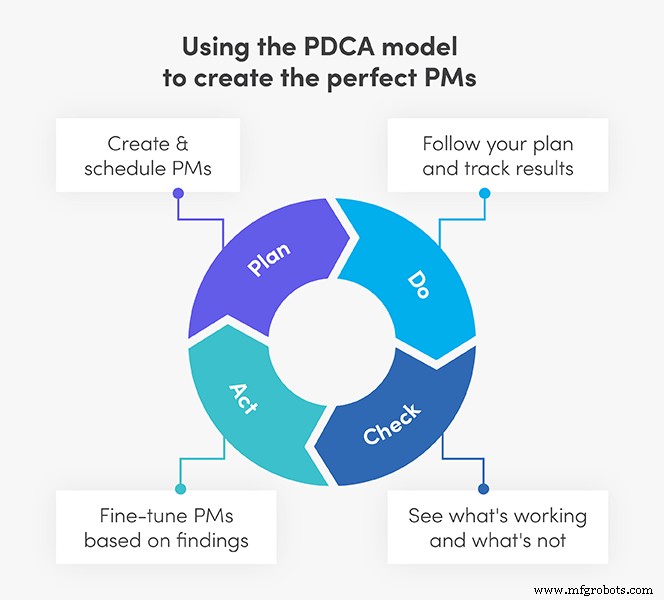
1. Optimize preventive‑maintenance frequency
Too many or too few PMs can harm efficiency. Balance the schedule by:
- Reviewing maintenance logs to identify high‑impact tasks.
- Maintaining frequency for PMs that consistently uncover faults.
- Extending intervals for PMs that rarely detect issues—adjust until the failure rate aligns with the schedule.
- Shortening intervals or shifting to usage‑based triggers when machines frequently fail between inspections.
Read a comprehensive guide to auditing and optimizing your PM schedule.
2. Maintain assets while they run
Identify equipment that can safely receive routine work during operation. If full shutdown isn’t required, consider:
- Partial maintenance on non‑critical components.
- Swapping spare or de‑commissioned units with production machines to keep them in service.
3. Make equipment capabilities transparent
Develop concise operation manuals and a Failure Modes and Effects Analysis (FMEA) for each asset. Provide clear warning signs and troubleshooting steps so operators can flag problems early.
4. Leverage work‑order data for efficiency
Analyze work orders to spot bottlenecks such as:
- Part unavailability—streamline purchasing and create kits for common repairs.
- Misdiagnosed issues—ensure task lists and failure codes are precise and include supporting documents.
- Emergency work causing resource diversion—break large jobs into smaller, scheduled tasks.
- Production conflicts—schedule maintenance during low‑output windows or coordinate with operators for minor tasks.
- Skill gaps—specify required certifications in each work request.
Get operations on board with your maintenance strategy.
5. Remove obstacles that hinder technicians
Direct feedback from the shop floor uncovers hidden barriers. Ask technicians:
- Which tasks divert them from the machine?
- Is critical information or parts readily accessible?
- What data would expedite their work?
- Which processes feel cumbersome or outdated?
- What routinely delays task initiation?
Solutions may include localized storage zones, digitized manuals, or mobile access.
Measuring maintenance impact on production efficiency
Key metrics include:
Found‑failure rate on preventive maintenance
A high rate indicates an efficient schedule that balances cost and risk.
Unplanned asset downtime (90 days)
Tracking minutes lost to unscheduled stops reveals maintenance effectiveness.
Average time to respond to and repair breakdowns
Shorter response times reduce production stoppage.
Clean start‑ups
Compare usable output before and after maintenance; a rise confirms added capacity.
Turning maintenance into a business driver
Instead of a cost center, view maintenance as a catalyst for growth. Reliable equipment translates to faster output, lower costs, and higher customer satisfaction—a true win‑win‑win.
Reposition maintenance from a reactive expense to a proactive growth engine, and unlock new levels of operational excellence.
Equipment Maintenance and Repair
- Maintenance Workers See Pay Raises Rise to 2.9% in 2006, Nearing the 3% Benchmark
- How Maintenance Drives a Sustainable Circular Economy
- CMMS Maintenance Software: Why Users Are Often Unhappy
- Crafting an Effective Maintenance Policy: A Step‑by‑Step Guide
- Campus Facility Management: Mastering Maintenance in a Dynamic Environment
- Electrivert Launches Comprehensive C.A.T. Scan to Boost Manufacturing Efficiency and Reliability
- How a Cat® Customer Value Agreement Enhances Equipment Management and Reduces Operational Burden
- Biomanufacturing: Harnessing Nature to Revolutionize Modern Manufacturing
- Will Ontario’s New Cap‑and‑Trade Law Cut Carbon? How CMMS Drives Real Emission Savings
- Total Productive Maintenance (TPM): Boost Production, Safety, and Quality