



When to Clean or Replace Your Diesel Air Filter – A Practical Guide
Deciding whether to clean or replace a diesel air filter is simpler than you think. A filter that’s packed with dry dust can usually be cleaned and reused. If the media is torn, the seal is damaged, or oil and soot have soaked in, it’s time to replace it. In dusty work environments, cleaning often is more economical than buying new filters each time the filter looks dirty.
- Key takeaways
- Is a dirty air filter actually a problem?
- When should you clean instead of replace?
- When do you have to replace it?
- How do you tell a good filter from a junk one?
- Doesn’t cleaning filters damage them?
- What does each one actually cost?
- How often should you clean, and how long can a filter last?
- Clean or replace: the 30‑second version
- Where Air Filter Blaster fits
- FAQ
Key takeaways
- A filter that looks filthy isn’t necessarily used up. Restriction, not appearance, dictates service.
- Clean a sound filter. Replace one with torn media, a bad seal, or oil‑soot penetration.
- A quick light test often resolves the clean‑or‑replace decision.
- Wrong cleaning methods cause damage; controlled air cleaning does not.
- In heavy dust, clean daily. A clogged filter can raise fuel consumption by 60+ gallons per day on large machines.
Is a dirty air filter actually a problem?
Not inherently. A loaded filter is doing its job, trapping fine particles until airflow is restricted. Dirt itself isn’t the enemy; the real threats are restriction and failure to seal.
When airflow drops, the engine loses power, burns extra fuel, and may trigger a derate. Worse, a compromised filter can allow silica dust to reach the cylinders, acting like a lapping compound that erodes engine components. A damaged filter can cost far more than a new one, potentially leading to turbo replacement.
When should you clean instead of replace?
Clean when the filter is filled with dry dust but the media and seal remain intact. This scenario is common on jobs in dirt, gravel, or aggregate pits.
- Dry dust only – no tears, soft spots, or thin media.
- Radial seal feels firm, springs back, and shows no cracks or crushing.
- No oil film, fuel odor, or sooty mud.
- The filter hasn’t been cleaned to the point of wear.
Cleaning keeps the filter working effectively and protects the engine. In dusty work, a clean filter is a cost‑saving insurance policy that extends diesel engine life.
When do you have to replace it?
Replace the primary filter if any of the following conditions are met:
- Torn or thin media. Any hole, tear, or soft spot allows grit to bypass the filter.
- Compromised seal. A cracked, hardened, or crushed radial seal prevents a proper seal.
- Oil or soot saturation. Oil, fuel, or sooty mud soaked into the media is a sign the filter is spent.
- Persistent restriction. After a thorough cleaning, if the pressure drop remains high, the media is permanently plugged.
- Age. Even a visually fine filter reaches its design life after repeated use.
Also remember the safety element: most off‑road machines use a two‑stage system with an inner safety filter. Do not clean this filter—replace it roughly once per three primary filter changes.
How do you tell a good filter from a junk one?
Use a quick, reliable inspection:
- Light test. In a dark area, shine a flashlight or droplight inside the filter. Even, soft light indicates intact media; bright pinpoints or streaks reveal holes or thinning.
- Seal check. Run a finger around the radial seal. It should feel rubbery, firm, and snap back. Dented, brittle, or cracked seals warrant replacement.
- Pressure gauge. Restriction is the true metric. Rely on the intake gauge or service indicator, not on visual dirtiness.
- Oil sample. A spike in silica during oil analysis can signal a leaking filter or seal before visible damage appears.
Doesn’t cleaning filters damage them?
Most damage stems from improper cleaning methods, not from cleaning itself. Using a high‑pressure jet (125–150 psi) on a single nozzle can tear the media, while dunking a filter in water can leave moisture that tightens dirt and degrades the material.
Controlled cleaning—gentle, evenly distributed pressure—does not damage the filter. In tests, we cleaned the same filter 60 times without causing tears or compromising performance. Inspect the filter before every reinstall to catch any damage early.
What does each one actually cost?
A clogged filter can increase fuel burn by 3–5 gallons per hour on a large combine—about 60 gallons per 12‑hour shift, equating to roughly $240 at $4 per gallon. In a 90‑day field trial, one tractor with a dirty filter burned 58 gallons more than its clean counterpart.
New primary filters range from $30 to $150, depending on size and brand. Heavy‑dust environments may require a new filter every shift or two. Cleaning, when done correctly, can save hundreds of dollars in filter purchases and reduce fuel costs.
Results vary by equipment, cleaning method, and dust load. The figures above come from controlled field trials and illustrate potential savings.
How often should you clean, and how long can a filter last?
Filter lifespan depends on damage, not on the number of cleanings. A well‑maintained filter can last up to 20 times longer than a typical lifespan before replacement becomes necessary.
Cleaning frequency is dust‑dependent. In heavy‑dust conditions, daily cleaning is advisable. In lighter environments, let the pressure‑drop indicator guide you. Always rely on condition, not on a fixed schedule.
Clean or replace: the 30‑second version
Run this quick checklist:
- Light shows holes or thin spots? Replace.
- Seal cracked, hardened, or crushed? Replace.
- Soaked with oil, fuel, or sooty mud? Replace.
- Restriction stays high after cleaning? Replace.
- Full of dry dust only, media and seal good? Clean.
- Inner safety element due for service? Replace on schedule; never clean.
Where Air Filter Blaster fits
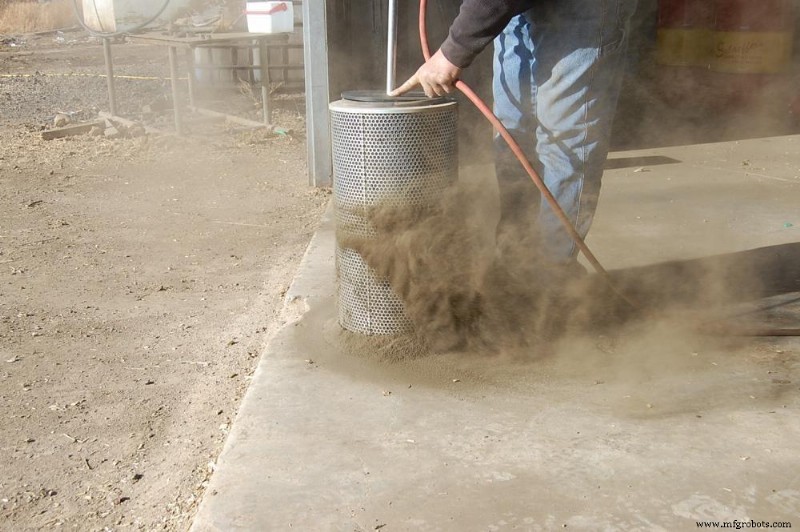
Air Filter Blaster delivers a controlled, water‑free cleaning process that removes dust from the inside out. By spinning and vibrating the filter with compressed air, the system avoids high‑pressure jets that can tear media. The portable units handle full‑size radial seal filters in shop or field, while the MINI version covers smaller equipment. No proprietary parts—just standard compressor power.
FAQ
Is it better to clean or replace a diesel air filter?
Clean when the filter is only dirty and both media and seal are sound. Replace if you detect damage, a compromised seal, oil/soot saturation, or persistent restriction. Reusing a healthy filter is cost‑effective and extends engine life.
How many times can you clean an air filter before replacing it?
There is no fixed number. In controlled tests, a filter was cleaned 60 times without damage. Replace only when the filter is damaged, not after a set count of cleanings.
Can you clean a diesel air filter with water?
No. Water leaves moisture that packs dirt tighter and degrades the media and seal. Dry compressed air removes dust without these drawbacks.
How do I know if my air filter is damaged?
Perform a light test for holes or thinning, check the radial seal for firmness and cracks, and monitor oil samples for silica spikes—early indicators of leaks.
How often should I clean my air filter in dusty conditions?
In heavy dust, daily cleaning is recommended. In lighter conditions, rely on the restriction indicator to time your service. Always base cleaning on filter condition, not on a fixed schedule.
Stop buying filters that could be reused. Explore the Air Filter Blaster lineup or call us at (855) 341‑4677 to match a unit to your equipment.
Jake Heying, CEO, Air Filter Blaster.
Equipment Maintenance and Repair
- Parts.Cat.Com: Unlock a 1M+ Parts Inventory and Seamless Registration
- Uncovering and Empowering Hidden Teachers in Your Organization
- Expert Tips for Choosing the Right Cordless Drill: What You Shouldn't Overlook
- Extending Oil Drain Intervals Safely: The Role of Base Number vs. Acid Number Analysis
- Hamilton Sundstrand Secures 10-Year Maintenance Deal for Singapore Airlines' Airbus A380 Fleet
- Cut Gearbox Maintenance Costs by 30% to Boost Wind Farm Profitability
- Key Lessons for Senior Management on Condition‑Based Maintenance
- Boost CMMS Adoption and Drive Continuous Improvement: 4 Proven Strategies
- Optimal Inspection Frequency for Industrial Equipment: Ensuring Reliability and Safety
- Six Real-World Case Studies: How Predictive Analytics Boosts Power Plant Performance