



How to Use Data and Storytelling to Secure Approval for Your Maintenance Projects
Competing for budget and resources is relentless. Every department wants a slice of the newly opened purse, including maintenance. The challenge is to demonstrate that your project will be the smartest investment. This guide gives you a proven six‑step framework that blends hard data with compelling narrative to win executive buy‑in.
Download a complete pitch deck template and fill it out using the tips below
Step 1: Present the Problem
Why it Works
Change is uncomfortable, and people resist it unless the status quo feels worse. Begin by framing the pain of doing nothing and showing why your project is the solution.
How to Tell the Story
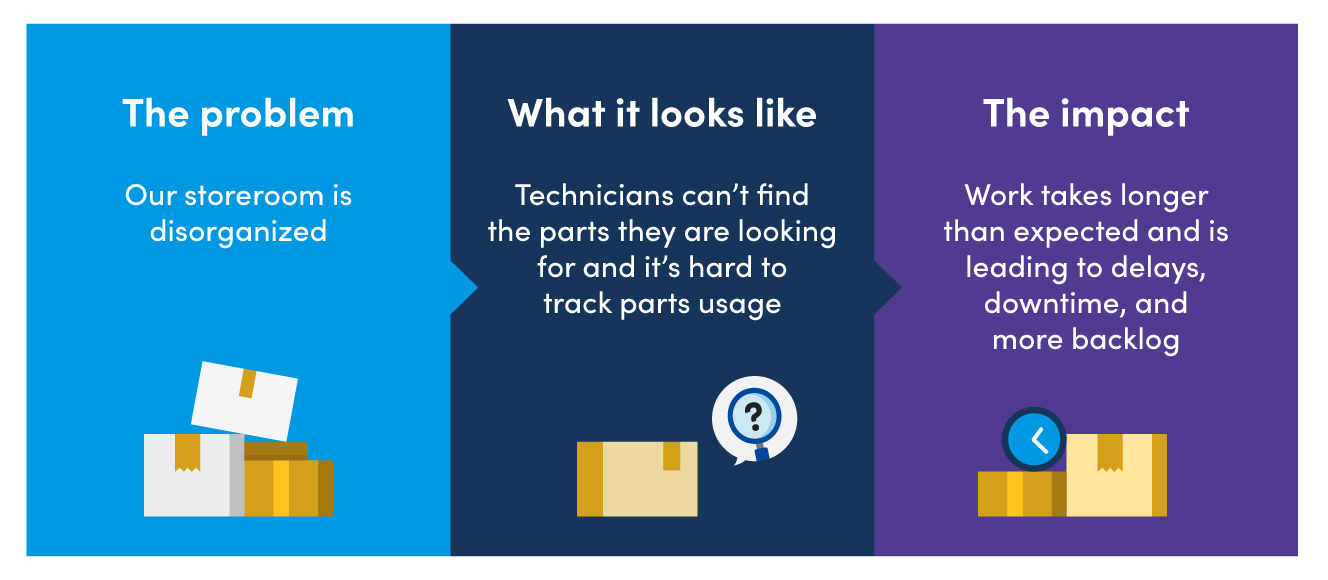
- Describe the problem.
- Show what the problem looks like.
- Explain the impact.
Data to Use
Quantify the issue wherever possible:
- Average time to retrieve parts from the storeroom.
- Monthly count of emergency parts required.
- Downtime hours linked to an unorganized storeroom.
Speaking of inventory woes, this template can help you fix a disorganized storeroom
Other quantifiable angles include:
- Cost: How much is the problem costing the team?
- Time: Are you spending more time than needed on a task? What does that cost you?
- Health & Safety: Are audit compliance tasks slipping or near‑miss incidents rising?
- Employee Retention: Difficulty retaining top talent? (See our article on reducing turnover.)
- Quality: How does the issue affect the end product? (See our article on maintenance’s impact on production.)
Step 2: Outline Your Solution
Why it Works
Once the problem is clear, position your project as the hero that resolves it. This reduces skepticism because the project directly answers a pressing pain point.
How to Tell the Story
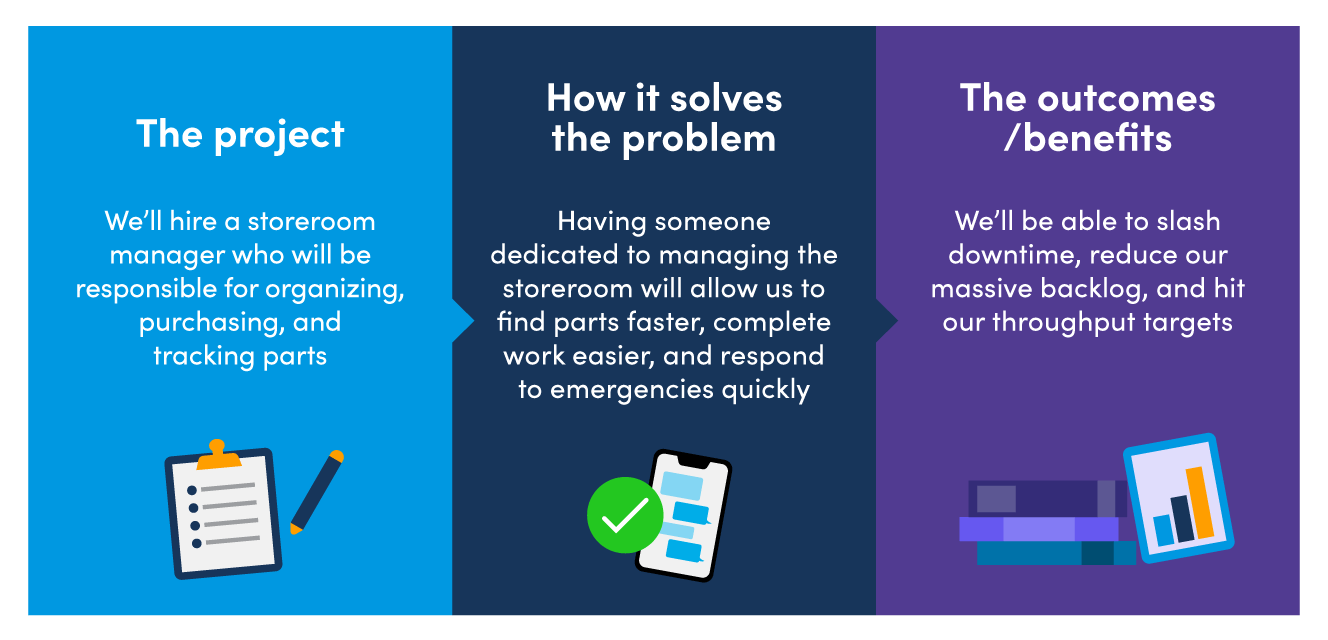
- Describe the solution/project.
- Explain how it solves the problem.
- Outline the outcomes and benefits.
Data to Use
Back your claims with numbers. For example, quantify labor hours saved when technicians no longer hunt for parts. Even modest savings can add up when multiplied over weeks, months, or years.
If you can cut one hour of repair time per month, that equates to five additional production hours—an attractive return for the business.
Sources of this data include:
- Work Order Data: Capture time or cost spent on each process.
- Peer Insights: Consult colleagues or OEM guidelines to gauge the value of time.
- Controlled Experiments: Test the solution on a low‑risk asset and compare before/after metrics.
Step 3: Align With Business Goals
Why it Works
Linking your project to broader business objectives turns maintenance work into a strategic imperative. When the project advances corporate goals, stakeholders feel a personal stake in its success.
How to Tell the Story
- Identify business goals—e.g., cost reduction, expansion, risk mitigation.
- Connect the goal to maintenance—illustrate how maintenance drives that outcome.
- Tie the project to the goal—explain how your initiative closes the gap or enhances existing efforts.
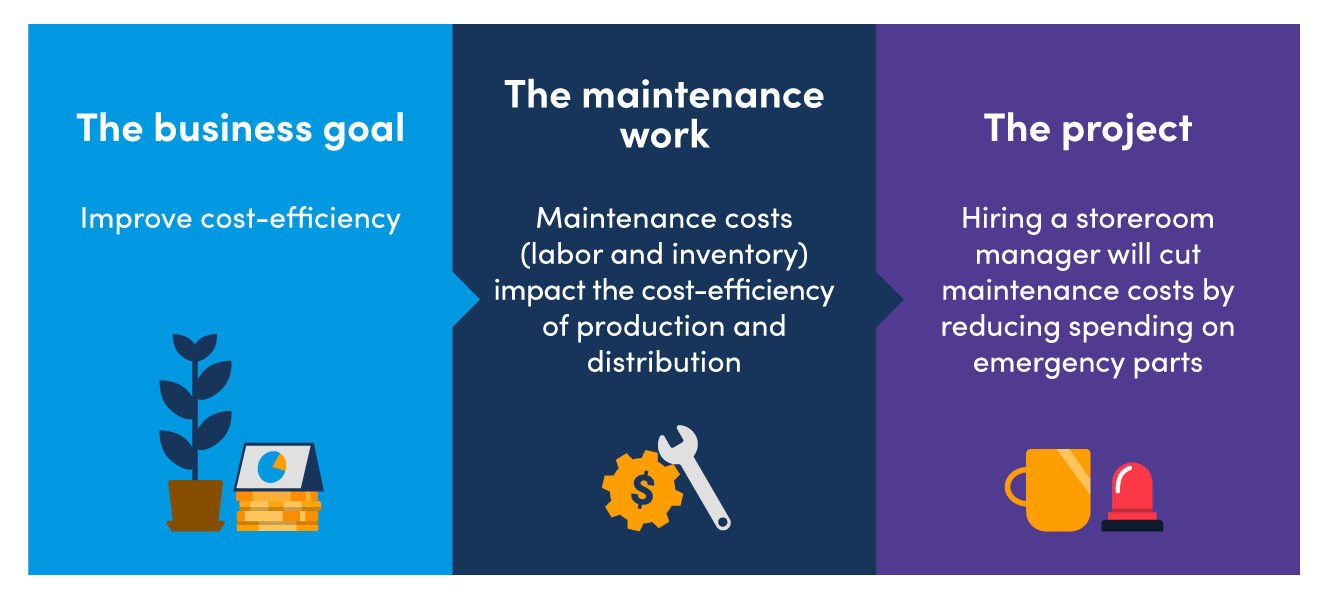
This handy template can help you align maintenance work with business goals
Data to Use
Quantify the business impact. Examples:
- Cost Efficiency: Hiring a specialist could cut contractor costs by $100,000 per year and boost production time by 8%.
- Expansion: Software that standardizes processes can enable new teams in 30 days instead of 60.
- Risk Reduction: An inventory manager could reduce emergency purchases by 40%.
Step 4: Prove the Project Will Work
Why it Works
Risk aversion is a major hurdle in budget discussions. Demonstrating proven success or a solid pilot removes doubt and builds confidence.
How to Tell the Story
- Show case studies from similar companies, especially competitors or industry leaders.
- Leverage internal success stories from other sites or teams.
- Run a small pilot and present tangible results.
Data to Use
Translate pilot results to your context. If a month‑long pilot saved 20 hours of admin work, that projects to 240 hours annually—12% of total staff time.
Step 5: Identify Risks
Why it Works
Acknowledging risks—and having mitigation plans—shows foresight and reduces perceived uncertainty.
How to Tell the Story
- Risk: Technicians may resist new software.
Plan: Involve them in the selection process and provide training. - Risk: Longer onboarding than expected.
Plan: Create concise tutorials for routine tasks. - Risk: Backlog grows during implementation.
Plan: Prioritize and clear backlog tasks concurrently. - Risk: Budget overrun.
Plan: Develop a detailed roadmap to guard against scope creep.
Data to Use
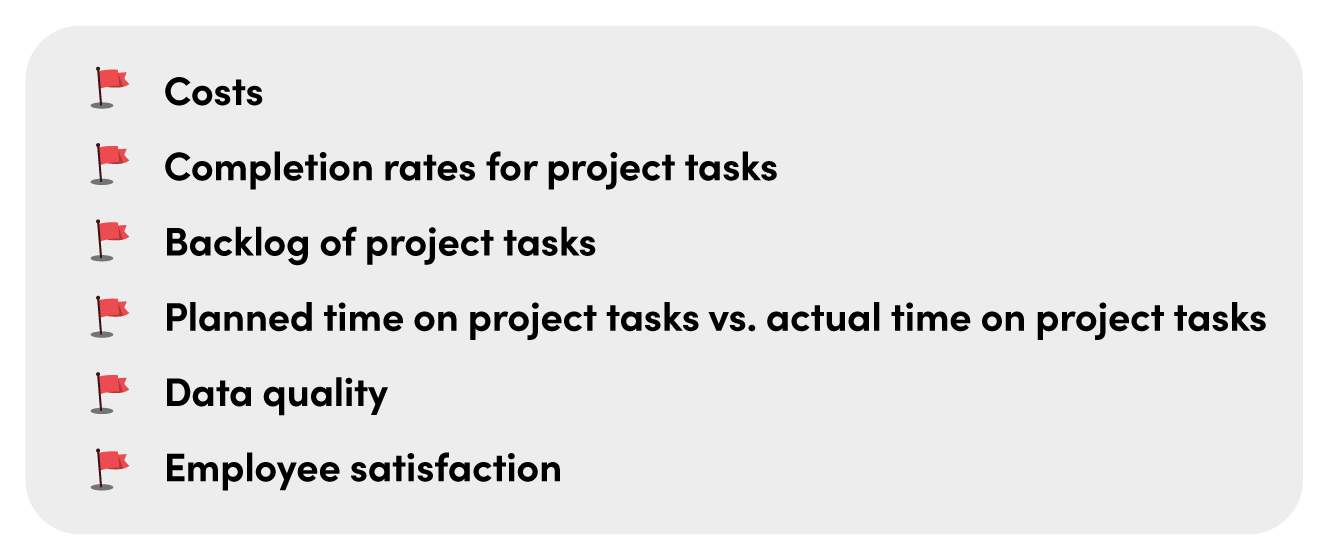
Use KPI dashboards to monitor risk indicators—e.g., software adoption rates, backlog velocity, cost variance. Presenting objective data reinforces that risk management is grounded in metrics.
Step 6: Outline Your Plan and Requirements
Why it Works
Detailing milestones, resources, and success metrics clarifies how the project will be executed and measured, making it easier for decision‑makers to approve funding.
How to Tell the Story
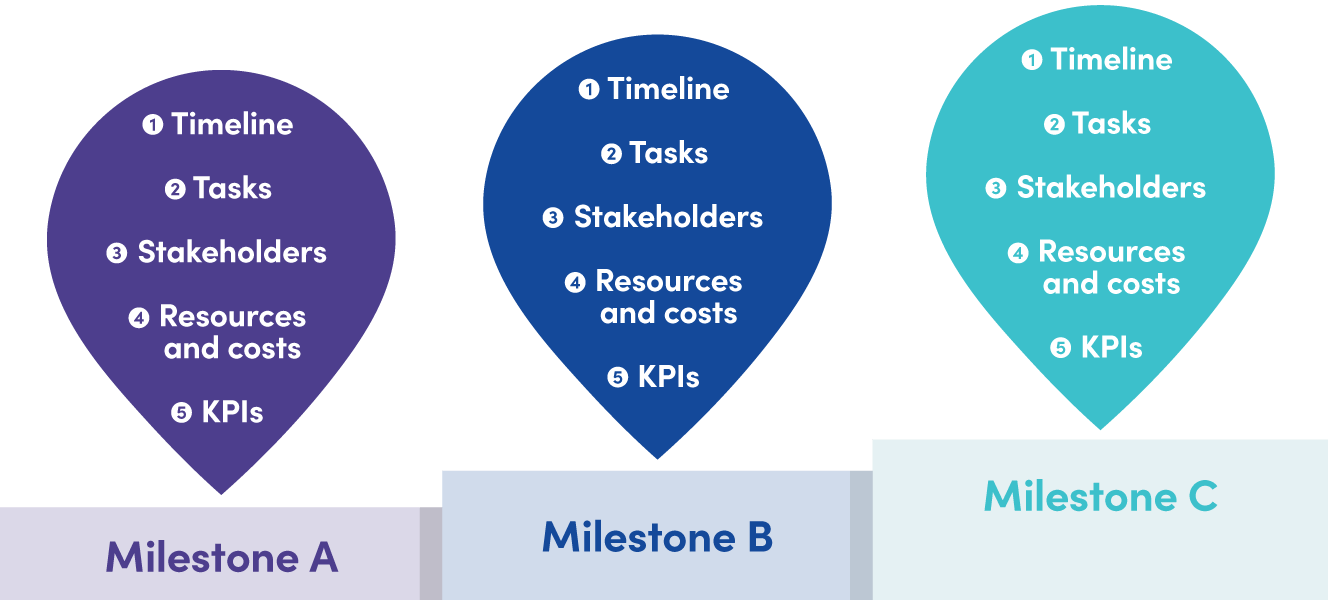
Structure the project into clear milestones. For each milestone, specify:
- Timeline: Duration of the milestone.
- Tasks: Specific deliverables.
- Stakeholders: RACI roles for each task.
- Resources & Costs: Labor, parts, software, etc.
- KPIs: Success metrics for the milestone.
Data to Use
Show cost comparison: For example, hiring a storeroom manager ($125k/year) versus current $250k annual loss due to downtime and emergency purchases.
Set rolling‑average metrics to track progress:
- Define success metric (e.g., time to retrieve parts).
- Benchmark (average 20 minutes).
- Track 90‑day improvement (e.g., 33% reduction to 6.5 minutes).
The Perfect Pitch Combines Data and Storytelling
Decision‑makers invest in problems, solutions, and outcomes. By weaving data into a clear narrative, you highlight the magnitude of the issue, the value of your solution, and the measurable benefits—making your pitch compelling and credible.
This framework works for large system overhauls or modest budget requests. The next time you need to secure funding, remember that data and storytelling are your most powerful allies.
Equipment Maintenance and Repair
- Measuring Maintenance Success: Showcasing Wins to Drive Impact and Retain Talent
- Mastering Preventive Maintenance: Strategies to Optimize Your PM Program
- Mastering Maintenance Storeroom Organization for Peak Productivity
- Transforming Maintenance Culture: Strategies for Reliability & Accountability
- How Poor Maintenance Data Hinders Your Operations—and How to Correct It
- July 2019 Maintenance Insights: Latest Industry Updates from Fiix
- Crafting an Effective Maintenance Policy: A Step‑by‑Step Guide
- How Accurate Maintenance Reports Drive Smarter Operations
- Track and Manage Maintenance Costs Effectively
- Shutdown Maintenance: Boosting Efficiency and Safety by Leveraging Offline Periods