



Marinette Plant Sets New Standards for Reliability and OEE Excellence
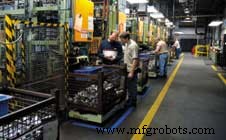
Dick Cole, Vice President of Operations at Karl Schmidt Unisia, describes the Marinette, Wis., facility as the world’s most diverse piston plant. He attributes this reputation to a blend of product breadth, customer mix, manufacturing capability, and cultural diversity.
Diverse products and customers: The 510,000‑sq‑ft complex—just a few miles from Michigan’s Upper Peninsula—produces pistons of virtually any size, with a daily capacity approaching 75,000. OEMs and aftermarket companies across automotive, agricultural, industrial, recreational and marine sectors, including General Motors, Nissan, Daimler‑Chrysler, Ford, Cummins, John Deere, International, Harley‑Davidson and Mercury Marine, rely on these parts.
Diverse manufacturing capabilities: Karl Schmidt Unisia’s all‑in‑one foundry features induction melting furnaces, automated and manual casting cells, in‑house heat‑treat and solution annealing, chip drying, weld hardening and prototyping. The machining and finishing wing houses automated transfer lines, complete machining/finishing cells, in‑house tin‑plating, anodizing, screen‑print coating, module assembly and prototyping.
Diverse heritage: As an American‑headquartered joint venture of Germany’s Kolbenschmidt Pierburg AG and Japan’s Hitachi Automotive Systems Ltd., the company brings “Japanese quality, German precision and American ingenuity” together to deliver the best of all worlds.
Equally important is the plant’s inclusive approach to maintenance and reliability. Operators, technicians, hourly and salaried staff, veterans and new hires collaborate to drive productivity, cost‑competitiveness and customer service. This teamwork is evident through:
- The composition of the Total Productive Maintenance (TPM) program;
- Positioning Continuous Improvement (CI) under the technical services department;
- The focus on Early Equipment Management System (EEMS); and
- Consistent use of overall equipment effectiveness (OEE) as a key metric.
“People, mindset, culture – that’s what matters,” says Cole. “We treat maintenance as a capacity enhancer and mission‑critical to our success, not a necessary evil.”
Since 2002, the plant has achieved nearly a 25% rise in OEE, a 41% cut in maintenance costs, and a 3% reduction in reactive work—all while sales dollars climbed more than 15% and rose almost 50% from 2001.
Scott Haulotte, manager of technical services and CI, emphasizes that reliability translates to repeatability, lean capability, and, ultimately, customer trust.
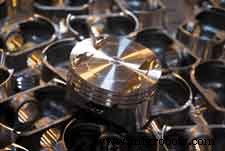
Karl Schmidt Unisia’s Marinette plant manufactures pistons in a wide range of sizes for gasoline‑ and diesel‑engine customers.
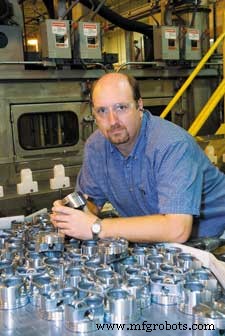
The foundry melts up to seven aluminum alloys, each requiring a specific temperature between 700–800 °C.
Just the Facts
Company: Karl Schmidt Unisia is a joint venture of Germany’s Kolbenschmidt Pierburg AG and Japan’s Hitachi Automotive Systems Ltd. U.S. plants are located in Marinette, Wis., and Fort Wayne, Ind.; additional sites exist in Germany, Japan, Mexico, Brazil, France, China, India and the Czech Republic. Sales in 2005 were $204 million.
Focus site: Karl Schmidt Unisia in Marinette, 50 mi northeast of Green Bay, Wis., 2 mi southwest of Menominee, Mich.
Site size: 510,000 sq ft of manufacturing and office space, split between foundry and machining/finishing.
Plant employment: 1,105 employees, including 91 in technical services.
Products: Pistons for passenger car, light truck, medium‑truck, marine, industrial and recreation engines.
FYI: The plant was built in 1944 for Badger Piston Co. Eric Barggren, the founder’s grandson, is now a foundry engineer.
TOTALLY TPM
In most U.S. plants, TPM is a routine wipe‑down. At Marinette, it’s a detailed, daily process that begins with Clean‑Inspect‑Lubricate (CIL) checklists tailored to each machine. Every item on the placard is linked to a specific action—e.g., fill the Waylube 68 oiler to the required level each shift—complete with visual cues and arrows pointing to key components.
Other CIL highlights:
- Cleaning is part of a rigorous, audited 5‑S program that keeps machines running at peak performance and flags potential issues before they cause downtime.
- Operators handle all lubrication and fluid management, eliminating the need for a dedicated maintenance crew.
- During inspections, operators use sight, smell, sound and touch to detect emerging problems and raise detailed work orders. “No one knows a machine better than the person operating it,” says Haulotte.
Scott Haulotte: Reliability is our top priority.
Unlike many plants where maintenance stops at problem identification, Marinette’s 24/7, non‑union culture keeps operators deeply involved. “If an operator can handle a task, we give them the chance,” says Mark Greenlund, business team leader for medium‑truck lines. This hands‑on approach has led operators to perform 30% of all preventive maintenance (PM) tasks, with a goal of reaching 70%.
Technical services reciprocate by re‑engineering workspaces—moving gauges, Zerk fittings and lighting to improve ergonomics—making it easier for operators to perform checks and spot issues early.
Jeff Welty, foundry maintenance supervisor, notes that operator involvement reduces surprises, speeds up root‑cause analysis, and frees technical staff to focus on continuous improvement.
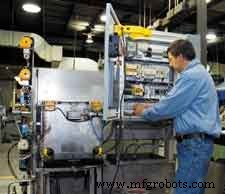
EEMS: Rebuild and refine existing machinery to exceed original performance.
LEADING LEAN
With operators handling routine maintenance, the technical services team directs a robust CI program grounded in kaizen principles. This includes visual tools—color‑coded lubrication containers, andon lights, and on‑site performance dashboards—to provide real‑time feedback.
Mobile tools such as PM carts and sump trucks eliminate multiple trips, reduce labor, and streamline large‑scale maintenance jobs. The full‑service cart houses tools, ladders and drills; the sump truck recycles coolant efficiently.
Data‑driven improvements in the CMMS have led to smarter PM schedules, reduced inventory, and lower contamination rates. Chokotei analysis pinpoints short‑stop losses, such as a miss‑loading issue on three piston machines, enabling targeted fixes.
Brew‑Up Continuous Improvement: Coffee as a Lean Example
Mark Greenlund shares how the plant’s lean mindset spills into everyday life. By timing and refining his morning coffee routine, he cut preparation time from over two minutes to under forty seconds—illustrating the power of incremental improvement.
UNIQUE PROACTIVITY
EEMS combines a rigorous equipment‑specification process for new machinery with comprehensive rebuild projects that upgrade existing machines beyond their original design. Projects consider operator input, engineer expertise, buyer requirements and maintenance feasibility, often led by a single technician.
Over 25 rebuild projects annually have delivered cost savings versus new equipment purchases and uncovered hidden capacity.
THE LANGUAGE OF OEE
OEE—availability × performance × quality—guides every decision at Marinette. From individual machines to the entire plant, OEE data is captured daily and used to pinpoint loss sources. Since 2002, OEE has risen from 51.4% to a projected 75% in 2006, with a 2007 goal of 77–78%. Each percent of OEE improvement translates to an extra week and a half of production capacity.
Industry experts set 85% as the world‑class benchmark; Marinette is targeting that threshold by focusing on top‑impact assets and aligning them with growth programs.
GREAT RESULTS, BUT WORK CONTINUES
Higher capacity, availability and quality satisfy demanding customers who demand on‑time, reliable piston supply. Sales, especially for diesel products, have surged, and customers now experience fewer supply‑chain surprises.
Haulotte calls the plant a success story, proving that high labor costs can be offset by smart, collaborative work. Yet the leadership remains vigilant, driven by Japanese continuous‑improvement philosophy and German insistence on relentless progress.
With a diverse workforce and a culture that pushes for better every day, Karl Schmidt Unisia’s Marinette plant is poised for sustained reliability and performance excellence.
Equipment Maintenance and Repair
- Preventing Early Machine Failures: A Proactive Reliability Engineering Approach
- Defining and Clarifying Reliability in Manufacturing Operations
- Top Performance in Maintenance & Reliability: Proven Strategies for Long‑Term Success
- Celebrating Excellence: Reliable Plant’s First‑Year Awards and Milestones
- Eli Lilly BHI Plant: A Reliability Success Story
- Energizer Battery Plant: Integrating Lean and Reliability to Drive Efficiency and Performance
- BMW Spartanburg Plant Sets Global Benchmark with World‑Class OEE and Innovative Landfill‑Gas Energy Use
- Why Attention to Detail Drives Maintenance & Reliability Success
- Harley-Davidson Plant Achieves Excellence with Proactive and Predictive Maintenance
- Rebuilding Reliability at Century Aluminum’s Ravenswood Smelter