



Mastering Integrated Inventory Management for Optimal MRO Efficiency
From an operational perspective, the primary goal of the materials management organization in a maintenance, repair and operations (MRO) environment is to deliver unwavering material support to plant maintenance and production. In other words, having the right parts at the right place at the right time.
One tempting solution is to stock every conceivable spare part in large quantities, ensuring that any required combination is available at all times. While this guarantees service, it is rarely the most efficient strategy.
Materials are costly and occupy valuable space, and most managers operate under tight purchasing budgets. Finance and plant leadership must monitor and control inventory investment, ensuring that stock levels are optimal without compromising reliability.
Uncontrolled inventory growth often forces cost‑cutting measures that can reduce service levels and increase downtime. Conversely, arbitrarily cutting inventory can jeopardise production and lead to costly stoppages.
Thus, materials managers face a dual challenge: maintaining sufficient supply to support maintenance and production, while prudently managing the company’s resources. The key is to achieve both objectives simultaneously, not to choose between them.
Providing parts “when needed” does not mean they must always be on the shelf, nor does “when needed” imply immediate availability. The optimal point lies where service and investment are mutually attainable.
Achieving this balance starts with a clear understanding of the problem and a structured plan of action.
Effective inventory management requires a solid grasp of fundamental principles, data, and work processes that drive material supply and total MRO cost. It also demands realistic, measurable goals and disciplined execution, underpinned by the commitment of knowledgeable professionals who can make informed, often difficult, decisions.
The cornerstone of this approach is Integrated Inventory Management. This methodology equips managers with a disciplined framework to decide what to purchase, when to purchase, what to keep in stock, and what to phase out. It controls storeroom investment and associated costs while sustaining an acceptable level of service.
This article provides an overview of the core elements of Integrated Inventory Management and the key linkages that tie them together. Future articles on the Reliable Plant website will delve deeper into each activity.
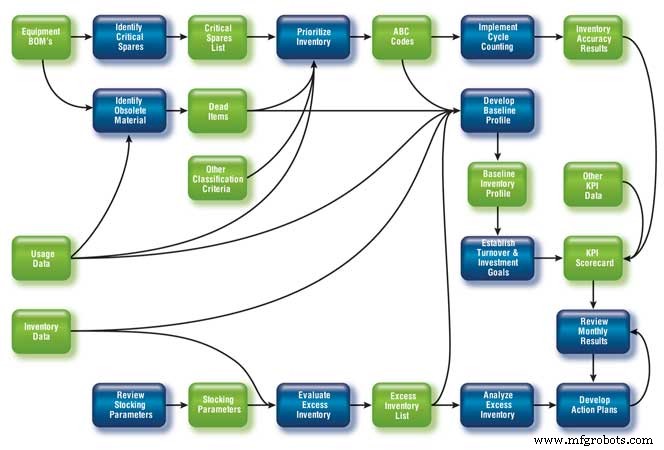
Figure 1. An illustration of the Integrated Inventory Management Model.
Integrated Inventory Management Model
The model may appear complex at first glance, but its implementation hinges on a clear understanding of basic inventory processes and disciplined application of best practices. With a solid grasp of the underlying principles and a practical, iterative approach, most organizations can make sound inventory decisions.
In the diagram, the blue‑shaded boxes represent independent inventory management processes. Subsequent articles will examine each process in depth, offering background, implementation guidance, and practical tips.
The green‑shaded boxes denote the input, output, reports, or electronic documents generated and used throughout each step to support the overall process. These are typically addressed within the relevant work process, though some may warrant separate treatment.
Collectively, the processes and associated information form a logical sequence that builds upon itself.
The model starts with a foundation focused on data integrity. From there, it concentrates on applying practical work processes that rely on this data to establish a baseline for improvement.
The next step is to develop realistic goals and action plans that will help control inventory and achieve those goals.
Finally, a periodic review process ensures the Integrated Inventory Management model becomes self‑sustaining through regular progress monitoring and continuous re‑evaluation of objectives and action plans.
THE BASIC ELEMENTS
Below is a concise definition of the main elements that compose the model. While this article offers an overview, the details will be expanded in subsequent publications.
Equipment bill of materials – a document showing the parent/child relationships of all repairable or replaceable components, assemblies, and subassemblies that make up an asset.
Usage data – historical information based on material issues that reflects the dates, quantities, and dollar values of all storeroom parts issued for maintenance work.
Inventory data – basic part‑master data (primarily on‑hand quantity and dollar value) from the CMMS or other inventory control system.
Critical spares – key parts or components whose unavailability could cause equipment or plant shutdown and significant lost production.
Obsolete material – any material that can no longer be used due to decommissioning, redesign, damage, inactivity, deterioration, or other causes.
Stocking parameters – lead times, minimum/maximum quantities, reordering methods, lot‑sizing data, or other information in the CMMS that controls the quantity and timing of replenishment orders.
Prioritize inventory – listing materials in order of relative importance based on set criteria (e.g., usage, unit cost, on‑hand value, lead time, criticality). The model recommends an ABC analysis based on usage.
Excess inventory – the quantity and associated dollar value of active, automatically replenished storeroom inventory that exceeds maximum projected inventory levels based on current ordering parameters; in simple terms, the on‑hand quantity above the maximum.
Cycle counting – an inventory verification technique that counts inventory on a periodic schedule throughout the year rather than all at once during a short annual physical inventory.
Baseline profile – a snapshot of investment, historical usage, and other inventory‑related data that provides a starting point for evaluating benefits from continuous improvement activities.
Turnover and inventory goals – targets for future storeroom investment levels and associated turnover rates based on anticipated usage rates.
Review monthly results – a periodic process for reviewing forecast accuracy, assessing key activities, and analyzing recent results.
Action plans – new or revised short‑term and long‑term targets and activities required to achieve them.
PREREQUISITES, CAVEATS
Data integrity is the cornerstone of the Integrated Inventory Management model. While the program can start with incomplete data, it relies on some level of data availability. The processes often include data collection, analysis, and correction, but a baseline of reliable information is essential.
This model is intended for organizations that already have reasonable control over their MRO inventory and a well‑organized repository of part‑master and transactional data. Below a certain data threshold, the effort may not yield worthwhile returns.
Doug Wallace is a materials management subject matter expert for Life Cycle Engineering. He has more than 25 years of combined experience in supply chain operations and management consulting. To learn more about inventory management, e‑mail dwallace@LCE.com, call 800‑556‑9589 or visit www.LCE.com.
Equipment Maintenance and Repair
- Fiix Parts Forecaster: AI-Driven Inventory Management for Accurate Parts Forecasting
- Mastering Maintenance Inventory Management: Strategies to Cut Costs and Boost Reliability
- Leverage AI for Smarter Inventory Management and Unlock $1.1 Trillion in Cash
- Optimizing Work Management: Planning, Scheduling, and Reliability
- Asset Inventory Management: Tools, Processes, and Best Practices for Optimized Asset Performance
- Mastering Spare Parts Management: A Practical, Data‑Driven Guide for Plant & Supply Chain Leaders
- Mastering Inventory Management: Proven Strategies for Every Business
- Inventory Management Software: What It Is and Why It Matters
- Four Essential Benefits of Inventory Management Systems
- 6 Proven Inventory Management Tactics for Manufacturing Success