



Comprehensive Guide to Corrosion Inhibitor Treatments for Industrial Equipment
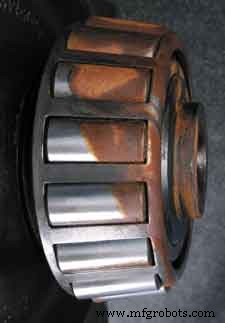
To ensure the long‑term reliability of critical assets, every component must be shielded from corrosion. While operating machines circulate oil to keep additives dispersed, equipment that is shut down and stored is vulnerable to rust on surfaces that never receive the protective fluid.
Several proven strategies protect machinery during idle periods:
- Liquid‑phase inhibitors – additives mixed into the lubricant or a dedicated protective oil.
- Vapor‑phase inhibitors (VCIs) – a slow‑release vapor that saturates the headspace.
- Surface coatings – a dry, greasy, or oily film applied directly to parts.
This article focuses on the inhibitors introduced by equipment builders and users.
Liquid‑Phase Protection
Liquid‑phase inhibitors are the most common way to protect submerged surfaces. Options include:
- Supplementary additives blended with the operating lubricant. These enhance corrosion resistance and keep remote surfaces protected even as the additive concentration declines.
- Specialized corrosion‑resistant oils that fill the system to normal operating level or 100 % capacity, providing uniform protection.
When adding an additive to the operating lubricant, compatibility is crucial. Incompatible chemicals can compromise lubricant performance or damage seals.
Standby systems that run intermittently benefit from liquid‑phase inhibitors that also act as lubricants during short shutdowns.
Vapor‑Phase Protection
VCIs are essential for safeguarding the headspace or gaseous voids in sealed systems. They are typically liquids or powders that release a protective vapor over time. Many storage or intermittent‑operation products combine liquid‑phase protection with VCIs to shield both submerged and airborne surfaces.
Surface Coatings
When parts are stored or shipped, maintaining a dry sump is often required. Surface coatings—dry, greasy, or oily—create a barrier that repels water and blocks oxygen. Commonly called “slushing compounds,” these coatings serve two primary functions: preventing corrosion and keeping moisture away.
Coatings can be brushed, sprayed, or applied by dipping. Most formulations contain a solvent that evaporates, leaving a durable film. Aerosol cans are a convenient delivery option for many coatings.
Removal and Flushing
If an inhibitor is not blended into the operating lubricant, it must be removed before the system is re‑lubricated. Incompatible chemicals can react with lubricant additives, clog filters, or leave residues that degrade performance.
For thorough cleaning, follow the guidelines in How to Flush Gearboxes and Bearing Housings (also available on Machinery Lubrication). These articles provide step‑by‑step instructions for flushing gearboxes, bearing housings, and other critical components.
Side Effects & Compatibility
Beyond lubricant compatibility, consider how the inhibitor interacts with all system materials—ferrous, non‑ferrous, plastic, and rubber components. Incompatible preservatives can corrode seals, degrade elastomers, or form organic deposits that clog filters.
For example, a study in Material EASE highlighted that certain preservatives in aircraft hydraulic fluids formed an organic plaque on filters, causing premature clogging under high‑temperature conditions. Selecting an inhibitor that matches the operating environment is essential.
Consult with manufacturers, distributors, or corrosion‑specialists like Noria Corporation to confirm compatibility and performance for your specific application.
References
- Brigitte Battat & Wade Babcock, “Understanding and Reducing the Effects of Contamination on Hydraulic Fluids and Systems,” Material EASE, AMPTIAC 21, Vol. 7 No. 1.
- Mike Johnson, “How to Flush Gearboxes and Bearing Housings,” Machinery Lubrication magazine, March 2006.
Equipment Maintenance and Repair
- Control Circuits: Fundamentals, Applications, and Best Practices
- Birth Control Pills: History, Benefits, Risks, and Production
- DIY Automatic Train Control with Arduino – Simple, Reliable, and Customizable
- Mastering Quality Control: Strategies for Consistent Excellence
- Advanced Process Control Systems for Industrial Efficiency
- Mastering Inventory Control: Key Strategies for Effective Stock Management
- Effective Corrosion Control Strategies for Cooling Towers
- Comprehensive Analysis of Aqueous Corrosion Products: Methods & Applications
- Mastering GD&T Perpendicularity: A Practical Guide for Mechanical Design
- Advanced 3D Scanners for Precise Reverse Engineering