



Simplot’s Burner Upgrade Cuts Energy Use and Costs at Idaho Plant
In a strategic effort to slash energy consumption and reduce operating costs, the J.R. Simplot Company upgraded the steam system at its Caldwell, Idaho potato‑processing plant. Leveraging the DOE‑developed Steam System Assessment Tool (SSAT) and the expertise of Bill Moir, a Qualified Specialist with Steam Engineering Inc., the project delivered measurable savings and enhanced reliability.
Company/Plant Background
The J.R. Simplot Company, a Boise‑based food and agribusiness powerhouse with annual sales of roughly $3 billion and a workforce of over 12,000 across the United States, Canada, China, Mexico, and Australia, operates a broad portfolio that includes food production, fertilizers, turf and horticultural products, cattle feeding, and more. Simplot’s energy‑efficiency program focuses on employee training and continuous improvement. Directors David Hawk (Energy & Natural Resources) and Alan Christie (Food Group Engineering Manager) collaborate with the DOE, Washington State University’s Energy Program, and the Idaho Department of Water Resources Energy Division to showcase the tangible productivity and financial gains of enhanced industrial energy efficiency.
The Caldwell facility is one of Simplot’s largest, producing roughly 270 million pounds of frozen French fries annually. It houses three natural‑gas‑fired, water‑tube boilers—two rated at 70,000 lb/hr and one at 60,000 lb/hr—generating saturated steam at 275 psig. Steam is integral to potato peeling, blanching, and frying.
Project Overview
In 2000, Simplot commissioned Steam Engineering Inc. to audit its steam systems. The Caldwell assessment revealed an average steam load of 90,000 lb/hr, with excess combustion air at 50 % and flue‑gas oxygen levels reaching 7.5 %. All three boilers ran part‑load to meet a fluctuating peak demand of 140,000 lb/hr, resulting in limited condensate reuse and high operating costs. The analysis identified a clear opportunity: installing modern burners with parallel positioning controls and adding a flue‑gas oxygen trim system to reduce excess air and improve combustion efficiency.
When the SSAT software launched in 2002, Moir used it to model the plant’s steam system. The model projected annual natural‑gas savings of over 25,000 MMBtu by maintaining flue‑gas oxygen at 3 % through burner upgrades and oxygen trim systems. It also indicated that condensate recovery could be increased, excess air could be trimmed to 10 %, and only two boilers would be needed to meet peak demand.
Project Implementation
Simplot’s leadership approved the SSAT‑driven recommendations. To minimize downtime, new burners, controls, combustion‑air fans, flue‑gas recirculation ducts, oxygen analyzers, and draft‑fan trim systems were installed on two boilers during scheduled outages. The upgrades allowed the plant to meet its steam load with less fuel and no compromise to production.
Project Results
The upgrade has dramatically improved efficiency: average flue‑gas oxygen now stays at 3 % or below, peak steam load drops to 110,000 lb/hr, and only two boilers are required at a 10 % excess‑air level. Condensate recovery rose to 50 %, enabling the deactivation of five condensate pumps. Annual savings include 52,000 MMBtu (7.5 % of prior consumption) for $279,000, 526,000 kWh for $20,000, and $30,000 in maintenance—totaling $329,000 per year. With a project cost of $373,000, the payback period is under 14 months. Production reliability has improved, with no boiler outages reported since completion.
Since then, Simplot has applied the SSAT methodology at eight additional facilities, achieving 176,000 MMBtu of natural‑gas savings annually. The company’s participation in the Western U.S. Food Processing Efficiency Initiative further extends these best practices to other regional food processors.
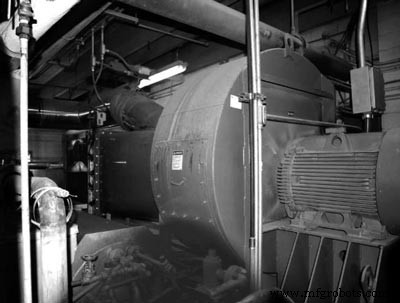
Figure 1. Intake Air Assembly
Lessons Learned
A standardized, data‑driven approach—embodied by the SSAT—unveils significant performance gains and cost savings in industrial steam systems. Simplot’s experience validates that conventional optimization techniques, when rigorously modeled, can yield both expected and additional benefits. Consequently, the company has adopted the SSAT as a corporate standard for all steam‑powered facilities, ensuring continuous, repeatable improvements.
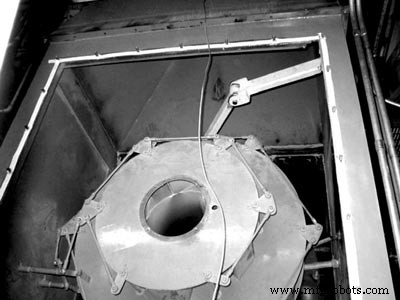
Figure 2. Burner and Burner Housing
Defining Combustion Efficiency
Combustion efficiency measures how effectively a fuel’s heat content converts into usable heat. Key indicators are stack temperature and flue‑gas oxygen. Operating a boiler with the optimal excess air—typically 10 % for natural‑gas boilers—minimizes heat loss and maximizes efficiency. When fuel composition or steam demand varies, an online oxygen trim system can automatically adjust burner controls to maintain ideal combustion conditions.
DOE ITP BestPractices Steam System Assessment Tool
BestPractices offers a suite of tools for evaluating and optimizing steam systems. The SSAT is the primary software package, enabling users to model improvement scenarios and estimate precise energy and cost savings. The tool, and other related software, are available via the EERE website (https://www.oit.doe.gov/bestpractices/software_tools.shtml) or by ordering from the EERE Information Center at 877‑337‑3463.
For more on the U.S. Department of Energy’s Industrial Technologies Program, visit https://www1.eere.energy.gov.
Equipment Maintenance and Repair
- Why an Annual Maintenance Contract Boosts Plant Reliability and Saves Costs
- How Mobile Plant Maintenance Drives Efficiency, Productivity, and Profitability
- Digitalization Unlocks Efficiency and Growth in Food Production Plants
- Southern Utility Modernizes Gas Turbines with Advanced Condition‑Monitoring Controls
- GE’s Wireless Vibration Sensors Boost Reliability at NV Energy’s Ft. Churchill Plant
- NV Energy Boosts Plant Reliability with GE Bently Nevada Wireless Monitoring
- Resolving Electrical Issues After Energy‑Efficiency Upgrades
- GE Secures 12-Year Service Contract with NV Energy to Boost Power Plant Reliability
- Three Key Drivers for Superior Plant Performance
- Proven Strategies to Cut Costs and Boost Efficiency in Your Manufacturing Plant