



Dynamic Motor Monitoring: Detecting Mechanical Faults Before They Cause Downtime
Dynamic electric‑motor testing—often referred to as online testing—is performed while the motor is running in its normal operating environment. By connecting voltage probes and current transformers in a quick, non‑intrusive manner, data is captured in real time and displayed in a concise summary. The results are automatically compared to the motor’s nameplate data, yielding a clear pass/fail assessment and a trend log after each test.
The Need for Motor Testing
Reliability technicians understand that motor failures can cripple operations and inflate costs. Detecting conditions that cause excess heat or mechanical stress allows technicians to intervene early, schedule preventive repairs, and keep the motor running within safe limits. Reducing unscheduled downtime while improving efficiency and profitability is a universal goal—dynamic motor testing provides the insight needed to achieve it.
What Dynamic Testing Reveals
An electric motor is part of a larger system: incoming power quality, the motor itself, and the driven load. Most motor issues stem from poor power quality or load‑related problems. Modern dynamic test equipment separates electrical from mechanical faults and pinpoints power‑related anomalies. It delivers comprehensive data on voltage levels, imbalances, and harmonic content—critical factors that can increase current imbalance, raise losses, and cause overheating.
Power quality issues manifest as higher stator and rotor temperatures, reduced efficiency, and premature failure. Monitoring these parameters and making necessary adjustments is essential for motor longevity.
Dynamic testing also records motor behavior—current signatures, load torque, and torque ripple. Torque ripple, calculated as the ratio of peak to average torque over a measurement period, indicates load stability and rotor stress independent of power conditions. Together, these metrics help predict derating factors and highlight potential mechanical problems.
Rotor bar and cage defects, for example, create distinct current signatures that can be detected with high accuracy. Trending these signatures over time simplifies tracking and early intervention, preventing lost efficiency and heat buildup that lead to failure.
Measuring true operating efficiency in the field is notoriously difficult. Standards such as IEC 60287 require laboratory‑grade instrumentation—torque transducers, precise voltage regulation—that is impractical on site. Field‑friendly efficiency estimation accepts a modest accuracy trade‑off for real‑world applicability, providing managers with actionable data to drive energy savings.
Case Studies
In a controlled lab experiment, a 5‑hp, 460‑V motor was instrumented for vibration and dynamic data while a deliberate outer‑race defect was introduced (Figure 1). The dynamic analysis pinpointed the defect at 107 Hz with sidebands tied to motor speed—clearer than conventional vibration spectra. The subsequent reassembly confirmed the defect’s signature, validating the dynamic approach.
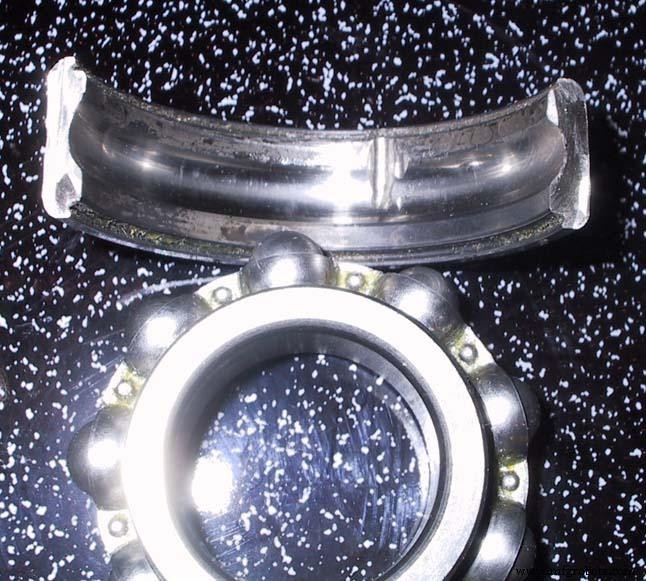
Figure 1 – Damaged outer race of a 5‑hp motor
Dynamic data also excelled at detecting rotor bar failures. In a second lab test, a 1‑hp motor’s rotor bar was intentionally severed. The current signature analysis revealed the defect with no ambiguity (Figures 4 and 5), demonstrating the technique’s precision.
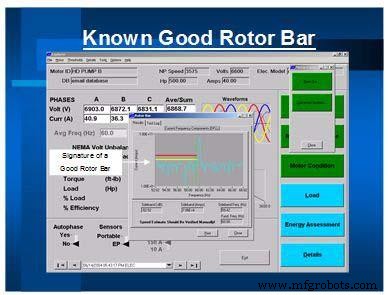
Figure 4 – Original rotor bar
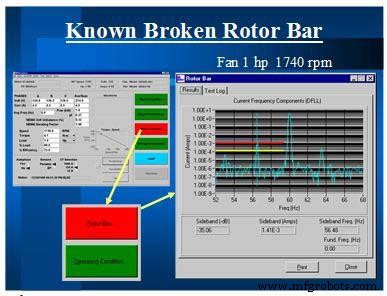
Figure 5 – Severed rotor bar
Cavitation
At a large North Carolina power plant, mechanics observed one of three 15,000‑hp pumps operating at a lower flow rate. Dynamic torque ripple analysis (Figure 6) revealed significant variations in the affected pump, while the other two pumps showed stable signatures. An inspection uncovered a corroded end‑bell bolt that allowed the water inlet flute to detach, creating cavitation and reduced flow. Repairing the bolts prevented imminent failure and saved the plant millions in downtime costs, while restored performance quickly recovered productivity.
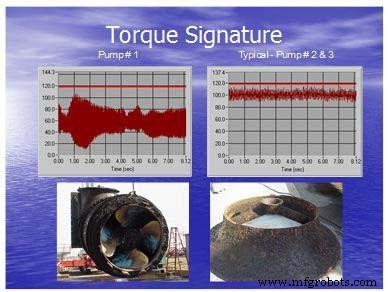
Figure 6 – Torque ripple comparison of three pumps
Dynamic motor testing is rapidly becoming the benchmark for reliability technicians worldwide. As the technology matures, its diagnostic breadth and depth continue to expand, offering unparalleled early‑warning capabilities for mechanical faults.
Equipment Maintenance and Repair
- Remote Weather Monitoring with Raspberry Pi 3 and PubNub
- Implementing an Effective Electric Motor Acceptance Testing Program
- Proactive Condition Monitoring: Root‑Cause Analysis of a 450‑HP Electric Motor Failure
- High Vibration in New Centrifugal Pump Traced to Faulty Motor Mounts
- Remote Motor Condition Monitoring: Harnessing Internet-Enabled Predictive Analytics
- Expert Motor Maintenance: Mechanical Care for Longevity
- Dynamic Memory Allocation in C: Mastering malloc, calloc, realloc, and free
- Industrial IoT Monitoring: Essential Hardware Components and Setup Guide
- Build an Ultrasonic Map-Maker with Arduino Yun – A Step-by-Step Guide
- Why Motor Insulation Testing Is Critical for Reliability and Cost Savings