



Maximize Profitability with Advanced Industrial Asset Management
Original equipment manufacturers (OEMs) across sectors such as aviation, power generation, and oil & gas can unlock higher margins, solidify market position, and deepen customer loyalty through cutting‑edge industrial asset management.
Yet most OEMs still operate under legacy models that suffer from two core limitations: sparse machine‑to‑machine coverage and subpar data analytics. When remote equipment connectivity is limited, installed‑base records become unreliable, preventing accurate assessment of service opportunities and potentially eroding up to 20 % of service revenue. In the absence of real‑time diagnostics, service delivery costs can climb by as much as 25 %, squeezing margins further.
Unscheduled downtime not only erodes the end‑customer’s profitability but also damages the OEM’s relationship and product reputation. In aftermarket contracts, inaccurate failure forecasting leads to mispriced services, while first‑time‑fix rates drop when technicians lack proper triage, spare‑part visibility, and efficient scheduling.
Quantifying and proactively managing contract risk is essential—yet it is often overlooked. Poor reliability, stemming from unimplemented engineering design improvements, drives up maintenance and quality expenses, eroding service profitability.
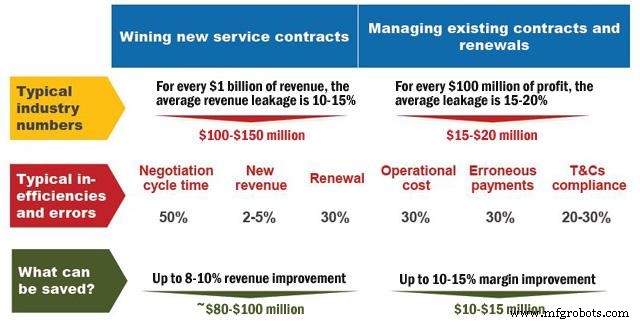
Figure 1 demonstrates how an inefficient operating model can cost a $1‑billion service business between $80 – $100 million in missed revenue and $10 – $15 million in lost profit.
Upside Potential
Remote‑diagnostic‑enabled aftermarket services are poised for rapid expansion over the next five to ten years. According to Harbor Research, value‑added service revenue is projected to grow from $50 billion in 2010 to $204 billion by 2014—a CAGR of nearly 32 %. Asset management, supply logistics, and energy management are the primary drivers of this surge.
Real‑world examples underscore the trend. In 2012, GE’s product‑related services generated roughly 30 % of its $43.4 billion revenue, up 4 % from the prior year. Rolls Royce’s TotalCare lease‑and‑maintenance model has seen sales double over five years, with more than half of the revenue—and about 70 % of its profit—derived from this service stream.
Both companies illustrate how an operating model focused on asset uptime and longevity translates into premium profitability. While the financial upside attracts executive attention, many OEMs lack the specialized expertise to overhaul service operations and unlock this potential.
Typical gaps involve revenue‑driving strategies and cost‑optimization methodologies. Analysis shows three key deficiencies in existing models:
A Fragmented Process
Current service chains are often disjointed, spanning from setup and planning to contract management, execution, transaction processing, and reporting. Visibility into customer, repair, and equipment data is hampered by outdated, geographically dispersed, and unconsolidated databases—leading to non‑profitable pricing and missed opportunities.
Real‑time condition monitoring, when selectively applied, can transform diagnosis, spare‑part readiness, field‑service intelligence, and technician training. Without it, OEMs struggle to meet the “first‑time‑fix” expectations of customers, and Aberdeen Field Service 2013 research shows that OEMs with a first‑time‑fix rate below 80 % experience alarmingly low retention.
Insufficient Technology and Disjointed Systems
Legacy field‑service platforms rarely provide an integrated operational view, even when machine‑to‑machine monitoring is in place. This fragmentation hampers automation and scalability.
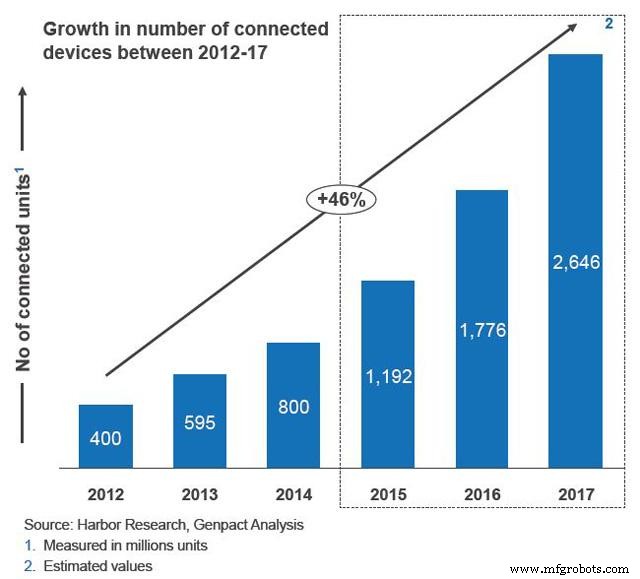
Aberdeen Research surveyed 156 field‑service providers and found that best‑in‑class performers invested in modern automation—covering ERP, billing, CRM, parts management, and workforce scheduling. Achieving top performance required integrating parts into scheduling, centralizing task assignment, equipping field agents with mobile tools, developing dynamic resource plans, and leveraging performance analytics to refine schedules and workforce deployment.
Critical Resources
Deploying remote monitoring and connectivity demands a skilled workforce: senior field‑service executives to define machine requirements, software experts for design and support, shared‑services managers for operations centers, and technicians with both foundational monitoring skills and advanced equipment knowledge. Coordinating these specialists across diverse geographies is complex, underscoring the need for a well‑designed operating model.
Industrial Asset Management Framework
To balance customization with speed, OEMs should adopt a framework that blends smart processes, focused technology, and the right talent—anchored in industry best practices and standards. Figure 3 illustrates the portfolio that delivers on key business imperatives.
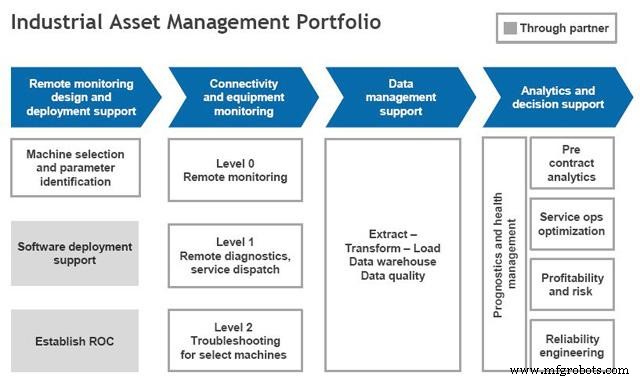
Industrial asset management combines specialized consulting, cutting‑edge technology, and rigorous data analytics. It encompasses machine‑to‑machine design, selective remote monitoring, robust data management, prognostics for asset health, and comprehensive lifecycle analysis.
OEMs adopting this approach can expect:
- Service revenue growth of 15 – 20 % by expanding coverage up to 100 %
- Contract profitability improvement of 10 – 15 % through accurate pricing and risk forecasting
- Overall service spend reduction of 8 – 10 % via remote diagnostics and planned scheduling, and fulfillment cost cuts of up to 15 %
- Customer asset uptime increase of 10 – 15 %
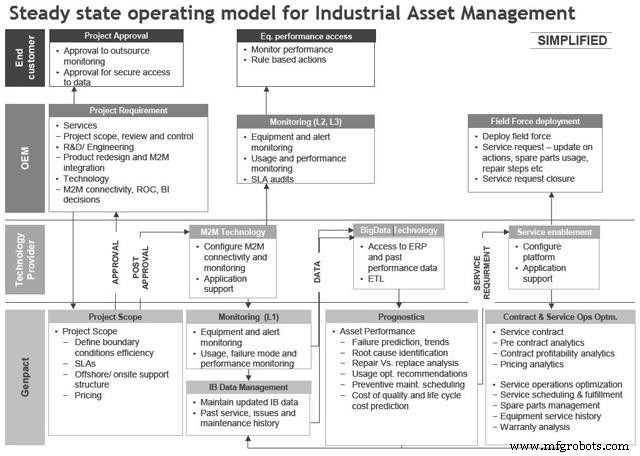
A mature framework clearly delineates roles for the OEM, technology partner, and asset‑management service provider, enabling scalable non‑core task coverage and empowering OEM teams to focus on data‑driven decisions that drive effectiveness.
Equipment Maintenance and Repair
- GE Digital Unveils Predictive Asset Management Software, Shifting Maintenance from Reactive to Proactive
- Strategic Asset Management: Unlocking Sustainable Operational Excellence
- GFMAM’s Bahrain Conference Strengthens Global Asset Management Collaboration
- Industrial Internet: Revolutionizing Asset Management Through Connectivity, Analytics, and User Experience
- AMP Announces Comprehensive Asset Management Study to Shape 2024‑2026 Practices
- Construction Asset Management: A Practical Guide to Maximize ROI and Efficiency
- Trusted Fanuc Equipment Repair – Rapid, Reliable Service
- How Nested Lifecycle Models Transform Industrial Asset Management
- Asset Management Explained: Optimizing Asset Value and Compliance
- 6 Proven Strategies to Optimize Your Maintenance Management Plan