



Automatic Lubrication Systems: Benefits, Types, and Key Selection Criteria
By: Mike Deckert, Vice President with Gabriel Lopez, Marketing Specialist, FLO Components Ltd.
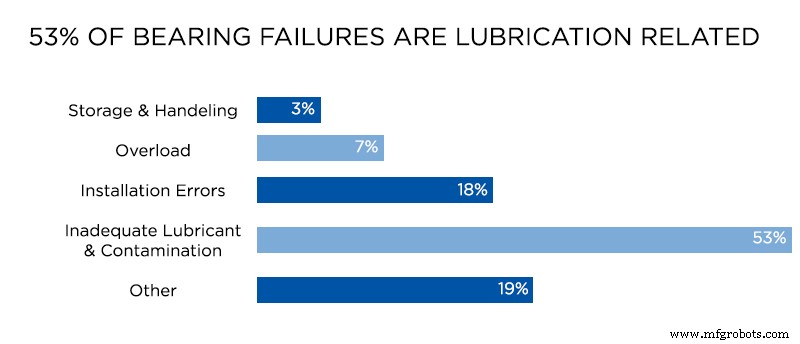
In a recent study by a leading component manufacturer, improper lubrication was found to cause 53% of all bearing failures. These failures drive equipment downtime, costly replacements, labor, and jeopardize delivery commitments. The primary culprits are dust, dirt, moisture contamination, and insufficient grease application.
Inadequate lubrication is just one problem. Manual practices often lead to over‑lubrication, which wastes lubricant, creates environmental concerns, and raises labor costs.
An Automatic Lubrication System (ALS) eliminates these avoidable expenses. Whether you call it an auto greaser, centralized grease system, or oil lubrication system, an ALS automatically dispenses measured amounts of lubricant from a central pump to multiple points while the machine runs. This steady supply prevents the “feast and famine” pattern of manual lubrication and seals bearings against contaminants.
Many operators note, “Even with an ALS, I still need to inspect the system.” That is correct—an ALS does not replace routine maintenance. It frees technicians from manual greasing, allowing them to focus on checking lines, pressure, and overall system health.
Here are eight compelling reasons to adopt an ALS:
1) Safety
By eliminating the need to climb over or under machinery, ALS enhances worker safety—an essential priority in modern workplaces.
2) Efficient Lubrication
ALS delivers lubricant while the machine operates, reducing downtime and ensuring even coverage thanks to the bearing’s motion.
3) Optimal Lubrication
Small, measured doses are applied frequently, the most effective method for most bearings, especially when time or accessibility is limited.
4) Better Housekeeping
Controlled dispensation eliminates over‑lubrication, reduces spillage, and minimizes slips, mess, and environmental impact.
5) Lower Downtime and Maintenance Costs
Consistent lubrication extends the life of bearings, bushings, and pivots, reducing replacement parts and unscheduled downtime.
6) Increased Productivity
Higher machine availability translates directly into greater throughput and reduced repair interruptions.
7) Longer Machine Life
Regular protection of critical components prolongs overall equipment lifespan.
8) Environmental Benefit
Reduced premature wear means fewer parts go to landfill, and precise lubrication conserves resources.
Typical ALS architecture includes a controller or timer, a pump and reservoir, supply lines, metering valves or injectors, and feed lines to the application points.
When evaluating systems, understand the two most common designs: Series Progressive and Parallel.
In a series progressive system, a pump feeds lubricant through a primary valve to multiple secondary valves and then to the final points. If any line fails to receive grease, the system shuts down and alerts the operator—preventing damage before it occurs.
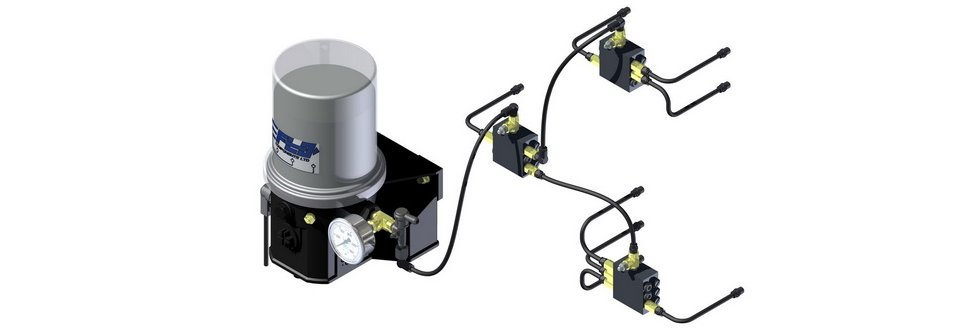
A parallel system routes lubricant from a single supply line to multiple independent injectors. Each injector is calibrated for its specific point, but the system only monitors main line pressure. A blocked line may go unnoticed until a bearing is starved.
Beyond design, ask these critical questions when sourcing an ALS:
- Is a high‑pressure inline lubricant filter included? Filters prevent contaminants that can cause costly failures; most manufacturers do not supply one as standard.
- Are hoses, tubing, and fittings NPT standard? Metric fittings require adapters, adding cost and potential service delays.
- Is a pressure gauge supplied? Visual pressure monitoring is essential; it is usually not standard and must be specified.
- For grease systems, do metering valves have high‑pressure manual grease fittings? These fittings simplify troubleshooting, priming, and flushing; high‑pressure fittings prevent leaks under back pressure.
- How will the system indicate a line or bearing isn’t receiving lubricant? Series systems often feature a cycle‑indicator pin; parallel systems may use pressure switches or individual injector indicators.
- Does the system require a specific grease? Some vendors mandate proprietary lubricants to honor warranties; others allow standard greases, reducing inventory and cost.
Choosing the right ALS—based on design, monitoring features, and compatibility with your existing lubricants—can dramatically cut direct and indirect costs, extend machine life, and boost productivity.
About FLO Components Ltd.: Established in 1977 in Mississauga, ON, FLO is a lubrication systems specialist and a leading supplier of total lube solutions to major construction, road building, aggregate, mining, and manufacturing companies in Ontario. FLO has been a Lincoln Industrial Master Distributor for over 35 years and the largest Lincoln Systems House in Canada. In 2012, FLO became the first official SKF Lubrication Business Unit System House in Canada, offering the full spectrum of LINCOLN and SKF lube solutions for all applications.
Equipment Maintenance and Repair
- Pigment Dispersions: A Comprehensive Guide to Safety, Performance, and Choosing the Best Indian Manufacturers
- Container Tracking Systems: A Complete Guide to ROI, Technology, and Implementation
- Wrench Time: A Practical Guide to Measuring and Improving Maintenance Efficiency
- Building Maintenance Mastery: Expert Insights on Safety, Cost‑Effectiveness, and Compliance
- Expert Guide to Plastic Stamping: Process, Materials, and Benefits
- Round Steel Bars: Key Properties, Applications, and Selection Guide
- Comprehensive Guide to Kor-Pak's Reliable Festoon Systems
- Understanding Hydraulic Cylinder Drift: Causes, Prevention, and Solutions
- The Complete Guide to Maintenance Work Orders: Boost Asset Reliability & Reduce Downtime
- Master Predictive Monitoring: The Complete Guide to Proactive Maintenance