



Top Challenges in Industrial Lubrication and How to Overcome Them
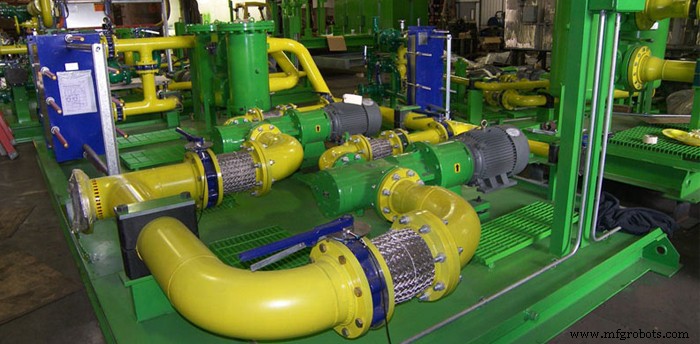
In a recent interview, Mike Deckert, vice‑president of Flo Components Ltd. and an automatic‑greasing specialist, identified the most critical lubrication challenges facing industry today.
Deckert is a respected member of the Society of Tribologists and Lubrication Engineers (STLE) and has taught part‑time at Mohawk College’s Lubrication School in Hamilton for the past 15 years. He observes a growing number of dedicated lubricators in forward‑thinking plants—from steel mills to food processing and large aggregate facilities—but notes that many companies still treat lubrication as a secondary concern.
The top three barriers, according to Deckert, are: a lack of expertise, insufficient product knowledge, and a general indifference to the strategic importance of lubrication.
"In North America, lubrication is often viewed as a necessary evil," Deckert explains. "In contrast, European manufacturers routinely deploy automatic lubrication systems. Today, roughly 85 % of North American plants still rely on manual greasing."
Deckert counters the fear that automation will displace workers: "It doesn’t replace people; it replaces the grease gun." Automatic systems eliminate the common pitfalls of manual greasing—over‑application, uneven distribution, and inconsistent timing—both of which can precipitate premature bearing failure.
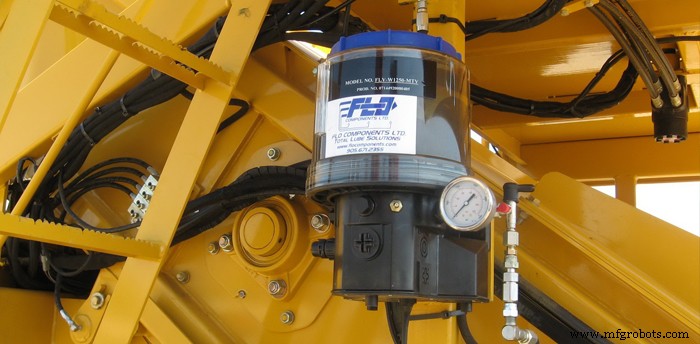
"Manual greasing often results in peaks and valleys of lubricant within a bearing," he says. "A void can quickly lead to heat build‑up and subsequent failure." Automatic units deliver precisely measured amounts at regular intervals, ensuring that bearings remain properly greased while simultaneously flushing out contaminants.
Deckert cautions, however, that an automatic system is not a set‑and‑forget solution. "It requires ongoing monitoring of lines and leak detection," he notes. "Ownership and oversight remain essential."
Another frequent issue is the use of incompatible lubricants, which can cause clogged lines, stuck metering valves, and ultimately system shutdowns. "Incompatibility can trigger a cascade of failures across an entire series or parallel set‑up," Deckert warns.
Lubrication is often an afterthought. "Many training programs, such as millwright courses, allocate only a single day to lubrication—usually limited to grease‑gun operation and fitting placement," he says. "This narrow focus undermines the strategic value of proper lubrication."
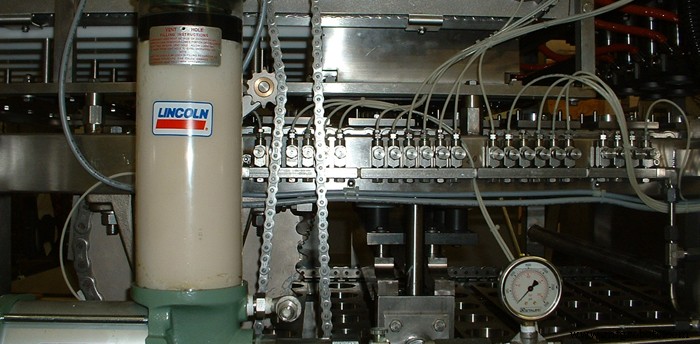
Deckert recommends that employers engage with government officials overseeing skills training and apprenticeships to elevate lubrication education. Suppliers can also help justify the cost of automatic systems by demonstrating the return on investment through reduced downtime and energy savings.
A recent study Deckert cites found that improper lubrication accounted for 53 % of all bearing failures at a major component manufacturer. The failures were largely due to dust, dirt, moisture contamination, insufficient lubrication, or over‑lubrication of critical pivot points.
Direct costs include bearing replacement, labor for repairs, and unscheduled downtime. Indirect costs encompass safety risks, housekeeping issues, wasted lubricant, environmental impacts, and higher labor expenses linked to inefficient manual greasing practices.
"An automatic lubrication system eliminates these unplanned expenses," Deckert concludes.
Bill Roebuck, editor at MRO
Equipment Maintenance and Repair
- Introducing the Certified Machinery Lubrication Engineer (MLE) – A New Industry Benchmark
- Unexpected Intruders: How Mice, Bats, and Bearing Defects Threaten Industrial Reliability
- How to Choose the Ideal Lubrication Supplier for Optimal Maintenance
- 5 Critical Risks That Undermine Asset Management Success
- Top Sources of Warehouse Losses and How to Mitigate Them
- Six Key Trends Shaping 3D Printing in 2024
- Debunking 3D Printing Myths: What the Technology Truly Can Do
- Top Hyperautomation Trends Reshaping Finance: Boost Efficiency, Cut Costs, Reduce Fraud
- Industrial Generator Problems: Identify & Resolve the Most Common Issues
- Why Proper Lubrication Is Essential for 3D Printer Performance