



Running Bond Explained: The Essential Bricklaying Technique
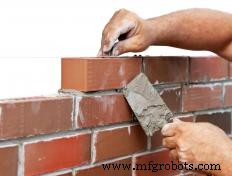
A running bond is a style of applying a bonding agent between building materials, such as bricks and other forms of masonry. The style is referred to as running, as the bonding agent is applied to create a straight line between the bricks or other materials. While considered by many to be the least visually appealing bonding configuration, the running bond is used extensively around the world.
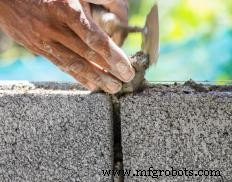
Also known as a stretcher bond, this running type of bond is a staple of laying brick for homes and public buildings. The method is used when a uniform appearance to the brickwork is desirable. While not considered to be an exciting look, the running bond does provide a uniform visual surface and helps the overall structure to be very stable.
One of the benefits of a running bond is that there is no need to use header bricks in order to apply the method. This makes it possible to utilize either full sized bricks or half-sized bricks in the overall design. In cases where the building plan calls for the construction of two walls of thin bricks in close proximity, the structure is usually connected with wall ties and understood to be a cavity wall bond.
When constructing a wall that will be visible from both sides, such as in brick fences or enclosures, the running bond of mortar between the bricks helps to provide a sturdy structure that can easily be dressed with the use of landscaping. Because the running bond gives the structure a great deal of uniformity, the focus will be on the elements utilized for the landscaping, and relatively little attention to the brick structure. However, it is possible to add visual interest to a wall created with running bond by simply using an occasional brick that is a different shade or color from the majority of the bricks in the construction. This added interest is often found with in the construction of residences within planned communities, as well as with some public buildings.
Industrial equipment
- Diamond Turning: Precision Machining for Advanced Optics and Beyond
- Understanding the Oxygen (O2) Sensor: Role, Placement, and Failure Signs
- Understanding AS9100: The Aerospace Quality Management Standard
- Optimal Methods for Bonding Metal to Plastic: A Technical Guide
- What Is A2 Steel? A Versatile, Cost‑Effective Tool‑Steel Grade for Industrial and Woodworking Applications
- Understanding Metal Casting: Process, Benefits, and Applications
- Demystifying 3D Printing: A Clear Guide for Innovators
- Stretcher Bond Explained: The Reliable Bricklaying Pattern for Stable Walls
- Running Bond Explained: The Essential Bricklaying Technique
- Decoding 'N' in Pump Calculations: Its Role and Significance