



Hydraulic Pump Types Explained: A Complete Guide
Hydraulic pumps are important tools in the construction and industrial sectors, and their variety can be a bit confusing. In this article, we’ll discuss the different types of hydraulic pumps and what they’re used for.
There are three main types of hydraulic pumps:
Pump-driven : These pumps are powered by an engine or motor. They’re used for applications that need a high output, such as pumping water from a well or lifting heavy objects.
: These pumps are powered by an engine or motor. They’re used for applications that need a high output, such as pumping water from a well or lifting heavy objects. Pump-assist : These pumps rely on another machine to help move the water, like a piston in a cylinder. This type is often used in close proximity to the required object, so the pump doesn’t have to work as hard.
: These pumps rely on another machine to help move the water, like a piston in a cylinder. This type is often used in close proximity to the required object, so the pump doesn’t have to work as hard. Rotary vane pump: This type of pump uses rotating vanes to move the water. They’re often used in applications where high pressure and flow rates are required, like factory pipelines and drainage systems.
What are Hydraulic Pumps?
Hydraulic pumps are a type of engine that use the power of water to move objects. There are many different types of hydraulic pumps, but all of them work in the same way. A hydraulic pump uses a nozzle to shoot a stream of water out into the air. Then, the stream of water comes down and pushes against a piston inside the pump. This action causes the pump to rotate, which forces the water through the nozzle and out into the environment.
Hydraulic pumps are used in a variety of different applications, including mining, construction, and water treatment. They are also used to power vehicles and machinery.
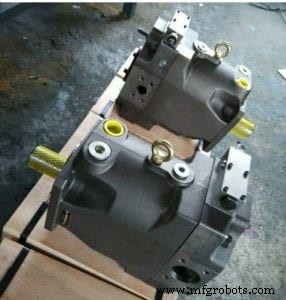
How many types of hydraulic pumps are there
Who invented the hydraulic pump?
The first known hydraulic pump was invented in the fourth century BC by the Greek scientist Archimedes. He used a screw to create a flow of fluid through a pipe, which he then used to raise water from a lower reservoir to a higher one.
Design of a hydraulic pump
There are many types of hydraulic pumps, each with its own advantages and disadvantages. This article will discuss the different types of hydraulic pumps and their advantages and disadvantages.
Pump types include:
Piston pumps: These are the most common type of pump. They use pistons to move the fluid. They are cheap and easy to operate, but they can only move a small amount of fluid at a time.
Disc pumps: These pumps use discs that rotate to create motion. They are more powerful than piston pumps, but they are also more expensive and harder to operate.
Rotary vane pumps: These pumps use a series of vanes to create motion. They are the most efficient type of pump, but they are also the most expensive.
How many types of hydraulic pumps are there?
There are many types of hydraulic pumps. Some common types of hydraulic pumps are: rotary, vane, piston, and screw.
Rotary pumps: Rotary pumps use a rotating element, such as a impeller, to create motion. They are the most common type of pump and are used in a variety of applications, including mining and water treatment.
Vane pumps: Vane pumps use a series of vanes to create motion. They are the most efficient type of pump, but they are also the most expensive.
Piston pumps: Piston pumps use pistons to move the fluid. They are cheap and easy to operate, but they can only move a small amount of fluid at a time.
Screw pumps: Screw pumps use a screw to push against the fluid. They are the least common type of pump, but they are also the most powerful.
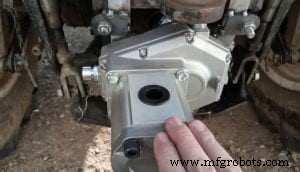
How many types of hydraulic pumps are there
Applications for Hydraulic Pumps
There are many different applications for hydraulic pumps, and each requires its own specific type of pump. Here are just a few examples:
-Pump used in mining to lift heavy rocks and ore from the mine floor
-Pump used in water treatment plants to move water through filtration systems
-Pump used in manufacturing to move machinery and parts
-Pump used in agriculture to move irrigation water
Description of Hydraulic Pump Components
There are a variety of different types of hydraulic pumps, each with its own specific features and purposes. Here’s a quick overview of the most common types:
– Piston: The piston pump is the most common type of hydraulic pump, and it’s typically used for small applications such as moving fluids between two containers. The pistons are located inside the pump barrel and move up and down according to the energy supplied by the hydraulic motor.
– rotary vane: A rotary vane pump is similar to a piston pump, but it uses a series of blades to move the fluid. This type of pump is often used for larger applications where speed and accuracy are important, such as pumping water out of a dam or oil out of a well.
– diaphragm: A diaphragm pump is similar to a rotary vane pump, but it uses a flexible membrane instead of blades. This type of pump is often used for applications where liquid needs to be moved slowly or in an accurate manner, such as in water treatment plants.
Are there any alternate uses for hydraulic pumps?
There are many alternate uses for hydraulic pumps, which can be helpful in various situations. Some examples include using them to power tools, lift heavy objects, and move objects through water.
Additionally, hydraulic pumps can be used to create pressure in a fluid, which is helpful in various industrial applications.
Benefits of using hydraulic pumps
Hydraulic pumps are a reliable way to transfer energy, and they can be found in a variety of applications. Here are four reasons you might want to consider using one:
1. Efficiency: Hydraulic pumps are incredibly efficient when it comes to transferring energy. This means they can move larger amounts of fluid at a faster pace, which can save you time and money.
2. Durability: Hydraulic pumps are built to last, which means you can trust them to handle tough situations without breaking down.
3. Versatility: Hydraulic pumps come in a variety of sizes and shapes, so you can find the perfect one for your needs.
4. Safety: Hydraulic pumps are among the safest forms of energy transfer out there. They’re engineered with safety in mind, so you can trust that they’ll protect you and your equipment from harm.
Conclusion
There are a number of types of hydraulic pumps available on the market, each with its own unique features and benefits. If you are looking to purchase a new pump for your business, it is important to know which type will best suit your needs. Hopefully, this article has helped you understand the different types of hydraulic pumps and given you some insight into which one might be the best fit for your business. Thank you for reading!
How many types of hydraulic pumps are there, please click topkitparts see more
Industrial equipment
- Understanding Hydraulic Pump Types and Their Operating Principles
- Exploring the Varieties of Hydraulic Pumps: Types, Functions, and Applications
- Hydraulic Pump Lifespan: Typical Operating Life and Replacement Guidance
- Understanding PTO-Driven Hydraulic Pumps: How They Operate and Why They Matter
- Exploring the Two Primary Types of Pumps
- Hydraulic Pump Classifications: Positive vs Negative Displacement Explained
- Exploring the Key Types of Hydraulic Pumps for Industrial Efficiency
- The Two Main Types of Hydraulic Pumps Explained
- Directional vs. Non-Directional Hydraulic Pumps: Which Is Right for Your Application
- Explore the 4 Key Types of Hydraulic Motors and Their Applications