



Designing Robust Circuit Protection, Control, and Sensing for Smart Home Security Systems
This article examines the critical protection, control, and sensing components essential for reliable wired and wireless smart home security cameras, as well as wired doorbell cameras.
Rapid advances in IoT are transforming home security. New sensing technologies and wireless protocols—such as Wi‑Fi—enable a wide array of devices that monitor and control everything from access systems to appliances, lighting, and entertainment. Figure 1 shows how IoT drives the breadth of smart‑home capabilities.
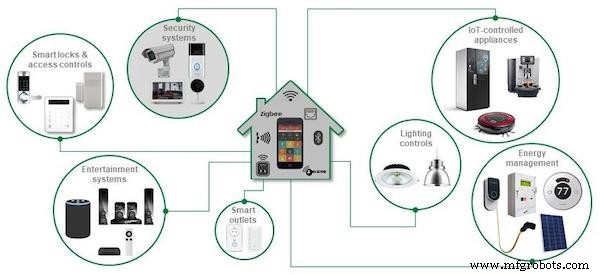
Figure 1. Benefits of smart‑home technology include control of entertainment, appliances, access, power, and energy as well as security.
The residential security‑camera market is expanding rapidly. Unit shipments are projected to grow from 54 million in 2018 to 120 million by 2023—an impressive 17 % CAGR (MarketsandMarkets, April 2020). This growth creates a fertile ground for innovative products that offer higher reliability and advanced protection.
Reliability Equals Security
To capture market share, smart‑home security products must deliver exceptional reliability. As competition intensifies and product differentiation narrows, consumers increasingly judge quality by robustness against overloads, transients, and ESD. The following recommendations help designers select components that protect and control key circuits in wired and wireless cameras, and in wired doorbell cameras.
- Wired and wireless security cameras
- Wired doorbell cameras
Wired Security Cameras
Wired security cameras are typically fixed‑mounted systems that monitor exterior or interior zones. They receive AC line power and are therefore vulnerable to line‑side overloads, transients, and electrostatic discharge (ESD). Figure 2 depicts a typical wired camera and the core protection components.
Designers should shield the camera’s circuitry from these hazards. Figure 3 presents a block diagram that integrates recommended protection and control components for a robust wired camera.
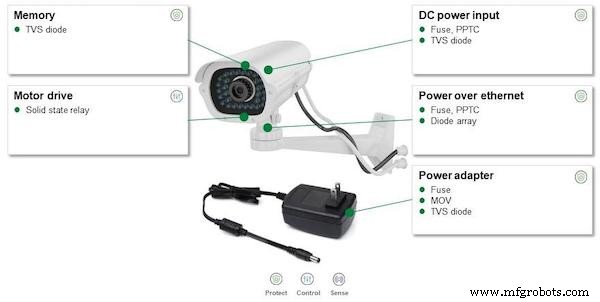
Figure 2. Example wired security camera and recommended protection and control components
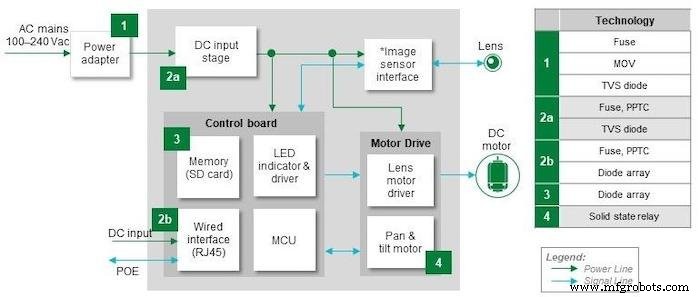
Figure 3. Wired security camera block diagram showing the circuits and their recommended protection and control components.
Power Adapter
The power adapter bridges the AC mains and the camera’s internal circuitry. Protecting it against current surges and voltage spikes is essential. A typical solution includes a slow‑blow fuse for overload protection, a metal‑oxide varistor (MOV) to clamp high‑energy transients, and a transient‑voltage‑suppression (TVS) diode for rapid voltage suppression. Selecting the right parameters—such as fuse time‑current curve, MOV energy rating, and TVS clamping voltage—ensures the adapter can tolerate lightning strikes, line‑side surges, and ESD without nuisance trips.
Key selection tips:
- Choose a slow‑blow fuse to prevent tripping from supply inrush, yet fast enough (within seconds) to block continuous overloads.
- Verify that the fuse’s voltage rating exceeds the maximum line voltage, and that its interrupting rating can handle worst‑case overcurrent without damage.
- Use UL/IEC‑certified components to streamline compliance.
- Place the MOV as close as possible to the mains input; a 10 kA surge and 500 J pulse energy rating is typical for lightning protection.
- Select a TVS diode with a clamping voltage as low as 10 V for maximum protection of downstream electronics.
DC Input Stage
The DC input stage powers the control board, motor drive, and image‑sensor interface. Protect this stage with either a conventional fuse or a resettable polymeric positive‑temperature‑coefficient (PPTC) fuse, both available in compact surface‑mount packages. A surface‑mount TVS diode can provide transient protection with up to 5 kW peak pulse power while consuming minimal board real estate.
Control Board
The control board houses the MCU, video memory, and the Power‑over‑Ethernet (PoE) interface. Two subsystems—the wired interface and the memory module—require dedicated protection:
- Wired interface: Use a conventional or resettable fuse for current overload and a TVS diode array for ESD and high‑voltage transients. Figure 4 shows a bi‑directional diode array with a 30 kV ESD rating and 1 pF/port capacitance.
- Memory module: Protect the SD card with a TVS diode capable of withstanding 30 kV ESD while keeping leakage under 1 µA.
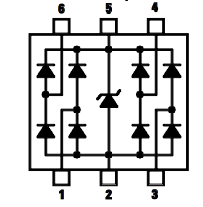
Figure 4. TVS diode array designed for ESD protection of multiple I/O ports
Motor Drive
Pan‑and‑tilt motors must be controlled cleanly to avoid noise and transients. An optically isolated solid‑state switch—preferably with zero‑crossing and current‑limiting features—provides bounce‑free operation and protects against stalled‑motor conditions.
Wireless Security Cameras
Wireless cameras are compact, easily deployable units that monitor interior spaces. Figure 5 presents a typical wireless camera, while Figure 6 shows its block diagram and recommended protection components.
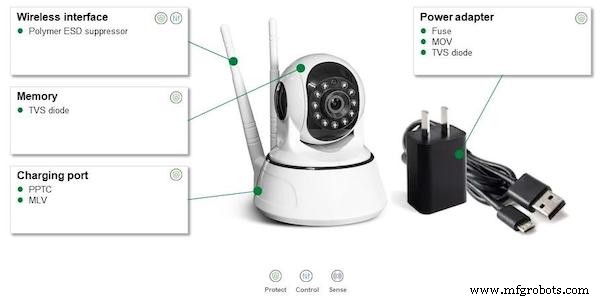
Figure 5. Example wireless security camera with recommended protection components
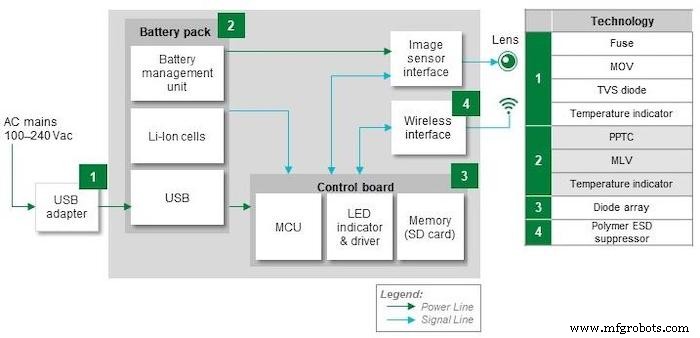
Figure 6. Block diagram of a wireless security camera and recommended protection and sensing components
Adapter
The USB adapter supplies power to the wireless camera and must be protected against overcurrent and voltage transients, just like a wired camera’s power adapter. Incorporate a fuse, MOV, and TVS diode. If the design uses USB Type‑C, include a thermal‑sensing element that detects short‑circuit conditions and automatically resets when the temperature normalizes.
Battery Pack
Battery packs should monitor for overcurrent that may result from cell failure. A resettable PPTC fuse (tripping in under one second at 200 % overload) safeguards against cascading damage. For ESD protection, multi‑layer MOVs with low clamping voltage—available in 0402 packages—offer compact, robust shielding. When USB Type‑C is used, a thermal sensor identical to that in the adapter protects the USB socket.
Control Board
The wireless camera’s control board also requires robust protection. A 30 kV Zener TVS diode with leakage under 0.5 µA and a 0201 surface‑mount footprint delivers reliable ESD suppression.
Wireless Interface
The wireless interface is exposed to human contact and ambient ESD. A polymer ESD suppressor can handle 15 kV air strikes and 8 kV from human touch, with a sub‑0.2 pF capacitance that preserves signal integrity.
Doorbell Cameras
Wired doorbell cameras are increasingly popular for remote visitor monitoring. Figure 7 shows an example unit, and Figure 8 presents its block diagram with recommended protection and control components.

Figure 7. Example wired doorbell camera and recommended protection and control solutions
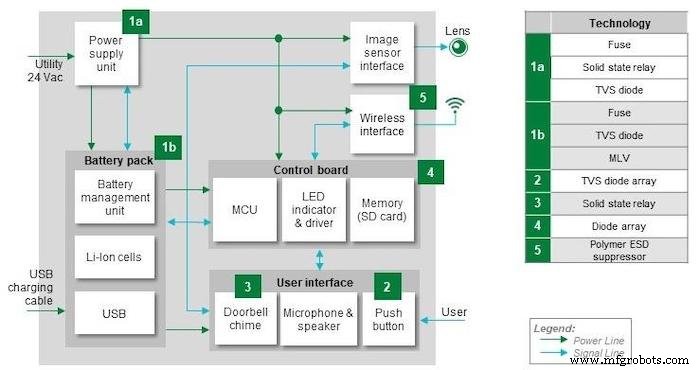
Figure 8. Block diagram of a wired doorbell camera with the recommended protection and control components
Power Supply Unit
Like other supplies, the doorbell’s power unit should incorporate a fuse for overload protection and a TVS diode capable of absorbing up to 4 kW of transient power. An optically isolated solid‑state relay can further isolate downstream circuits from line‑side noise.
Battery Pack
The backup battery pack for the control board and user interface benefits from the same overcurrent and transient protection used in wireless cameras. Add a TVS diode and, if applicable, a thermal‑sensing element for USB Type‑C compliance.
User Interface
Human interaction introduces ESD risk. Protect the UI with a TVS diode. For European markets, a solid‑state relay can separate the door chime from the camera to meet privacy regulations and eliminate mechanical bounce and EMI.
Control Board and Wireless Interface
These subsystems in the doorbell camera mirror those in the wireless camera; the same protection components apply.
The COVID‑19 Pandemic is Influencing the Design of Security Cameras
Manufacturers are now integrating infrared thermal sensing to discreetly monitor visitor temperatures—a feature likely to become standard in future smart‑home security systems. Robust circuit protection is even more critical as these cameras adopt new health‑safety functions.
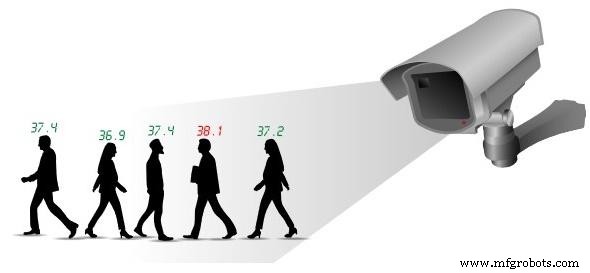
Figure 9. Security cameras add thermal scanning to monitor body temperature post COVID‑19
Applicable Standards for Home Security Cameras
Compliance with IEC 62368‑1 (audio/video communication equipment) and IEC 62311‑2 (lithium‑cell safety) is mandatory. Failure to meet these standards can lead to costly redesigns, delayed certification, and increased project expenses.
Table 1. Safety Standards for products with surveillance cameras
Value in Protection
Incorporating protection and sensing components early in the design cycle—and aligning with standards—enables cost‑effective development of reliable smart‑home security systems. While component costs vary, a higher upfront investment in robust protection often reduces total cost of ownership and accelerates market entry. Leverage the engineering expertise of reputable component suppliers; this partnership saves time and mitigates risk.
Reliability and efficiency build a brand’s reputation, leading to increased market share, revenue, and profitability.
For deeper insight into component selection, consult Littelfuse’s Circuit Protection Selection Guide and Sensing Products Selection Guide.
References
- Video Surveillance Market by System. MarketsandMarkets. April 2020.
- Universal Serial Bus Type‑C Cable and Connector Specification. Revision 2.0. August 2019. USB Implementers Forum (USB‑IF), Inc.
- Digital Temperature Indicators for USB Type‑C cables Design and Installation Guide. Littelfuse Application Guide. April 2019.
Industry Articles are a form of content that allows industry partners to share useful news, messages, and technology with All About Circuits readers in a way editorial content is not well suited to. All Industry Articles are subject to strict editorial guidelines with the intention of offering readers useful news, technical expertise, or stories. The viewpoints and opinions expressed in Industry Articles are those of the partner and not necessarily those of All About Circuits or its writers.
Industrial equipment
- How Smart Home Technology Transforms Everyday Living
- Pinch Valves & Peristaltic Pumps: The Gold Standard for Abrasive Lime Slurry Systems
- Smart Lock & Sensor Design: Expert Circuit Protection & Sensing Strategies for Secure Smart Homes
- Unlocking Blockchain’s Potential in Industrial Automation: Opportunities and Obstacles
- Electronic Eye Security Circuit: LDR & 4049 IC for Light‑Sensitive Control
- 10 Essential Tips for Designing Low‑Noise Amplifiers
- Passive Tone Control Circuits: Design, Applications, and Audio Benefits
- Designing a Compact Flyback Power Module for RFID Readers
- Essential Guide to Designing Effective Jigs and Fixtures
- Part 1: Critical Cooler Design Considerations for High-Performance Centrifugal Compressors